Let Me Save You Six Months of Wellness Hacks
Chrissy Sundt ·
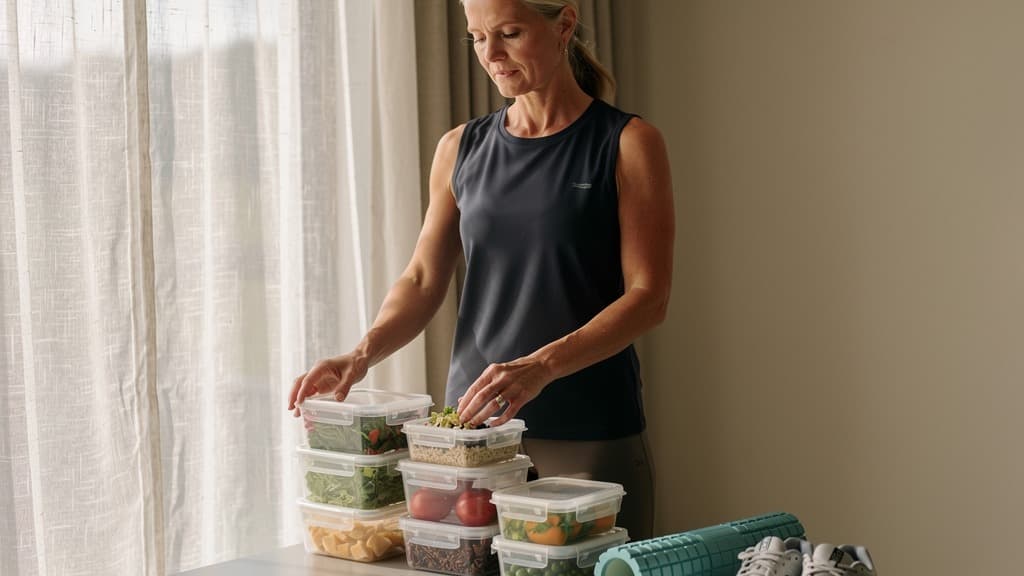
If I can save you six months of podcast listening, wellness experimentation, expensive supplements and endless scrolling, then the last year of my life will have been well spent.
Over the past year, I have gone deep into the world of perimenopause. I have read the books. Listened to the experts. Followed the research. Downloaded the podcasts. Tested the routines. Bought the supplements. Changed the way I train. Tweaked my nutrition. Prioritised my sleep. Questioned everything I thought I knew about health and fitness.
Most importantly, I have tried it all on myself first.
In many ways, I became my own midlife lab rat.
Partly because I was fascinated. Partly because I was struggling with some of the same symptoms my clients were describing. And partly because I wanted to separate what genuinely works from what simply sounds good on social media.
As a movement professional, I assumed I already had a pretty good understanding of health. I have spent more than twenty five years teaching movement, training instructors and helping people feel better in their bodies.
What surprised me was how much the rules seemed to change in my forties.
The things that had always worked suddenly did not.
Training harder left me feeling more exhausted. Eating less did not necessarily make me leaner. More discipline did not always equal better results.
The more I learned, the more I realised that many women are spending huge amounts of time, energy and money searching for solutions that are often hiding in plain sight.
The wellness industry is very good at selling complexity. Midlife tends to reward consistency.
After a year of learning, testing and refining, here are some of the lessons that have had the biggest impact on my own health and wellbeing.
The first is that most women do not need another diet. They need more protein.
I spent years watching women jump from one eating plan to another while consistently under eating protein. Yet protein plays a vital role in maintaining muscle, supporting recovery, balancing blood sugar and helping us feel satisfied after meals. Once I stopped chasing dietary perfection and started prioritising protein, everything felt simpler. My energy improved, my cravings reduced and my meals became far less complicated.
The second lesson is that movement beats gadgets every single time.
I love wellness products as much as anyone. I have certainly purchased my fair share over the years. But very few things have delivered the same return as simply moving my body consistently.
Twenty minutes of intentional movement most days has had a greater impact on my physical and mental wellbeing than almost any gadget, tracker or wellness trend. Movement supports our strength, our mood, our energy, our confidence and our long term health. It remains one of the most powerful tools available to us.
Another lesson that surprised me was the importance of sleep.
For a while, I found myself becoming fascinated by cortisol. Every second podcast seemed to be discussing stress hormones and nervous system regulation. While those conversations are valuable, I eventually realised that many of us are looking for advanced solutions before addressing the basics.
Sleep changes everything.
It influences our appetite, our energy levels, our recovery, our concentration and our emotional resilience. I spent a lot of time searching for clever answers when often what I needed was a slightly earlier bedtime and a more consistent evening routine.
I have also learned that starting over every Monday is not a strategy.
For years, I approached wellness in cycles. I would have a brilliant week, a busy week, then convince myself I needed a fresh start.
What actually works is having a simple plan that you can return to again and again.
The women who seem to navigate midlife most successfully are rarely the most motivated. They are rarely the most extreme. Instead, they have systems and routines that make healthy choices easier. They remove the need to negotiate with themselves every day.
Perhaps the biggest shift in my thinking has been around muscle.
So many women in midlife are still searching for the fastest way to lose weight. Yet one of the most important things we can do for our future health is build and maintain muscle.
Muscle supports metabolism, balance, strength, bone health and longevity. It helps us remain capable and independent as we age. I often say that muscle is midlife insurance because the benefits extend far beyond how we look.
And finally, I have learned that motivation is wildly overrated.
Motivation is wonderful when it appears, but it is not something we can rely on.
Routines are far more powerful.
The women who continue showing up for themselves are not necessarily more disciplined than everyone else. They have simply created routines that support them when life becomes busy, stressful or unpredictable.
That, more than anything else, has been my biggest takeaway from this year of learning.
The answer is rarely another hack.
It is rarely another supplement.
It is rarely another complicated protocol.
More often than not, it is found in the habits we repeat every day.
Enough protein.
Regular movement.
Quality sleep.
Strength training.
Simple routines.
Consistency.
None of these ideas are particularly glamorous. Yet they continue to outperform many of the trends that dominate the wellness conversation.
If I can save you six months of searching, start there.
Focus on the fundamentals.
They work.
And they keep working.
If you are looking for a simple place to begin, that is exactly why I created Awaken Barre.
Discover the 4-week Awaken Barre Programme 🤍
It is not designed to be another fitness challenge or quick fix. It is a gentle but effective movement practice created specifically for women navigating perimenopause and menopause.
Short twenty minute sessions. Minimal equipment. A structure that helps you build consistency without overwhelming your nervous system.
Because thriving in midlife is not about having more willpower.
It is about creating routines that support the woman you are becoming.
And sometimes one small daily practice is all it takes to change the trajectory of your health.
First published in The Midlife Movement, Chrissy’s newsletter.
Common questions
What is the biggest wellness lesson for midlife women?
The answer is rarely another hack, supplement or complicated protocol. It comes down to repeated daily habits: enough protein, regular movement, quality sleep, strength training, simple routines and consistency.
Why is protein important in perimenopause?
Protein plays a vital role in maintaining muscle, supporting recovery, balancing blood sugar and helping you feel satisfied after meals. Prioritising protein over chasing dietary perfection can simplify meals, improve energy and reduce cravings.
How much movement do you need each day in midlife?
Twenty minutes of intentional movement most days can have a greater impact on physical and mental wellbeing than most gadgets, trackers or wellness trends. Movement supports strength, mood, energy, confidence and long term health.
Why does building muscle matter in midlife?
Muscle supports metabolism, balance, strength, bone health and longevity, and helps you remain capable and independent as you age. Many women focus on losing weight, but building and maintaining muscle is described as a form of midlife insurance.
Is motivation enough to stay consistent with healthy habits?
Motivation is wonderful when it shows up, but it cannot be relied on. Routines are more powerful because they support you when life becomes busy, stressful or unpredictable, removing the need to negotiate with yourself every day.