Is There Barre in Edinburgh for a Midlife or Perimenopausal Body?
Scotland, United Kingdom
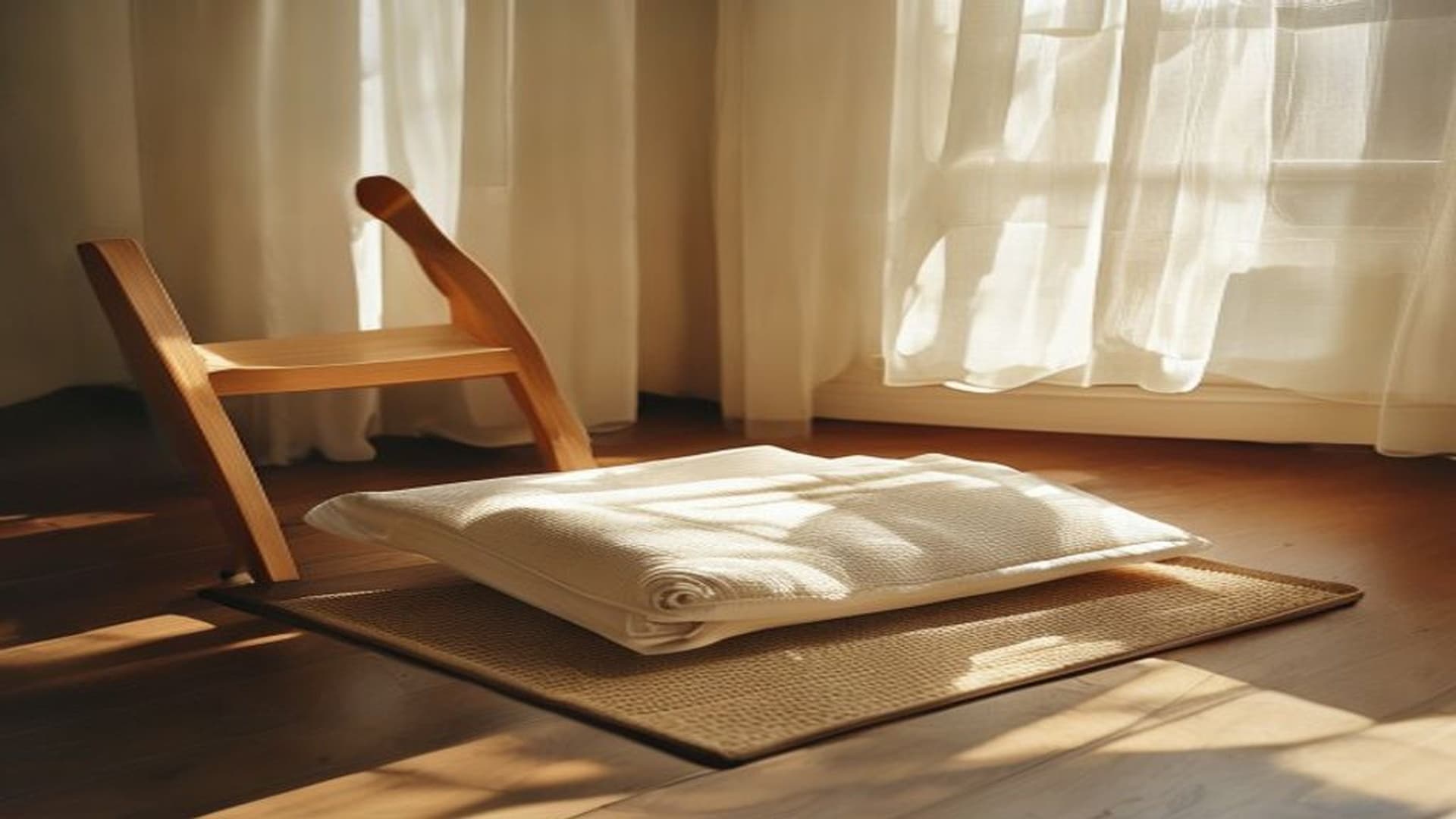
Yes, plenty of studios and gyms across Edinburgh run barre classes. The honest challenge is finding one paced for a midlife body, with real modifications, joint awareness and a teacher who understands shifting energy. If you can't find that locally, an online programme built specifically for this stage is a genuine, workable alternative.
Is there barre in Edinburgh that suits a midlife body?
A search for barre in Edinburgh turns up a genuine mix: dedicated barre studios, dance schools that have added it to their timetable, and gyms running it as a group class. That's a fair starting point, and the format itself often suits a changing body well. Barre works through small, controlled movements at a barre or a chair, built on ballet-inspired positions, so it trains strength and stability without the impact of running or the sharper load of some HIIT classes. The format being a good fit, though, doesn't mean every class teaching it will be.
What separates a class that leaves you steady and strong from one that leaves you wrecked for three days isn't the word on the timetable. It's what happens in the room: the pace, the depth of instruction, and whether the teacher treats modification as standard practice rather than a favour.
Before booking, it's worth asking a few direct questions. Does the teacher check in about injuries, joints and energy, not just fitness goals? Are low-impact versions offered as standard, without singling anyone out? Is the class small enough for real correction, rather than a room of thirty following along at the front? A good local barre class for this stage exists, it's just worth screening for before committing to a course.
- Pace that allows a position to be held and felt, not just moved through quickly
- Modifications offered to everyone, not only when you ask
- Low-impact alternatives for anything jumped or pulsed at speed
- A teacher who asks about joints and energy levels, not only fitness goals
- Small enough class sizes for individual correction
- No pressure to match the intensity of the person next to you
What changes in midlife, and why it changes what works
In perimenopause, recovery between sessions tends to become less predictable. A pace of training that felt fine a few years ago can leave joints achy or energy flat for days, not because anything has gone wrong, but because the body is responding to a different set of internal conditions. Connective tissue and joints often need more time to warm through, and a class built for speed doesn't always leave room for that.
Energy also becomes less consistent week to week, sometimes day to day. A class format that assumes the same output every session, building relentlessly on the last, can work against a body that needs the plan to flex with it. This is where pacing and precision start to matter more than raw volume: fewer, better-controlled repetitions, done with attention to form, tend to serve this stage better than pushing harder for longer.
This isn't a clinical checklist, just what many women notice on the mat at this stage: a class that respects pace and precision feels sustainable, and one that doesn't feels like something to survive rather than enjoy. Class choice, in other words, stops being about which studio is nearest and starts being about which one actually reads the room.
None of this changes what barre is at its core, a strength and mobility practice. It changes how it should be delivered, and that's the detail worth chasing down before signing up for a term.
When a good local fit doesn't turn up
Sometimes the search doesn't turn up the right thing. Timetables might not line up with a working week, the nearest studio offering barre might not have a teacher trained in modification for this stage, or a trial class might simply not feel right in the room. That's a normal outcome of a local search, not a failure on your part, and it's worth being honest about rather than settling for a class that leaves you depleted.
This is where an on-demand option becomes a genuine alternative rather than a consolation prize. A programme built specifically for a changing body, filmed once and available any time, sidesteps the timetable problem entirely. It works at five in the morning before a shift, at midnight after one, or on the other side of a time zone from wherever it was recorded. There's no commute, no class size to negotiate, and no explaining your joints to a new teacher each term.
Awaken Barre, part of the Midlife Movement Method, was built around exactly this gap: barre-based strength and mobility work designed for the pace and priorities of this stage of life, done at home with a mat and a sturdy chair. It isn't a replacement for wanting to be in a room with other people. It's an honest option for whenever that room doesn't exist yet, locally or at all.
What a session with Awaken Barre actually involves
Sessions run around twenty minutes: long enough to build real strength and mobility, short enough to fit before work, between calls or at the end of a long day. Barre here means a fitness discipline inspired by ballet positions, not a ballet class. No dance background is needed, and no dance vocabulary either. The chair is there for balance and support, the mat for the floorwork, and that's the full kit list.
It's taught by Chrissy Sundt, who has spent more than twenty-five years working in movement as a barre and Pilates trainer, and who is navigating perimenopause herself right now, not observing it from a distance. That shapes the pace of the sessions directly: fewer, more precise movements rather than a high volume of them, built around the idea that a body in this stage responds to control and consistency rather than sheer effort.
Sessions are entirely online. There's no studio to travel to and no in-person class anywhere, in Edinburgh or otherwise. What it offers instead is a session that meets you wherever you are, on whatever day you can show up, built around the idea that your body isn't working against you. It's simply asking for a different kind of attention than it used to.
Common questions
Is barre in Edinburgh actually suitable for a midlife or perimenopausal body?
Some classes are, if the pace, modifications and teacher's understanding of midlife line up. It's worth asking about all three before joining rather than assuming any barre class is automatically midlife-friendly.
Does Awaken Barre have a studio or class in Edinburgh?
No. Chrissy Sundt teaches online only. There's no studio, partner or in-person class in Edinburgh or anywhere else. Awaken Barre is an on-demand programme, done at home.
Do I need any dance experience for barre?
No. Barre borrows positions from ballet as a strength and mobility format. It isn't a dance class, and no dance background or vocabulary is expected.
Is twenty minutes really long enough?
In this stage, precision tends to matter more than volume. Twenty minutes of controlled, well-formed work often does more than a longer session rushed through.
What equipment do I need at home?
A mat and a sturdy chair, that's the full list. No barre, no dumbbells, no separate kit to buy.