Feeling Isolated Working From Home in Midlife? Here's Where to Start
Chrissy Sundt · Connection ·
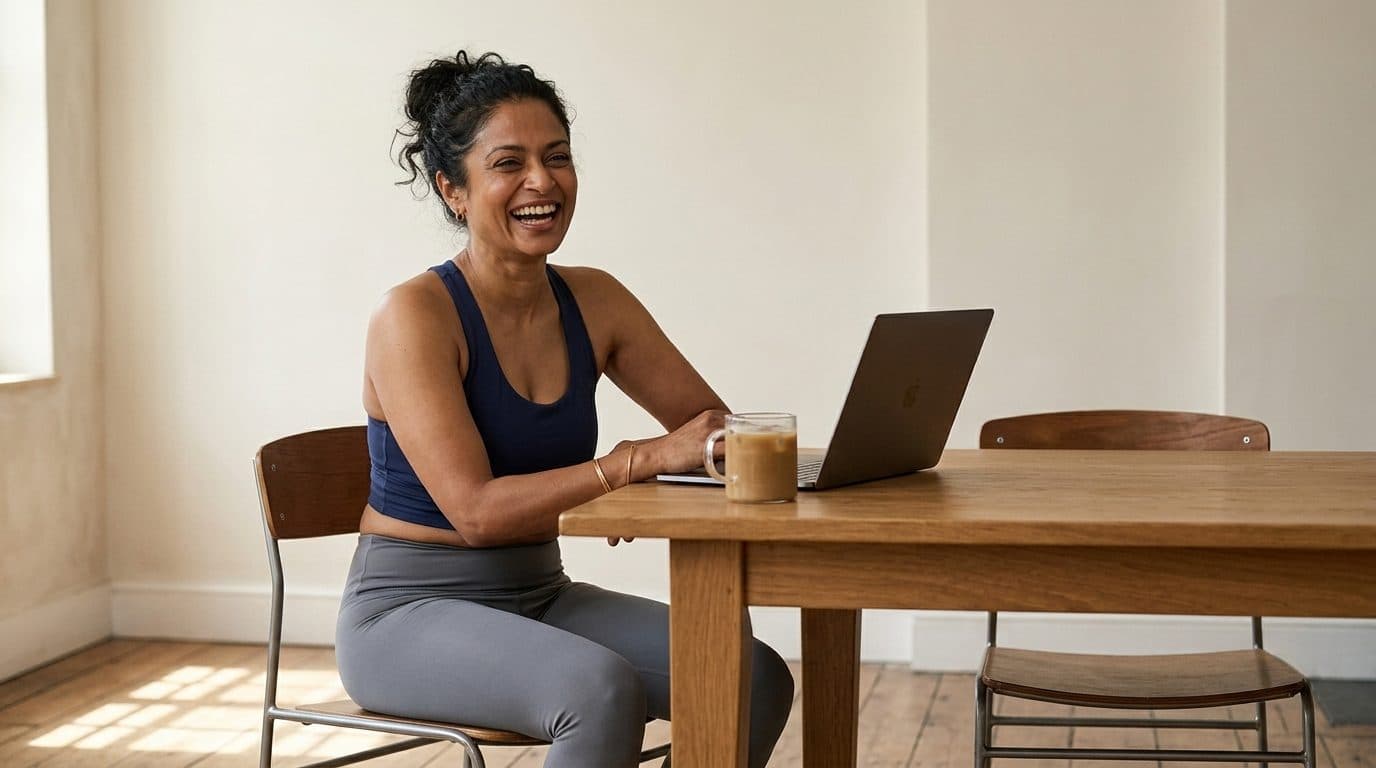
Working from home removes the incidental contact an office used to hand you for free, the corridor chat, the commute nod, and midlife friendships often thin out at the same time as routines change. What helps is making contact deliberate. Put a weekly call in the diary. Move at a fixed time each day. Send the message before you feel ready.
Why does working from home in midlife feel so much lonelier than it used to?
The isolation is arithmetic. An office day used to hand you dozens of small unplanned contacts, someone in the lift, a colleague topping up their coffee at the same time as you. Working from home removes every one of those without replacing them, and nobody warns you how much of your daily connection was running on autopilot until it stops.
Midlife compounds it. Friendships that were built around a shared context, the school gate, a team you worked alongside, tend to fade when that context disappears. A gym class at a fixed time works the same way. Children leave home or need you less in the same visible way. Parents may need more of you, quietly, in ways that eat the hours you'd have spent on a friend. The circle gets smaller by attrition, one quiet gap at a time.
Perimenopause adds a layer that's rarely named. Energy dips at points in the day when you'd usually make the effort to reach out. Some weeks concentration is patchy enough that a video call feels like more than you can give. The effort required to stay connected has gone up while the built-in opportunities have gone down, and that gap is what people feel as loneliness.
Does loneliness actually affect your health, or is it just an unpleasant feeling?
It's tempting to file loneliness under unpleasant but harmless, something to tolerate rather than address. That undersells it. Chronic loneliness has been linked to worse health over time, not just a flatter mood, which is reason enough to treat it as more than an inconvenience.
That is not a reason to panic about a quiet week at home. It is a reason to treat connection the way you'd treat sleep or movement: a genuine input to how well you function, worth protecting even in a busy week. The relationships that hold up over decades tend to be the ones people kept investing small, regular effort in, week after week.
For a midlife woman working from home, that reframes the problem. The daily contact you used to get for free was doing real work, and that work still needs doing, deliberately now instead of automatically.
How do you reconnect when your friendships have quietly gone quiet?
Most friendships that fade in midlife don't end in an argument. They end in silence, a text left unanswered for a week that becomes a month, an intention to catch up that never gets a date attached to it. Often it comes down to a simple, fixable habit gap: we wait to be invited, and so does everyone else.
People tend to underestimate how much others want to hear from them, and how welcome a message out of nowhere actually is. If you've been waiting for a friend to reach out first, there's a reasonable chance they've been doing exactly the same thing. The fix is small: send the message today. Things rarely calm down enough on their own to justify waiting for the right moment.
What matters more than any single gesture is repetition. A standing weekly call, even a short one, does more for a friendship over time than an occasional long one. If your working week is entirely solitary, put one recurring point of human contact in the diary before the week starts.
Can a short movement break actually make you feel less isolated?
Movement isn't a substitute for a friend or a cure for loneliness. A working day with no fixed shape to it makes isolation worse, because there is nothing to interrupt the hours of sitting alone with a screen. A short session at a fixed time each day, even one you do alone, gives the day a structure that a purely remote schedule doesn't otherwise have.
There's also a physical piece to it. Sitting still for long stretches keeps your body, and often your mood, in the same low gear all day. Standing up and working through a proper sequence shifts your state in a way that scrolling during a break doesn't, partly because it changes your breathing and your posture too. A short session is often easier to actually fit into a working day than a long one, short enough to happen on a hard day, long enough to change how the rest of it feels.
The connection angle is what you build around that anchor. A fixed session time is something you can share, telling a friend you both do your movement practice at 8am, even separately, or using the minutes right after a session to send the message you've been putting off, because you're upright, alert, and have just proven to yourself the day can be interrupted on purpose. It's a small lever you control entirely.
What daily habits actually help, starting today?
The habits that reduce isolation while working from home are unglamorous and specific. They work because they replace the unplanned contact an office used to hand you, automatically, with contact you plan on purpose. They depend on a handful of small commitments landing on the calendar, something that fits the time and temperament you already have.
Start with the calendar. Loneliness thrives on I'll call her when things are quieter, because things rarely get quieter on their own, and a good intention with no date attached to it tends to slide by a week, then a month. A recurring slot, the same day, the same time, survives a busy week in a way a loose plan never does. The same goes for movement: a fixed time each day does more for consistency than waiting until you feel like it, because most days you won't feel like it until you've started.
These habits don't need a big life change or a free weekend. Treat a five-minute phone call, or the ten minutes after a movement session when you're upright and already out of your chair, with the same seriousness you'd give a work meeting. For your sense of connection, on most days, it matters more.
- Book one voice or video call a week with the same person, on a fixed day, so it survives a busy week
- Take your movement break away from your desk and, where you can, near a window or outdoors
- Send the message before you feel ready to, rather than waiting for the right moment
- Join one thing with a fixed weekly time, a class or a regular walk, so contact isn't only self-initiated
- Use the few minutes after a movement session, when you're upright and alert, to make contact rather than returning straight to a screen
If you want this as movement rather than another article, Awaken Barre is the twenty-minute programme I built for a body that has already changed.
Common questions
Is it normal to feel isolated working from home in midlife?
Yes. You've lost the incidental contact an office provided, just as friendship groups built around school runs or old workplaces often thin out. It's a structural change rather than a sign you've become less sociable.
Does loneliness really carry a health risk, or is that overstated?
It carries a real risk. Chronic loneliness has been linked with worse health outcomes over time, beyond simply a low mood. It's a genuine variable worth managing, on the same footing as sleep or movement.
How do I reconnect with friends I've drifted from without it feeling awkward?
Send the message rather than waiting for one back. People consistently underestimate how welcome an out-of-nowhere message actually is, so the awkwardness is mostly imagined.
Can exercise alone fix feeling isolated?
On its own, no. A short daily movement session gives your day a fixed structure and a natural break point, which makes it easier to build connection habits around. The connecting itself still has to be deliberate.
What's one change to make this week?
Put a single recurring call or catch-up in your diary on a fixed day and time. One reliable point of contact does more for isolation than several vague, unscheduled ones.