How to Feel Like Yourself Again in Your 40s
Chrissy Sundt · Connection ·
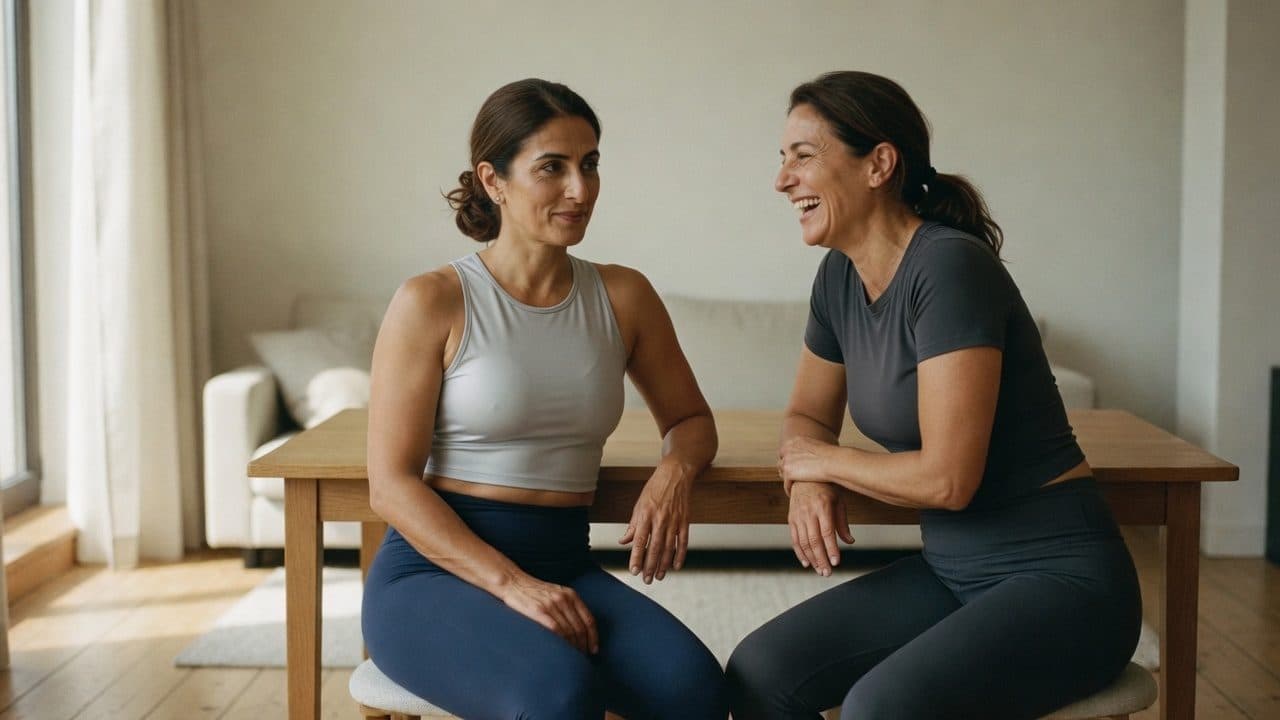
Feeling like yourself again in your 40s rarely starts with a new routine, it starts with being seen. As friendships thin and roles shift, connection often disappears quietly, and that loss is part of why midlife can feel unfamiliar. Rebuilding small, regular contact with other people is often the fastest route back to feeling like you again.
Why does feeling like 'you' disappear at the same time as your friendships?
There's a specific kind of disorientation that turns up in your 40s, the sense that you're surrounded by people yet strangely unseen by any of them. It rarely arrives as one event. It builds from years of being the one who holds things together, from the family calendar to the emotional weather in the house, never mind the mental list of who needs what. Somewhere in that work, the version of you that existed before all the holding tends to go quiet.
This matters because identity isn't something you rebuild alone in a room. It's reflected back by the people who've known you long enough to remember who you were before the responsibilities arrived. When those friendships thin out from lack of time rather than any falling out, you lose more than company. You lose the people who could tell you, convincingly, who you actually are. If that sense of disappearing has been creeping up on you, why you feel invisible in midlife is worth reading properly, not skimming.
None of this means you've let something slip. Roles genuinely multiply in your 40s, and attention is finite. The friendships that need a text or a diary invite are the ones that quietly lose out, because the people already in front of you need feeding, driving or managing right now. Recognising that pattern is the first step out of it.
What happens to friendships in your 40s, and why does it feel so sudden?
Friendships in your 40s don't usually end. They erode. The friend you once saw weekly becomes the friend you mean to text back. Diaries fill with other people's appointments before they fill with your own, and the friendships that demand effort, a drive across town, an evening kept free, lose out to the ones that need nothing at all. Over a few years that adds up to a much smaller circle than the one you started the decade with, and it rarely feels like a single decision.
The cancellations don't help. Everyone in this stage of life is juggling the same list of competing demands, which means plans get dropped more often, not less. If you've had the same friend reschedule on you three times running, what to say when a friend cancels on you again covers how to respond without writing the friendship off, because the cancelling is rarely about you.
What's happening is more mundane than a verdict on your likeability or your worth as a friend: several people hitting capacity at the same time. The friendships worth keeping are the ones that survive an honest conversation about how thin everyone is stretched.
Is loneliness really just a feeling, or does it affect your health?
It's tempting to file loneliness under 'nice to have' rather than something that matters, somewhere below sleep and movement on the list of things worth prioritising. In practice, it rarely behaves like a minor thing once it takes hold.
What tends to happen is more straightforward than it sounds. Regular contact with other people shapes how steady a day feels, what you look forward to, who notices if something's wrong. Drift away from that, and the loss shows up in mood, energy and motivation long before it shows up anywhere else.
Consistency seems to matter more than scale. It isn't the size of your social circle that counts for most, it's whether you have a handful of people you're in regular contact with. For a woman in her 40s, that's a long view worth taking seriously now rather than later.
Feeling lonely inside a full house or a busy job doesn't mean anything has gone wrong with you. It means the feeling deserves the same attention you'd give a physical symptom, and finding women going through the same thing is a sensible place to start.
How do you start rebuilding connection without overhauling your life?
Rebuilding connection in your 40s rarely needs a dramatic life audit or a new personality. A handful of low-effort, repeatable points of contact, something that doesn't depend on you finding the energy to organise something new every single week, does more over a year than one big reunion ever will. A standing coffee on the same Tuesday works. So does a regular class, or a group chat that actually gets used rather than just read.
The structure matters more than the size of the gesture. Deciding who to see and when takes energy you often don't have spare, so building routines that make the decision for you removes that barrier. Building a support network in midlife sets out how to do this without it becoming another project you have to manage on top of everything else.
Start smaller than feels meaningful. One message to one person, asking for a regular slot rather than a vague 'we should catch up'. One group, even an imperfect one, attended twice before you decide whether it's for you. Momentum here comes from repetition, not from finding the perfect friend or the ideal community on the first attempt. Waiting to feel ready first usually means waiting a long time.
- Pick one friend and ask for a standing slot, not an open invitation
- Try one group or class twice before judging it
- Let a routine make the decision so you don't have to each week
Where does movement fit into feeling like yourself again?
Movement earns its place here because it's one of the few remaining excuses most of us still have for turning up somewhere in person, at a set time, around other people. A class with the same faces most weeks builds a kind of low-stakes familiarity that's harder to get elsewhere in your 40s, when so much of life has moved onto a screen or into a solitary routine.
Twenty minutes, done regularly, in the company of people dealing with a similar stage of life, builds connection almost as a side effect of showing up, long before any big commitment or dramatic change of identity comes into it. If you're looking for where to find that, finding a workout community in midlife covers what to look for and what a good one feels like once you're inside it.
A class like this sits alongside the people who already know you well, adding a second, lower-pressure route back into regular contact with others, at a point in life when the first route has got harder to maintain.
If you want this as movement rather than another article, Awaken Barre is the twenty-minute programme I built for a body that has already changed.
Common questions
Why do I feel like I've lost myself in my 40s?
Often the people who used to reflect you back to yourself have simply drifted out of regular contact. As roles multiply and friendships thin from lack of time, the sense of who you are can feel less steady.
Can loneliness really affect your health, not just your mood?
Loneliness tends to affect more than mood once it settles in. It can also chip away at your energy and your motivation to do much else. It's a reasonable thing to take seriously rather than dismiss as a minor low mood.
How much social contact do I need before I notice a difference?
There's no fixed number. Small and regular, a weekly call or a monthly class, tends to do more than one big occasional gathering. Consistency matters more than volume.
Is it too late to rebuild friendships that have drifted?
It's rarely too late. Most friendships that have drifted did so through circumstance rather than conflict, so an honest message acknowledging the gap tends to land better than you'd expect. Start with low-pressure plans rather than one long catch-up that feels too big to organise.
Does a barre or exercise class count as 'real' connection?
Regular time in the same room as the same people builds genuine familiarity, even without the depth of close friendship. For many women in their 40s, that's a realistic second route into contact with others alongside closer friendships.