Simple Meal Prep Ideas for Midlife Women (UK)
Chrissy Sundt · Nourishment ·
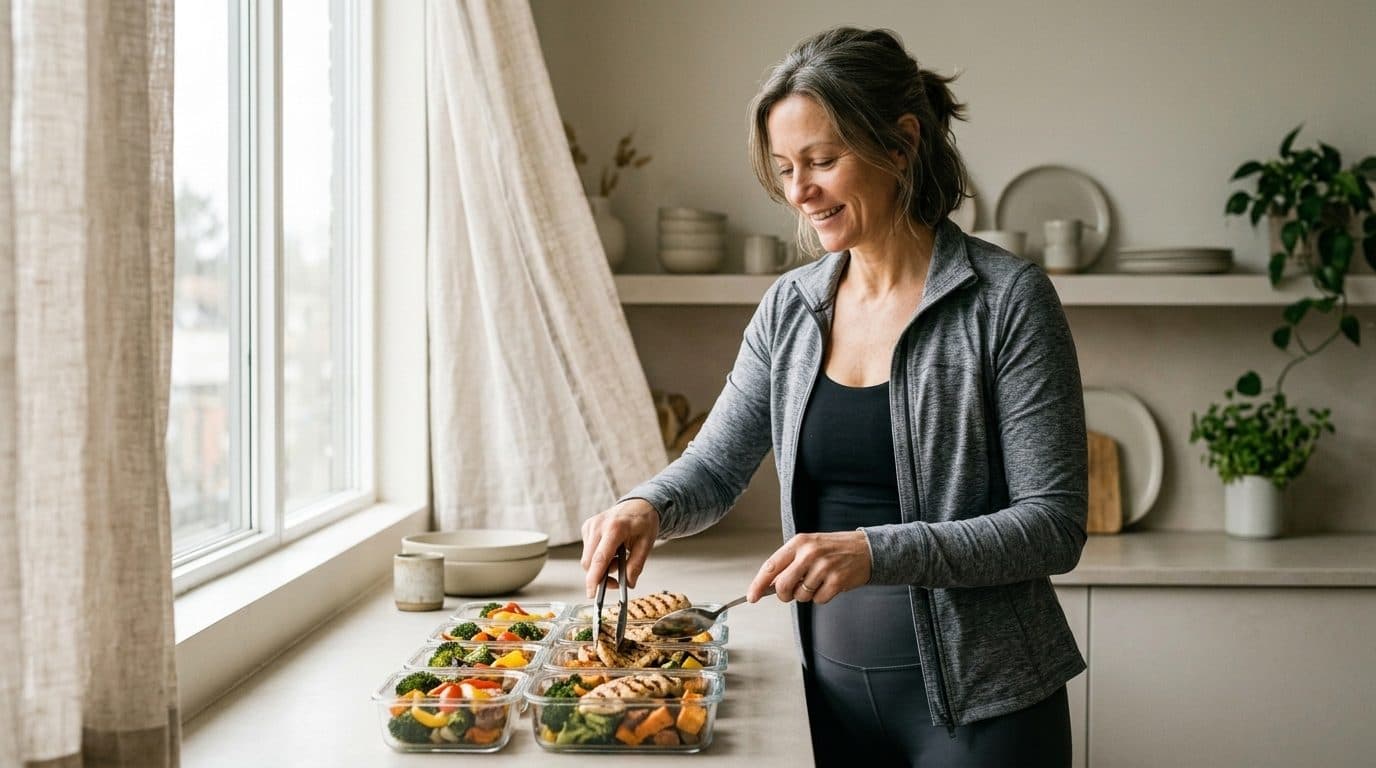
Simple meal prep for midlife women in the UK means building a weekly rhythm around a few proteins, a big tray of roasted vegetables and a grain, batch-cooked once and mixed differently through the week. The aim is fewer daily decisions, steadier energy, and meals that still feel like food you chose.
Why does meal prep feel harder to keep up with in perimenopause?
Appetite and energy in perimenopause stop following the predictable pattern they once did, and that has nothing to do with how organised you are. Some days you are genuinely hungry by eleven. Other days food is the last thing on your mind until you are running on empty by four. A meal plan built for the old rhythm keeps missing the new one, and that mismatch is exhausting long before you have even switched the oven on.
Then there is decision fatigue. By the time many women reach the end of a working day, they have made hundreds of small choices already, and 'what's for dinner' is the one that finally breaks the system. A day that has already asked a lot of you doesn't need a meal that demands more thinking on top of it.
This is why most meal prep advice aimed at twenty-somethings does not transfer well. It assumes stable hunger, stable energy, and plenty of headspace for meal planning as a hobby. Midlife meal prep works better when it is built around flexibility, a handful of repeatable components, and permission to eat slightly different things on different days without starting again from scratch.
What should actually go into a simple weekly meal prep session?
Keep the session small and repeatable. A useful structure is two or three proteins, one large tray of roasted vegetables, one cooked grain or pulse, and one sauce or dressing that can dress almost anything. Four or five components are enough to build a fortnight of different-feeling meals.
Protein is worth prioritising deliberately. Spread it across the day so no single meal has to carry all of it. Nutritionist Tina Lond-Caulk, who wrote MMM's Core Nutrition Reset, works with women through perimenopause on this kind of steady, practical approach to food.
Fibre and plant variety matter just as much as protein, and this is often the part that gets skipped when time is short. Aim for a wide range of vegetables across the week; two or three types on permanent rotation will not give you that. Lean on whole, recognisable ingredients where you can. They tend to keep you fuller and steadier between meals than convenience food does.
A realistic session takes sixty to ninety minutes, most of it hands-off while things roast or simmer. Anything longer than that stops being sustainable on a weeknight or a single free hour at the weekend.
What are easy protein-forward meals to prep for a UK week?
Start with proteins that reheat well and do not dry out: chicken thighs rather than breast, baked salmon or tinned fish, a big pot of lentils or bean chilli, and boiled eggs for the days you cannot face cooking at all. These form the backbone of most meals without needing a fresh decision each evening.
Breakfast is often the easiest place to prep ahead entirely. Overnight oats with Greek yoghurt and seeds, or a batch of frittata cut into portions, both keep well in the fridge and mean the first meal of the day is already decided before you have had your coffee.
For lunches, build a base you can vary: a jar or container of grains, roasted vegetables and a protein, topped with whatever dressing or leftover sauce is in the fridge that day. Swap the grain from rice to bulgur to new potatoes across the week and it stops feeling repetitive even though the method never changes.
Dinners can lean on the same components rearranged: the roast vegetables become a traybake with the salmon, the lentils become a soup with stock and greens, the chicken thighs go into a simple curry. Four building blocks, combined five different ways, get you through the week.
How do I meal prep without cooking five different dishes at once?
The trick is to stop thinking in whole recipes and start thinking in components that can be recombined. One tray of roasted vegetables can go into a salad, sit alongside eggs, or be blitzed into a soup. One batch of grains works under a curry one day and cold in a salad the next. This is what actually saves time, far more than any single 'quick recipe'.
Use your oven and one pan at the same time. A tray of vegetables and a tray of chicken thighs can roast together while a pot of grains or lentils simmers on the hob. Twenty minutes of active work can produce most of a week's meals if the oven and hob are doing the waiting for you.
Freeze in smaller portions. A single container that has to be defrosted whole and eaten within two days is far less useful than four smaller portions you can pull out as needed. Label them with the date, because 'I'll remember what this is' rarely holds true by week three.
Missed a prep session entirely some weeks? That's normal. Returning to the routine matters more than never breaking it.
How can meal prep actually fit around a busy week?
Pick one fixed slot. Sunday afternoon, Monday evening, whatever actually exists in your week without a fight. A recurring slot in the diary, treated the same way you would treat a standing appointment, outlasts good intentions every time.
Keep the shopping list short and repeat it. Choosing from a rotating list of six or seven proteins, five vegetables and three grains removes the need to plan from scratch each week, and it also means the ingredients are ones you already know how to cook without a recipe in front of you.
Let some meals stay unplanned on purpose. Not every dinner needs to come from the prep session, and building in one or two flexible nights, for a tin of soup, eggs on toast, or leftovers from the freezer, takes the pressure off the whole system and makes it easier to keep going.
This is a smaller, steadier way of feeding yourself. It holds up on the days energy is low as well as the days it isn't.
If the food side of this never quite settles, the Core Nutrition Reset is Tina explaining it in plain language, not another diet.
Common questions
How much meal prep is actually enough for one week?
Two or three proteins, one tray of roasted vegetables and one grain or pulse is usually enough to build most meals for a week. You do not need a full seven days of finished dishes sitting in the fridge to call it meal prep.
Is meal prep the same as a diet plan?
No. Meal prep here is about having ready components so decisions are easier through the week. Tina Lond-Caulk's approach in MMM's Core Nutrition Reset is built on steady, practical eating.
What if I don't have time to meal prep every week?
One skipped week doesn't erase the ones before it. Restart with a shorter session, even just one tray of vegetables and a pot of grains. Waiting for a full free afternoon just delays it further.
How long does simple meal prep actually take?
Most of the components in this approach roast or simmer unattended, so a session is often sixty to ninety minutes with only twenty minutes or so of hands-on work.
Can meal prep help with energy dips during perimenopause?
Having protein and food ready to hand removes the temptation to skip meals or grab whatever is nearest when energy drops. It's about steadier, easier eating through the day.