Meal Ideas for Perimenopause (UK): What to Actually Put on Your Plate
Chrissy Sundt · Nourishment ·
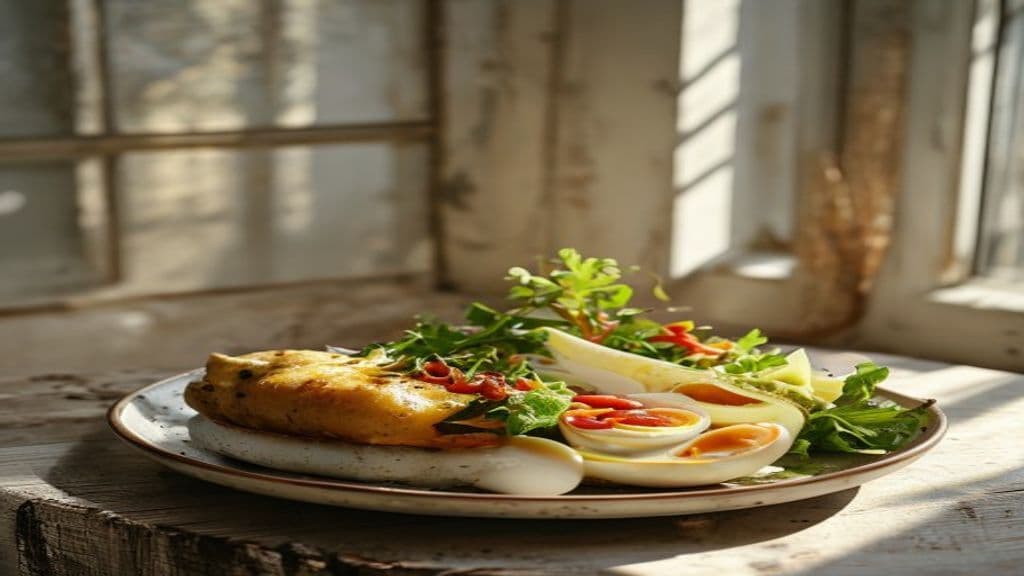
Good perimenopause meals in the UK are built round a protein source (eggs, tinned fish, chicken, lentils, tofu), plenty of colourful veg or fruit, a slower-release carbohydrate like oats or wholemeal bread, and a source of fat such as olive oil or nuts. Think porridge with nut butter, jacket potato with beans and salad, or a tray-baked chicken and veg dinner, rather than skipped meals or a strict plan.
What should a perimenopause meal actually include?
You don't need a separate shopping list or a cupboard full of supplements. Most perimenopause meals work better when they're built round three things: protein, fibre and colour. Protein at each meal, roughly a palm-sized portion of eggs, fish, chicken, tofu, beans or lentils, helps you feel fuller for longer and supports the strength work you might be doing elsewhere in your week. Fibre from vegetables, fruit, wholegrains and pulses keeps digestion moving and helps a meal feel more satisfying and filling for longer.
Colour is the easy shorthand for variety. Different coloured veg and fruit bring different vitamins and plant compounds, so a plate that looks visually varied is usually doing more nutritional work than one that's beige and repetitive. You don't need to weigh anything or hit a target number. Half a plate of veg, a palm of protein, a cupped hand of carbohydrate and a thumb of fat is a rough, forgiving guide that works whether you're eating a fry-up or a curry.
This isn't a diet to follow perfectly. It's a smarter way to build a plate so your energy, focus and strength have something reliable to run on, especially as your body's needs shift through your forties and fifties. If a meal is missing one of these elements, it's not a failure, it's just information for the next one.
What are some easy breakfast ideas for perimenopause?
Breakfast is often the meal that gets skipped or rushed, which can leave you running on caffeine until lunch and then ravenous by mid-afternoon. A few reliable, UK-cupboard options make a real difference. Porridge oats made with milk rather than water, topped with a spoon of peanut or almond butter and some berries, gives you slow-release carbohydrate, protein and fat in one bowl. Overnight oats made the night before in a jar work the same way for anyone short on morning time.
Greek yoghurt with mixed seeds, a chopped apple and a drizzle of honey is another quick option that leans heavier on protein. Two eggs, scrambled or poached, on wholemeal toast with grilled tomatoes covers protein and fibre without needing much thought. If you're eating on the move, a shop-bought protein yoghurt or a couple of boiled eggs from the fridge with an oatcake or two will do more for your afternoon than a pastry from the station kiosk.
The aim isn't a perfect breakfast, it's a breakfast that includes protein rather than just carbohydrate and caffeine. If your current breakfast is a coffee and not much else, adding a boiled egg or a small pot of yoghurt alongside it is a realistic first change, not a full overhaul.
- Porridge with nut butter, berries and a splash of milk
- Greek yoghurt, mixed seeds and chopped fruit
- Two eggs on wholemeal toast with grilled tomatoes
- Overnight oats prepared the night before for busy mornings
What lunch and dinner ideas keep energy steady through the day?
Lunches and dinners are where it's easiest to fall back on whatever's quickest, which often means something carbohydrate-heavy with little protein or veg. A jacket potato with baked beans and a side salad is a genuinely solid, affordable UK staple when you add a source of protein, try grated cheese, tuna or a boiled egg alongside the beans. Tinned fish is worth keeping in the cupboard generally: mackerel, salmon or sardines on toast, or flaked through a salad with new potatoes, takes minutes and needs no planning.
For dinner, a tray bake is one of the least effortful ways to get a full plate right. Chicken thighs, chopped vegetables like peppers, courgette and red onion, and a tin of chickpeas roasted together with olive oil and whatever herbs you have covers protein, fibre and colour in one tray with almost no washing up. A simple lentil dahl with rice or flatbread does the same for a meat-free night, lentils bring both protein and fibre in one ingredient.
Stir fries are another reliable option: strips of chicken, tofu or prawns with a bag of pre-chopped stir fry veg and noodles or rice, ready in fifteen minutes. None of these need special ingredients or a trip to a specialist shop, they're built from things most UK supermarkets stock as basics. The point isn't novelty, it's having two or three of these in rotation so you're not deciding from scratch every evening.
- Jacket potato with beans, tuna or a boiled egg and salad
- Tray-baked chicken thighs with mixed vegetables and chickpeas
- Lentil dahl with rice or wholemeal flatbread
- Stir fry with chicken, tofu or prawns and pre-chopped veg
What snacks actually help with the afternoon energy dip?
A three or four o'clock energy dip is a familiar pattern for a lot of women, and it's often a snack problem as much as anything else. A biscuit or a sugary drink gives a quick lift and then drops you lower than before. Snacks that pair protein or fat with a little fibre tend to hold you steadier until your next meal. A small handful of nuts with a piece of fruit, oatcakes with hummus or nut butter, or a pot of cottage cheese all do this without much preparation.
Boiled eggs are an underrated snack, cheap, portable and entirely protein, and they'll keep in the fridge for days if you boil a batch at the start of the week. Edamame beans, either from the freezer or in ready-to-eat pouches, are another quick option with both protein and fibre. If you want something sweeter, a square or two of dark chocolate alongside a handful of nuts satisfies the craving while still including some protein and fat alongside it.
None of this means sugar or biscuits are off limits. It means that if the three o'clock dip is a daily pattern, building in a snack that includes protein an hour or so beforehand is a more useful fix than trying to white-knuckle through it on willpower alone.
- Boiled eggs, prepared in a batch at the start of the week
- Oatcakes with hummus or nut butter
- A small handful of nuts with a piece of fruit
- Edamame beans or a pot of cottage cheese
Do I need to cut out sugar, caffeine or alcohol in perimenopause?
This is one of the questions I get asked most, usually by someone who's already braced for bad news. The honest answer is no, not entirely, and treating food as a list of banned items tends to backfire before long. It's not a diet, it's not restrictive, it's a smarter way to nourish your body during a stage of change. What tends to help more than elimination is noticing patterns: does a coffee on an empty stomach leave you jittery by eleven, does a big glass of wine disrupt your sleep more than it used to.
Rather than cutting caffeine or alcohol out completely, many women find it more sustainable to shift the timing or the amount slightly, an earlier last coffee, a smaller glass, a meal underneath the wine rather than an empty stomach. The same goes for sugar. A biscuit with your afternoon tea isn't undoing anything if the rest of your day includes protein and fibre. It's the pattern across a week that matters, not a single treat on a single day.
If you notice a specific food or drink consistently affecting your sleep, mood or energy, that's useful information worth acting on, not because you're doing something wrong, but because your body is responding differently than it used to. Adjust around what you actually notice in yourself rather than a generic list of things you're told to avoid.
Common questions
Is intermittent fasting a good idea in perimenopause?
It affects everyone differently, and some women find long fasting windows leave them tired or irritable during this stage. Rather than following a fasting protocol because it's popular, pay attention to how you actually feel, and prioritise protein and regular meals if skipping food leaves you flat.
How much protein should I be eating each day?
A simple, workable guide is a palm-sized portion of protein at each main meal, roughly three times a day. Exact needs vary by size and activity level, so treat this as a starting point rather than a strict target.
What if I don't have time to cook from scratch most nights?
Batch-cook a base like roast chicken, boiled eggs or cooked lentils at the weekend so you can build meals quickly in the week. Tinned fish, frozen veg and pre-chopped stir fry packs are entirely legitimate shortcuts, not a compromise.
Can I still eat toast, pasta and potatoes?
Yes. Carbohydrates aren't the enemy, wholemeal or higher-fibre versions simply sit alongside protein and veg a little more steadily than refined versions eaten on their own. There's no need to remove them from your plate.