The Real Rollercoaster isn’t Menopause…it’s Perimenopause
Chrissy Sundt · Connection ·
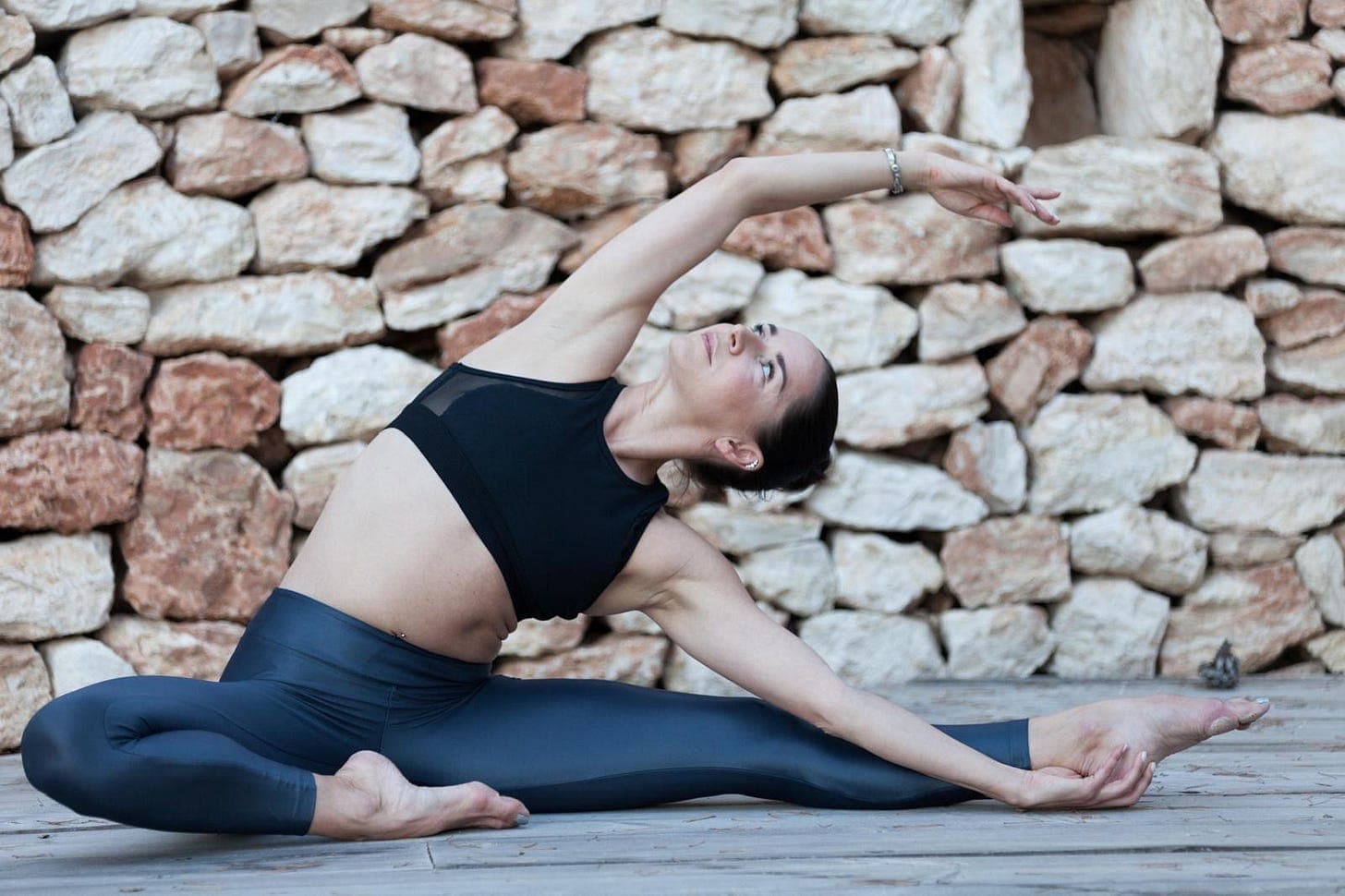
Menopause is a single date. Perimenopause is the rollercoaster: shifting cycles, sleep changes, mood and energy swings that can last years before that date arrives. Naming the phase early helps women stop blaming discipline and start matching movement, rest and support to the terrain they are actually on.
I remember the moment, but not as a single conversation. It unfolded slowly, over the course of a weekend.
My lovely friend and I had escaped our children and run away to Mykonos on a short beach holiday. The kind where days blur into each other. Sun, salt air, long lunches, easy conversation and too much rosé.
At some point early on, I noticed a small pot of cream in the hotel bathroom. It caught my attention, but I didn’t think too much of it.
Later that day, almost casually, it came up. She mentioned HRT. Not in a big, dramatic way. Just woven into conversation. Her sleep had been off. Her stress levels were incredibly high. She was figuring things out.
And then over the next couple of days, the conversation kept returning. In snippets. On walks down the beach, over Greek coffee. Getting ready for dinner.
Symptoms. Hormones. What she had been experiencing.
I remember listening, quietly at first and then feeling something shift. Not fear. Not even surprise. More like a slow, dawning awareness.
As if a blindfold had been gently lifted.
Because until that weekend, I had still been holding onto the idea that menopause was something that happened later. A moment. A line you crossed. Something that had happened to my mother but I hadn’t really clocked that that would be me one day.
I had no idea the real story had already begun.
We talk about menopause like it is the main event. But the truth is, menopause is just a date. Perimenopause is the rollercoaster.
It is the phase leading up to that date where everything starts to shift. Quietly at first. Then all at once.
And here’s the truth, hormones do not decline in a neat, predictable way. They fluctuate. Oestrogen rises. Drops. Spikes again. Progesterone begins to fall earlier than most of us realise.
And in that instability, we feel it. Not as a clear diagnosis. But as a collection of symptoms that feel disconnected, confusing and often deeply personal.
This is where so many women begin to question themselves.
Mood swings that feel out of character.
A brain that suddenly feels foggy or slower.
Sleep that becomes unreliable.
Cycles that shift, sometimes dramatically.
And because no one has joined the dots for us, we internalise it. We think we are not coping as well as we used to. That we need to push harder, that something about us has changed in a way we should be able to fix.
But this is not a personal failure. It is a physiological transition.
Looking back, I can see how late I was to the conversation. Not because I was not paying attention.
But because no one around me was really talking about it in a way that made it land early enough.
Even friends and clients who were already navigating it were not necessarily calling it perimenopause. It was still framed as something that happened later.
So I carried on as normal. Training in the same way. Pushing through fatigue. Ignoring the signals. Until that weekend.
A quiet series of conversations that changed how I saw everything.
As a fitness professional, that realisation hit deeply because I needed to educate myself (the process is ongoing) and this phase demands a different approach.
Perimenopause is not the time to double down on intensity and override your body. It is the time to move more intelligently.
To support your nervous system, not constantly push against it.
To build strength while prioritising recovery.
To understand that sleep, stress and hormones are now part of the same conversation.
This is why I created The Midlife Movement Method. Because women do not need more pressure in this phase.
They need clarity and community.
They need understanding.
They need a way of moving that works with their changing physiology.
When you understand perimenopause early, everything begins to shift.
You stop blaming yourself. You start recognising patterns. You begin to respond, rather than react.
This is not a decline.
It is a transition.
And when you meet it with the right knowledge, it becomes something else entirely.
A recalibration.
A refinement.
A more intelligent way to move, live and feel.
If this resonates, this is exactly the work we are doing inside The Midlife Movement Method.
And if you are at the beginning of this journey, Awaken Barre is your starting point.
A way to reconnect with your body, intelligently and sustainably, in midlife.
Love Your Core - Midlife Movement that works
First published in The Midlife Movement, Chrissy’s newsletter.
Common questions
What is the difference between menopause and perimenopause?
Menopause is a single date, a line you cross. Perimenopause is the phase leading up to it, when hormones like oestrogen and progesterone begin to fluctuate and shift, often years before most women connect what they are feeling to that word at all.
What are common signs of perimenopause?
Mood swings that feel out of character, a brain that feels foggy or slower, sleep that becomes unreliable, and cycles that shift, sometimes dramatically. These can feel disconnected and confusing, especially when no one has joined the dots to explain what is happening.
Why do women often miss the early signs of perimenopause?
Because it is still commonly framed as something that happens later in life, many women keep training and living as normal, pushing through fatigue and ignoring signals, until a conversation or moment makes the pattern impossible to ignore.
Should you change how you exercise during perimenopause?
Chrissy suggests this phase calls for moving more intelligently rather than doubling down on intensity, supporting the nervous system instead of constantly pushing against it, and building strength while prioritising recovery, rather than overriding the body.
What is The Midlife Movement Method?
It is the approach Chrissy created for women navigating this phase, offering clarity, community and understanding instead of added pressure, built around a way of moving that works with the body's changing physiology rather than against it.