Barre for Menopause: Why Twenty Minutes Is Enough to Rebuild Strength and Confidence
Chrissy Sundt · Mindful Movement ·
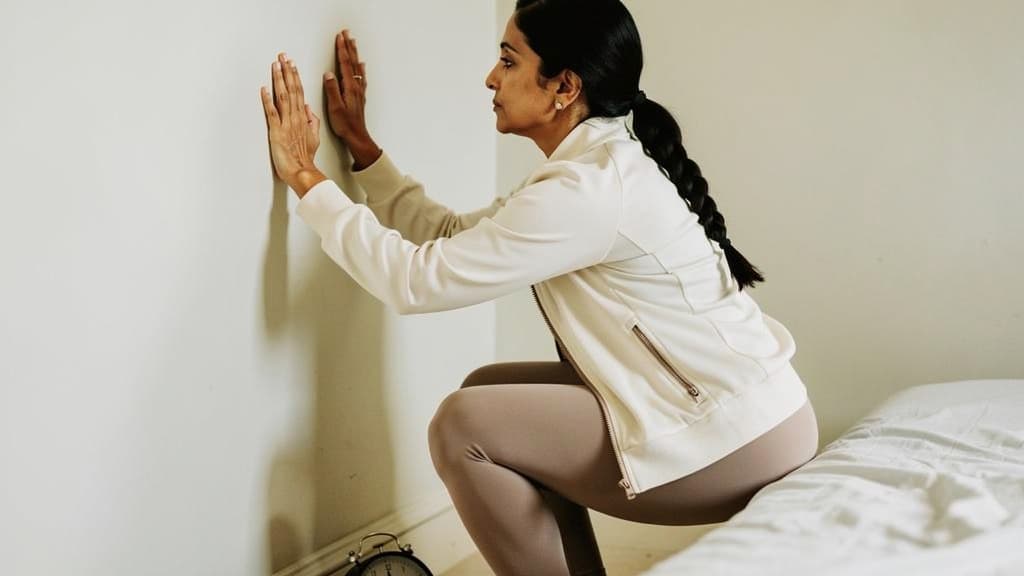
Barre for menopause means short, controlled strength and mobility sessions built around small ballet-inspired movements at a support rail, done at an intensity chosen for this stage of life rather than carried over from an earlier one. Awaken Barre sessions run around 20 minutes, need no dance background, and focus on precision over volume to build strength, balance and confidence in a changing body.
Why does menopause change what your workouts should look like?
Perimenopause changes the terrain, not just the scenery. Your body responds differently to training at this stage of life, so training styles that worked well in your twenties and thirties can start to feel like they are working against you rather than for you. High-impact, high-volume routines built on push-harder, sweat-more logic are using a map for a landscape you are no longer standing in.
Barre approaches training from a different starting point. It works within small ranges of motion, at a controlled tempo, using isometric holds and slow pulses rather than large ballistic movements. That matters more in midlife because fascia responds to patience rather than force, and consistency compounds more reliably than intensity does. Barre's structure, low impact, deliberately precise, reflects that same approach.
Prolonged high-intensity effort can leave you feeling more depleted rather than stronger, especially when life already feels demanding. Barre keeps intensity contained and intelligent: short bursts, controlled breathing, deep core engagement, rather than the badge-of-honour approach of leaving everything on the floor. That is not a lesser workout, it is a differently calibrated one.
This is why barre for menopause is a genuinely different search from barre workout in general: the method needs choosing deliberately for this stage, not simply carried over from an earlier one. Awaken Barre is built around this recalibration, not adapted from a class designed for a different body and decade.
Do you need any dance experience to do barre in midlife?
No, and this is the single biggest misconception about barre, one that stops women trying it who would otherwise take to it immediately. Barre borrows some vocabulary and positioning from ballet, a small first position, a lifted posture through the spine, but it is not a ballet class and nobody is marking your turnout or the line of your leg. Nobody needs prior dance training, natural flexibility or rhythm to begin.
The barre itself is simply a support, functionally no different to the back of a sturdy kitchen chair, which is exactly what most women use for Awaken Barre sessions at home. It exists to give you a stable point of contact so you can work on balance, control and small stabilising movements without worrying about losing your footing. Think of it as a spotter for your standing leg, not a piece of dance equipment you need to master.
What barre actually asks of you is patience and attention rather than athleticism. You are working small, controlled ranges of motion, tiny pulses, slow lowers, held positions, so the skill being built is body awareness rather than choreography. If you can hold onto a chair and follow simple instructions, you already have what you need to start.
This matters especially if you have fallen out of exercise altogether and worry that starting again means walking into a room where everyone else already knows what they are doing. Barre for midlife women is deliberately built as a way back in, not a test designed to catch you out.
What actually happens in a 20-minute Awaken Barre session?
A session is short by design, not by compromise. Twenty minutes is enough time to properly warm the joints, work through a sequence of standing and floor-based holds at the barre or chair, and finish with a controlled stretch, without asking your body for more volume than a busy, changing life can actually recover from.
There is no jumping, no high-impact cardio and no attempt to leave you breathless as proof it worked. The intensity comes from precision, small movements held for slightly longer than feels comfortable, tempo changes, tiny ranges of motion, rather than from doing more of something. That is deliberate: in perimenopause, your body responds to how well a movement is done far more than to how many times it is repeated.
Because sessions are this contained, they fit around a day that barely has room to spare, and they do not leave you so depleted that the rest of your day suffers for it. Missing a day does not undo the last one. The format is built to be returned to, not maintained perfectly.
- A short warm-up to mobilise hips, spine and shoulders and bring attention into the body
- Standing barre work: small pulses and holds targeting legs, glutes and the deep core
- A floor-based section for core and postural strength, working with control rather than repetitions
- A brief cool-down and stretch to close the session
What can barre realistically do for you in perimenopause?
This needs an honest answer, because it is not medical advice and it does not treat, cure or prevent any menopause symptom, hormonal or otherwise. What barre can realistically offer is a way to build and experience strength, stability and confidence in a body that may currently feel unfamiliar to you.
Regular, controlled strength and mobility work builds capability: better balance when getting up from the floor, more control on stairs, steadier positions when carrying, reaching or bending, a stronger deep core to support your everyday posture. These are things you can feel and notice for yourself, session by session, without anyone needing to promise you a specific outcome in advance.
There is also the experience of movement itself. The sense of not quite recognising your own body, common enough at this stage of life to be worth naming, can shift through consistent, gentle, intelligent practice, from a body you are constantly monitoring to one you inhabit and trust again. That shift, from managing your body to moving in it, is a real and valuable outcome of training, even without any claim about specific symptoms.
If you are managing symptoms that concern you medically, that is a conversation for your GP or a specialist, not a fitness programme. What Awaken Barre offers alongside that is a way to keep building strength and comfort in movement regardless of what else is happening, at a pace and intensity designed for exactly this stage of life.
How do you know if now is the right time to start?
If you are asking this question, the honest answer is usually yes, and the hesitation itself is often the real barrier rather than any physical readiness issue. Barre for menopause was built specifically for women who have fallen out of the exercise habit, not for those maintaining an existing routine, so being out of practice is the expected starting point, not a disqualifier.
You do not need a baseline of fitness, and you do not need to get in shape before you start. If you can stand at a chair and follow along, you can begin. The point of the twenty-minute format and the low-impact approach is precisely to remove the usual reasons midlife women delay starting: not enough time, not enough energy, worry about being the least fit person in the room.
It is also worth being honest about consistency. Missing sessions, some weeks more than others, does not erase whatever progress you have already built. This is not a habit-streak app where one gap resets you to zero. Returning matters more than perfection, and a slower, steadier return is more sustainable through a stage of life where energy is genuinely unpredictable.
The clearest sign it is the right time is simply that your current approach to movement, or the absence of one, is not working for the body you are in now. That is not failure. It is information that the terrain has changed and the map needs to change with it, which is exactly what barre for menopause is designed to do.
Common questions
Do I need any equipment to try barre at home?
Just a sturdy chair or worktop to hold for balance, comfortable clothes and bare feet or grip socks. No dedicated barre, mat or dumbbells are required to get started.
Is barre safe if I have joint pain or stiffness?
That isn't something a fitness programme can answer for you. If you have an existing joint condition or ongoing pain, please speak to your GP or a specialist before starting barre or any new exercise.
How is barre different from Pilates?
Both work the deep core and favour control over momentum, but barre adds a standing, balance-based element at a support rail or chair alongside floor work. Awaken Barre blends both approaches into a single short session.
How often should I do a 20-minute barre session?
There is no single right number. Because sessions are short and low-impact, many women build toward a few sessions a week, returning after a missed week rather than starting again from nothing.
What is the difference between MMM Barre and Awaken Barre?
MMM Barre is the name of the barre-based discipline within the Midlife Movement Method. Awaken Barre is the specific programme you join to learn it.