The Best Evening Wind-Down Bath Routine for Better Sleep in Midlife
Chrissy Sundt · Sleep ·
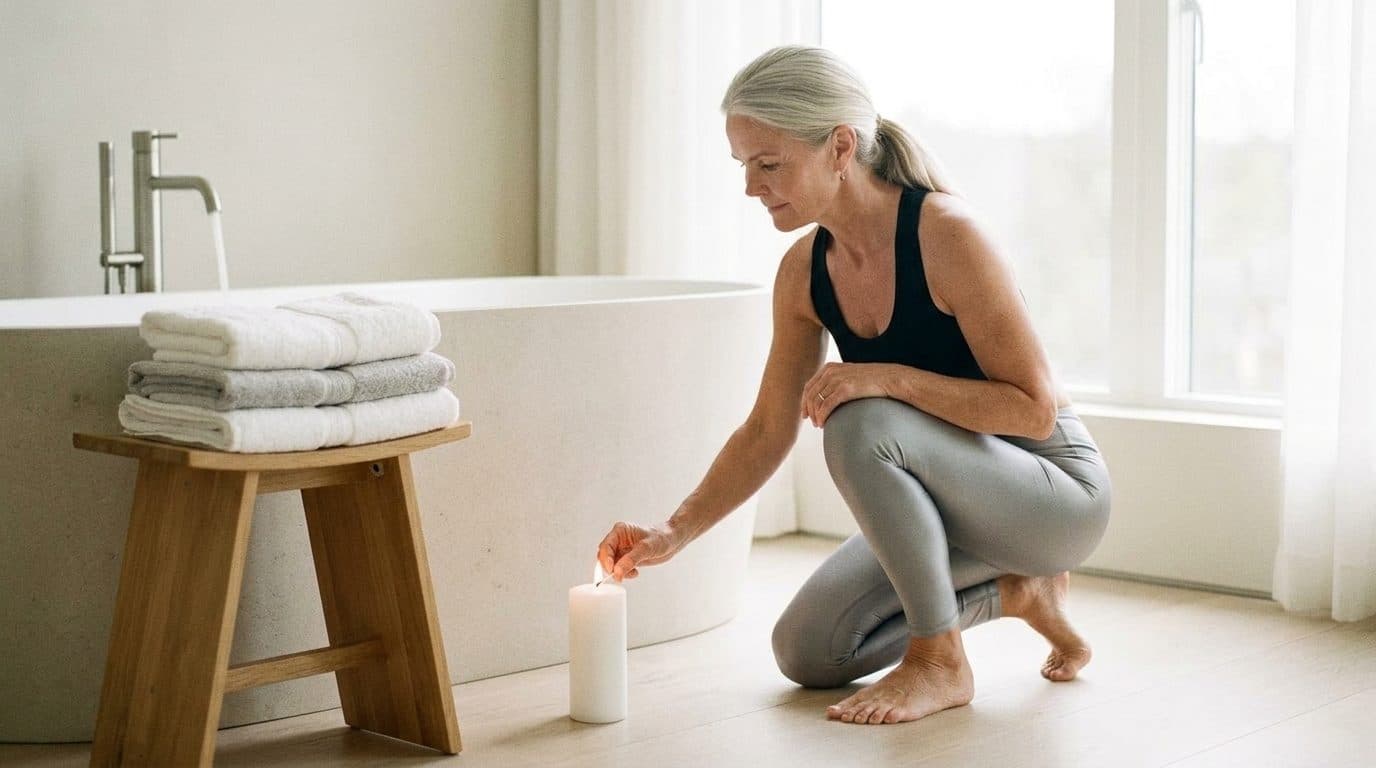
A warm bath about an hour before bed works because it raises your skin temperature, which then speeds up the drop in core temperature once you get out, the same drop your body needs to fall asleep. Pair it with dim light and a consistent bedtime, and it becomes a real sleep cue.
Why does a warm bath actually help you fall asleep?
There's a simple explanation for why a hot bath sends you toward sleep rather than away from it: your body needs to drop its core temperature to fall asleep and stay asleep. A hot bath does the opposite in the moment, pushing blood to the surface of your skin and raising your temperature there. But that is exactly the trick. Once you step out, all that surface blood dumps heat fast, and your core temperature falls further and faster than it would have done on its own.
In midlife this matters more, not less. Sleep tends to be lighter and easier to disturb than it used to be, so anything that gives your body a clearer, stronger signal to power down is worth having in the evening. A bath will not fix a genuinely difficult night. It is one dependable lever among several, and it happens to be one you can actually control.
You do not need the water scalding. Warm enough to make you sweat lightly is enough, roughly body temperature plus a few degrees. Fifteen to twenty minutes is plenty. Longer than that and you are mostly just using up time you could spend on the rest of the wind-down instead.
What's the best time to have your evening bath?
Timing is what separates a bath that helps you sleep from a bath that is simply pleasant. The temperature drop your body needs happens after you get out of the water, as the heat you have pulled to your skin disperses into the cooler air of the room. That makes the useful window roughly an hour before you actually want to be asleep. Climb straight into bed from the bath and you miss it.
Get in too close to lights-out and you go to bed still flushed and warm, working against the very mechanism you were trying to use. Bath too early in the evening, hours before bed, and the effect has faded by the time you need it. An hour out is a sensible starting point. Try it for a week or two, then shift it earlier or later depending on how you actually sleep.
In practice that might mean a bath at half past nine for a ten thirty bedtime, with the last twenty minutes before sleep spent somewhere dim and quiet instead of scrolling. Think of the bath as the anchor the rest of the evening hangs off. Plan the twenty minutes either side of it, and the routine holds together.
What should the rest of the wind-down routine include?
A wind-down routine works less because of any single ingredient and more because it becomes a reliable cue. Your brain learns to associate the sequence, bath, dim light, bed, with sleep, the same way it has learned other repeated sequences mean other things.
That means what happens after the bath matters as much as the bath itself. Keep the lights low. Switching on a bright bathroom or bedroom light straight afterwards undoes the point of the dimness you just created. Leave the phone outside the bedroom, or at least face down and silenced, since a bright screen an hour before bed works directly against the dimming light your body is expecting. If the bed doubles as your spot for reading, scrolling or working during the day, your brain has a harder time reading it as a cue for sleep at night.
Consistency does more for sleep than chasing one perfect night. A short wind-down routine you can actually repeat most evenings will do more for you over several weeks than an elaborate ritual you only manage twice.
What if hot flushes or night sweats make an evening bath complicated?
If your evenings already include hot flushes or unpredictable waking, a hot bath before bed can sound like the last thing you need. That is a fair instinct. Adjust the routine instead of dropping it altogether.
A cooler bath, warm rather than hot, can still give you the surface-to-core temperature swing without adding heat to a night that already runs hot. Pay attention to the bedroom itself too. A cool room, somewhere close to 18°C, and breathable bedding you can throw off without fully waking, make it easier for your body to do what it is already trying to do. An earlier bath, well before the hour-out window, can also sit better on evenings when flushes tend to build as the night goes on.
None of this is about solving perimenopause, and a bath will not stop a flush arriving at 3am. It is about giving your evening a structure that works with what your body is actually doing right now. The routine that suited you a decade ago is not the one you need tonight. Adjust the details and keep the anchor.
Does anything else in the evening cancel out the bath?
A bath is one part of the evening, and a few habits either side of it can undo a lot of its work. Caffeine lingers in your system far longer than most people expect, so a coffee at four in the afternoon can still be affecting you at ten that night, even if you feel like you fall asleep fine.
Alcohol causes a similar problem in a different way. It can make you drop off faster, which is exactly why it gets mistaken for a sleep aid, but it fragments sleep later in the night and interferes with the deeper stages that leave you feeling rested. A glass of wine in the bath might feel like part of the ritual. It is working against the very thing the ritual is for.
The same goes for bright light and screens once you are out of the bath. Your body reads light as a signal about what time it is, and a bright kitchen or a phone screen an hour before bed tells it something quite different from the dim room you have just prepared it for. None of this needs to be perfect. A handful of good evenings each week will do more for your sleep than one flawless night followed by a fortnight of forgetting.
- Last coffee by early-to-mid afternoon, not after lunch if you are sensitive to it
- Bath around an hour before your target bedtime, warm rather than scalding
- Lights dimmed and phone out of reach once you are out of the bath
- Bedroom cool, around 18°C, with bedding you can adjust in the night
If you want this as movement rather than another article, Awaken Barre is the twenty-minute programme I built for a body that has already changed.
Common questions
How long before bed should I have a bath?
Around an hour before you want to be asleep works best. That gives your body time to release the heat it has pulled to the surface, which is what actually triggers the core temperature drop sleep depends on.
What water temperature is best for a wind-down bath?
Warm rather than scalding, enough to make you sweat lightly. The goal is a gentle rise in skin temperature you can shed afterwards, not an intense heat that leaves you overstimulated before bed.
Is a shower just as good as a bath?
A shower can create a similar effect if it is warm and long enough to raise your skin temperature, though a bath tends to hold the heat for longer. Either works better than neither.
Should I avoid baths altogether if I get night sweats?
Not necessarily. Try a cooler bath earlier in the evening and keep the bedroom itself cool afterwards. Adjust the routine to suit your evenings and keep going with it.
What if I don't have time for a full bath most nights?
A shorter bath or warm shower still gives you the same temperature mechanism, and doing it most evenings matters more than any single perfect version of the routine.