How to Build an Evening Wind-Down Routine for Better Sleep in Midlife
Chrissy Sundt · Rest & Illumination ·
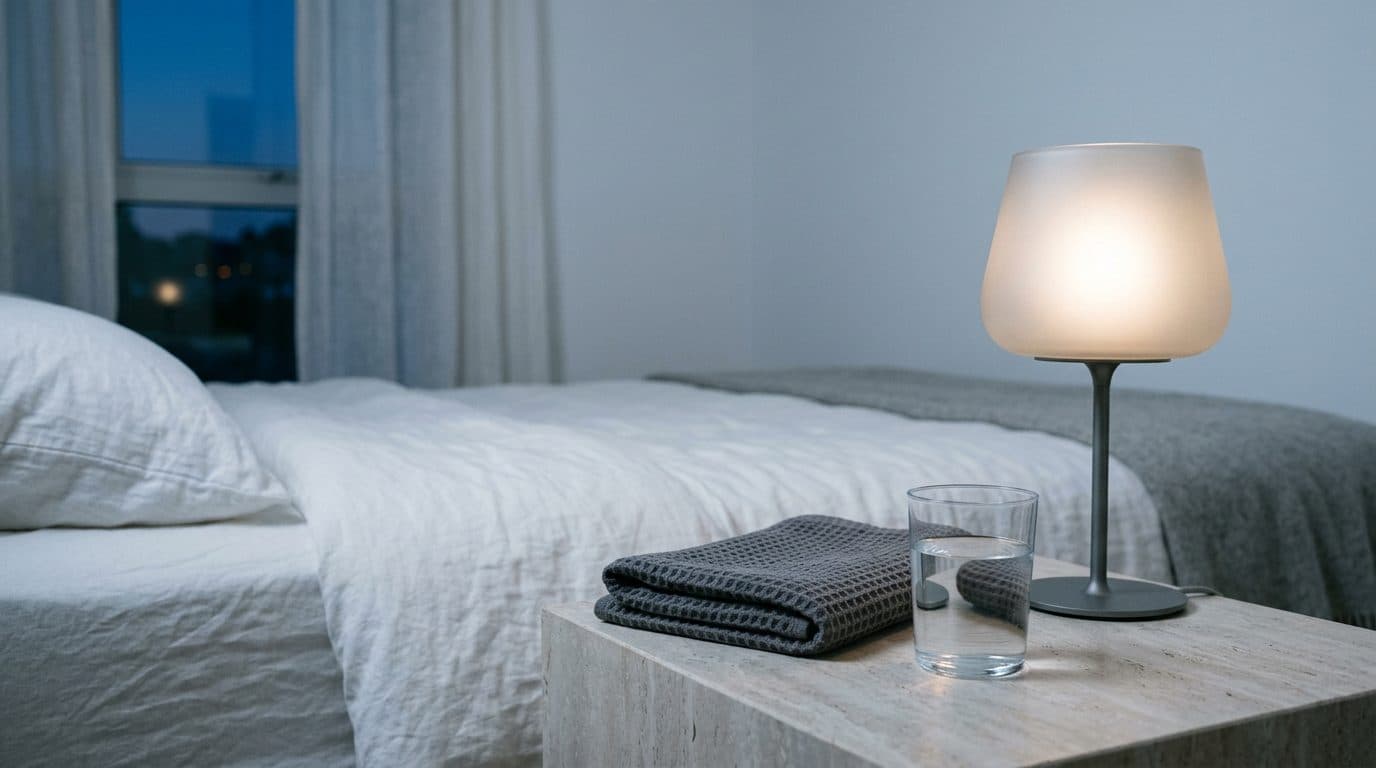
A good evening wind-down routine for midlife sleep starts 60 to 90 minutes before bed, lowers light and stimulation gradually, and repeats the same two or three steps each night, such as a warm bath, a few minutes of slow breathing and dimming screens, so your nervous system learns what is coming next.
Why Does Sleep Get Harder in Midlife, Even With a Good Routine?
If you've always slept well and now find yourself staring at the ceiling at three in the morning, the routine itself is probably not the real problem. The hormonal shifts of perimenopause change how you fall asleep and how easily you stay there. Oestrogen and progesterone both influence body temperature regulation and the depth of your sleep stages, so a wind-down that worked for years can quietly stop being enough on its own, even though nothing about your evening has changed.
Your nervous system doesn't distinguish neatly between a stressful afternoon and a calm evening. If you've been running on alert since early morning, through a long commute, work pressure or caring for other people, your body doesn't simply downshift because you've closed your laptop or turned off the television. It needs a deliberate transition into rest. Permission to rest isn't the same thing.
This is why a wind-down routine matters more in midlife than it did at thirty, even though you probably have less patience for adding anything new to your evening. It isn't about another task on an already full list. It's about giving your body a repeated, recognisable signal that the day is ending, which is often the piece missing once sleep has quietly become harder. If this feels like a pattern rather than a bad week, how to tell if you need to slow down goes into that distinction in more depth.
What Should an Evening Wind-Down Routine Include?
A wind-down routine doesn't need to be elaborate to work. What matters more than any single step is that your body temperature drops, the light around you dims, and you repeat roughly the same sequence most nights. Your body picks up on repetition more than on novelty, so the same two or three steps done nightly will do more for your sleep than an elaborate ritual you only manage once a week.
For many women in midlife, a warm bath or shower an hour or so before bed works well, partly because the drop in body temperature afterwards mirrors the natural dip that happens as you fall asleep. Low light matters too: lamps instead of overhead lights, with anything screen-based moved earlier in the evening instead of saved for right before bed. None of this has to be fancy. It just has to happen on most nights, even the nights you don't particularly feel like it.
If you want a fuller breakdown of how a bath-based routine fits together, the best evening wind-down bath routine for better sleep in midlife goes through it step by step, right down to water temperature and timing.
- A consistent start time, roughly the same each night
- Dimmer, warmer light for the last hour before bed
- One repeated calming action, such as a bath, stretch or breathing exercise
- Screens finished well before the final ten minutes
How Long Before Bed Should You Start Winding Down?
Most women do best starting to wind down somewhere between sixty and ninety minutes before they want to be asleep, well before they actually climb into bed. That gives your nervous system time to come down from an alert, task-focused state into something calmer. Expecting it to manage that whole transition in the two minutes between turning off the light and trying to fall asleep is asking too much.
This is the territory of nervous system regulation: you slow the body down on purpose. Tiredness alone won't do it for you. If the idea of your nervous system staying switched on well into the evening sounds familiar, nervous system regulation for midlife women goes into how that downshift works and how to put it into practice on an ordinary evening.
None of this needs to be rigid. Some nights you'll have forty minutes, other nights closer to ninety, and both are fine. Consistency over intensity applies here as much as it does to training: a shorter wind-down done most nights will serve you better than a perfect ninety-minute ritual you only manage occasionally.
What Should You Avoid in the Hour Before Bed?
Bright overhead lighting and phone or laptop screens are the most obvious disruptors, because both tell your brain it's still daytime at exactly the point you're trying to convince it otherwise. A late, hard training session falls into a similar category. Intensity has its place. It isn't the hour before bed. Your body is better served there by something slow and undemanding, not another dose of effort.
Big, unresolved conversations are best avoided too, where you can help it. Working through a difficult decision, or a tense exchange with a partner or a teenager, right before bed tends to leave your mind busy exactly when you need it quiet. If something needs addressing, it's often better handled earlier in the evening, keeping the wind-down separate and for afterwards.
For a lot of women, the harder part isn't knowing what to avoid, it's the stopping itself. If you recognise the feeling of staying switched on long after the day's work is done, how to switch off after a busy day goes into why that happens and what helps.
How Do You Know If Your Wind-Down Routine Isn't Working?
A wind-down routine isn't working if you're still lying awake twenty minutes after finishing it, night after night, or if it's started to feel like one more thing on a long list instead of something that settles you. Either one is simply useful information. Sleep in midlife is more sensitive to what's happening in the rest of your day than it used to be, so the routine itself is rarely the whole story.
Before changing the routine entirely, check what's happening earlier in the day. A body that hasn't moved much, or has been tense and upright for ten hours straight, often resists winding down regardless of how good the evening ritual is. Sometimes the fix is simply an earlier routine, started before the tension has had all day to build.
If you're curious what's really happening while you sleep, beyond simply how you feel in the morning, a wearable can be a reasonable way to check your sense of things against what's actually going on each night. But the routine still matters more than the tracking, and it's the one thing fully within your control.
If you want this as movement rather than another article, Awaken Barre is the twenty-minute programme I built for a body that has already changed.
Common questions
How long should an evening wind-down routine be?
Somewhere between 20 and 90 minutes works for most women, depending on the night. What matters more than duration is repeating the same calming steps most evenings, so your body recognises the signal.
Can a wind-down routine help with perimenopause night waking?
It won't stop hormonal fluctuations, but a consistent routine can make it easier to settle back down if you do wake, because your nervous system already knows the steps that come before sleep.
Is it too late to start a wind-down routine if I've never had one?
No. It takes a few weeks of consistent repetition before your body reliably associates the routine with sleep, so start simply and keep it the same most nights. Changing it often defeats the point.
Should I avoid exercise entirely in the evening?
Not entirely. Gentle movement such as stretching or restorative work is usually fine close to bedtime. It's higher-intensity training that's worth moving earlier in the day.