Coffee Isn’t the Problem. Your Hormones Changed.
Chrissy Sundt · Nourishment ·
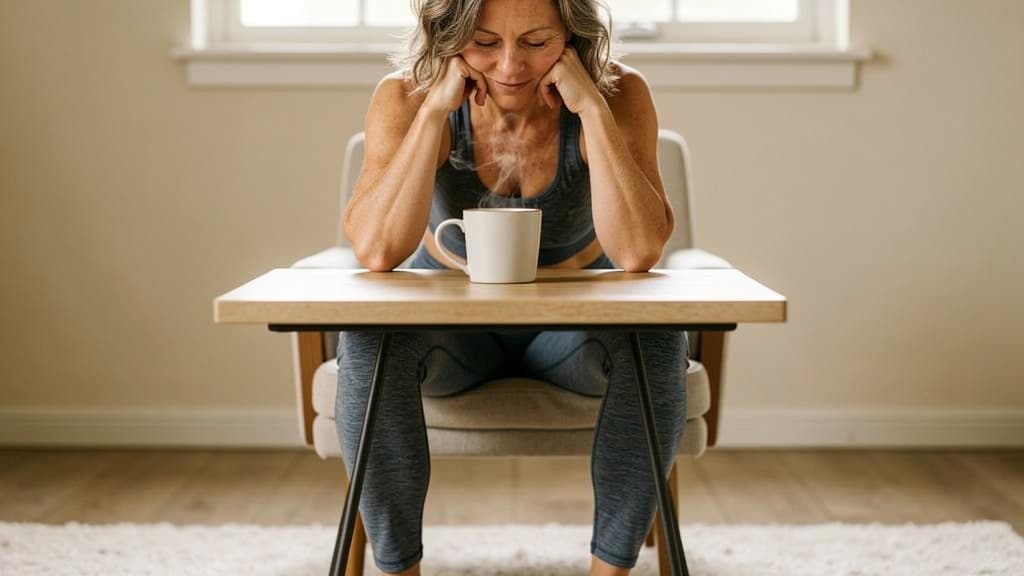
The coffee that once sharpened me now leaves me wired and tired, sometimes with a racing heart. Women do not process caffeine the way men do, and perimenopause changes it again: the same liver enzyme that breaks caffeine down is tied up with oestrogen. I have not given coffee up. I ask whether this habit is still working for this body.
I love coffee.
The ritual of it. The first warm sip before the house wakes up. The pause between one part of the day and the next. It has been part of my mornings for years but somewhere during my forties, something shifted.
The same coffee that once made me feel focused suddenly left me feeling slightly anxious. Sometimes I feel wired but strangely tired at the same time. Occasionally my heart races after my second cup and I have found myself wondering whether I was imagining it. I’m not.
One of the most fascinating things I’ve learnt whilst researching perimenopause is just how much of the nutrition and exercise advice we’ve followed for decades was built using male physiology. Coffee is yet another perfect example.
Put simply, women don’t process caffeine in the same way that men do and perhaps more importantly, we don’t process it the same way throughout our own lives. Your hormones influence how your morning coffee lands.
Your liver uses an enzyme to break down caffeine. That same enzyme is also involved in processing oestrogen. During different stages of our hormonal life, particularly during pregnancy, whilst taking certain hormones, and throughout the transition into menopause, the speed at which caffeine is cleared changes dramatically.
Which means that the coffee you happily drank in your thirties may suddenly feel completely different in your forties. It isn’t because you’ve become “sensitive”, your whole physiology has changed. This explains so much.
If you’ve ever noticed that…
• one coffee suddenly feels enough
• your afternoon coffee now affects your sleep
• you feel jittery before exercise if you have a coffee
• your heart races after caffeine
• anxiety feels worse after your second cup
there is a very real physiological reason behind it.
The research increasingly shows that women experience the effects of caffeine differently from men, and those differences become even more noticeable during perimenopause.
Coffee can still be part of a healthy lifestyle. Don’t worry, this isn’t one of those articles telling you to give it up and put down your morning cappuccino. Far from it.
Coffee is associated with numerous health benefits, including improved cognitive function, lower risk of several chronic diseases and, for many women, simply making mornings feel a little brighter.
The goal isn’t elimination, it’s awareness.
Instead of asking, “Should I stop drinking coffee?”. Perhaps the better question is,
“Is my current coffee habit still working for my body?”
My own approach
These days I still enjoy coffee every morning, but I pay much closer attention to how and when I drink it.
• I drink hot water first thing and try to wait 60-90 minutes before my precious first coffee.
• I avoid relying on it instead of eating breakfast. Whilst I find eating a big breakfast challenging, I am trying hard to get some protein on board before the coffee and before I train.
• I try not to drink it late in the afternoon. (I have an iced Matcha or a Chai in the winter as an afternoon ‘treat’)
• And if I’ve had a poor night’s sleep or my nervous system already feels overloaded, I know another coffee probably isn’t the answer.
What I also know is that movement, sunlight, protein and hydration usually serve me far better than just adding more caffeine (a habit from my busy studio days!).
The Midlife Movement Method
One of the biggest lessons I’ve learnt during this stage of life is that very little is about restriction, it’s about working with your changing physiology instead of fighting against it.
That applies to movement. It applies to nutrition and it applies to recovery. And yes, even to your morning coffee.
Midlife isn’t asking us to become less, it’s simply asking us to become more informed.
Five Coffee Questions to Ask Yourself:
* Does coffee still make me feel good?
* Am I using it to replace sleep?
* Does it increase my anxiety?
* Does it affect my sleep later that night?
* Am I drinking it because I need energy or because I love the ritual?
Because in midlife, the goal isn’t to give up the things we love.
It’s to understand how our bodies have changed so we can continue enjoying them for many years to come.
If the food side of this never quite settles, the Core Nutrition Reset is Tina explaining it in plain language, not another diet.
First published in The Midlife Movement, Chrissy’s newsletter.
Common questions
Why does coffee affect me differently in my forties?
The same coffee that once made me feel focused started leaving me slightly anxious, and sometimes wired and strangely tired at the same time. I am not imagining it. So much of the nutrition and exercise advice we have followed for decades was built on male physiology, and coffee is another example. It is not that you have become sensitive.
Do I have to give up coffee in perimenopause?
No, and this is not one of those articles telling you to put down your morning cappuccino. It is about awareness rather than elimination. A better question than should I stop drinking coffee is whether your current coffee habit is still working for your body.
How do you drink coffee now?
I still have it every morning, but I pay much closer attention to how and when. Hot water first, then I try to wait 60 to 90 minutes. I try to get some protein in before it. I keep it out of the late afternoon. And after a poor night's sleep, I know another coffee is probably not the answer.