Best Foods for Skin and Joints That Feel Dry in Your 40s
Chrissy Sundt · Nourishment ·
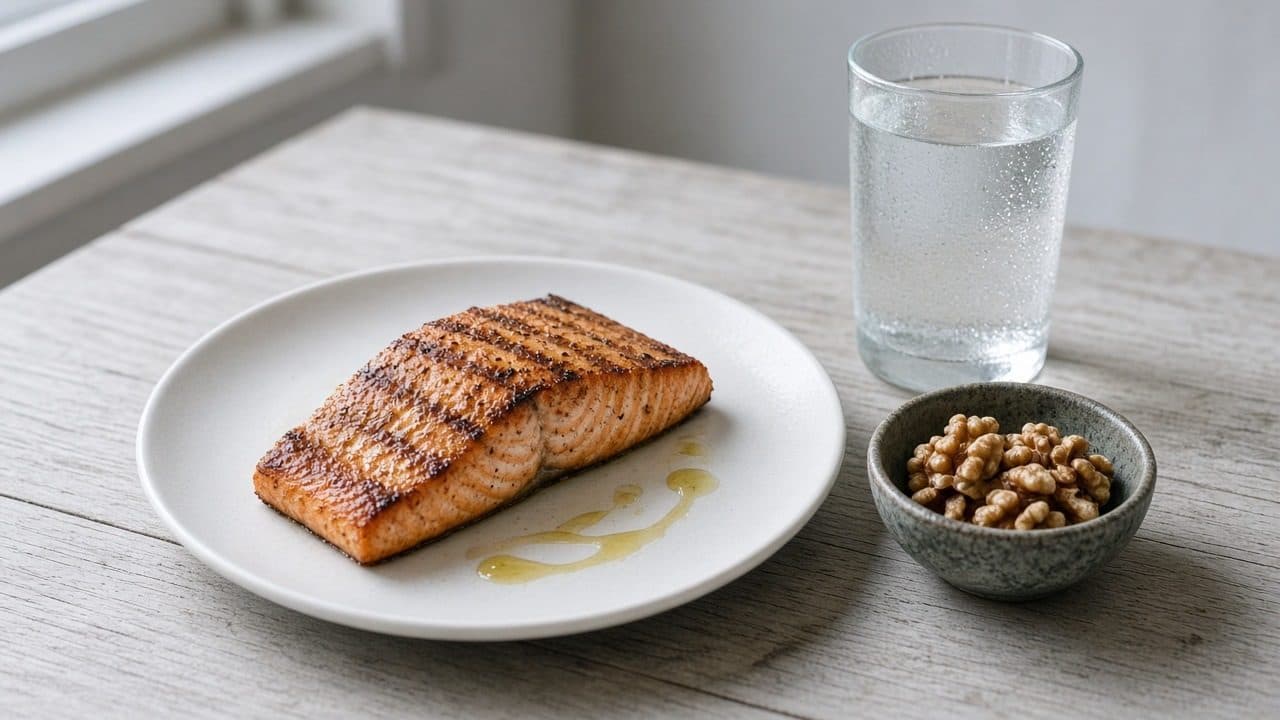
Skin and joints feel drier in your 40s partly because fat and fluid balance in the body shift. The most useful foods are oily fish, nuts, seeds and olive oil for essential fats, protein at every meal for repair, and fluid taken with food rather than sipped alone, since thirst becomes a less reliable guide in midlife.
Why do skin and joints feel different in your 40s?
Moisturiser that used to be enough for your skin can stop being enough. A knee, hip or wrist that never used to say anything now wants a slower start to the morning, particularly after a long drive or a weekend spent mostly sitting. Nothing here suggests you have done anything wrong. It is a different decade, with a different starting chemistry, and food is one of the few things you can actually adjust straight away.
The layer of fat that used to cushion skin thins with time, and the tissue around joints holds a little less of the fluid that once kept it supple. The body's own fluid balance becomes less automatic too, which matters more than it sounds. The change creeps in rather than arriving all at once. It happens slowly enough that most women notice the effects before they notice any particular cause, which is exactly why it gets written off as just getting older rather than something food has a say in.
Food will not undo any of that shift. What it does is change how comfortable the day to day feels, because the fats, fluid and protein eaten consistently over months are the raw materials skin and joints have to draw on. What sits in the fridge and the fruit bowl, week after week, matters more than any single ingredient.
Which fats help skin and joints feel more comfortable?
The typical modern diet runs heavy on omega-6 fats, from fried and heavily processed food, and light on the omega-3s found in oily fish, walnuts, flaxseed and chia. The aim is not to cut fat out, since fat is what carries certain vitamins around the body and gives hormones the conditions they need to work properly. It is to rebalance which fats make up the plate. Oily fish and seeds become the normal choice most days; fried and packaged food becomes the occasional one.
MMM's nutritionist Tina Lond-Caulk frames the same idea slightly differently. Her approach to lowering inflammation is additive: foods go onto the plate before anything comes off it, and oily fish, olive oil, berries, leafy greens, herbs and spices sit near the top of that list. Nothing is forbidden in this framing, which matters, because a plate built entirely around restriction tends not to last. Olive oil as your default for dressing and cooking, oily fish a couple of times a week, a small handful of nuts most days: small enough to keep up long after a new regime would have fizzled out.
There is no magic fat here. What matters is which fats turn up on the plate most often, since that is what the body has to use, day after day.
- Oily fish: salmon, mackerel, sardines
- Nuts and seeds: walnuts, chia, flaxseed, pumpkin seeds
- Olive oil as the default for dressing and cooking
- Avocado for a savoury source of the same fats
Are you drinking enough, and is water on its own enough?
Something counterintuitive is worth knowing here: thirst itself becomes a less reliable signal through perimenopause and beyond. Oestrogen and progesterone act on the part of the brain that manages thirst and fluid balance, so as they fluctuate, the signal to drink can arrive late or barely arrive at all. A woman can be quietly short of fluid without ever feeling thirsty enough to do anything about it, and the effect tends to get more pronounced with age rather than less.
The practical point translates simply. Water taken alongside food does more for the body than water sipped on its own throughout the day, because a trace of food helps fluid move from the gut into the bloodstream properly. Plain water drunk steadily between meals, with nothing alongside it, often passes straight through. Keep drinking water. Just stop relying on thirst as your signal, and treat fluid as part of the meal itself.
Skin cells and the fluid cushioning your joints draw on the same water supply as every other tissue in the body, so a day spent quietly under-hydrated leaves less for either to work with, whatever sits on the bathroom shelf. For how much water to aim for in perimenopause, the fuller picture is worth reading alongside this.
What does protein have to do with any of this?
Protein's role here goes well beyond skin and joints, since repair happens throughout the body. The amino acids it breaks down into are the raw material the body uses for repair generally, not just for muscle, and protein is the macronutrient where timing and spread across the day matter as much as the total. A single large portion at dinner, after a day with almost none, asks the body to do a lot of repair work in a narrow window.
Tina Lond-Caulk's version of this is simpler to put into practice: put a visible source of protein, roughly palm-sized, on every plate, and leave the counting out of it. Eggs, yoghurt, tofu, fish, chicken, lentils and beans all count, and none of them need weighing. If you want a fuller sense of what that looks like across a working week, how much protein women need in midlife sets it out in more detail.
A kitchen overhaul isn't needed here. Swapping a mid-morning pastry for a boiled egg and a handful of nuts, or adding tinned beans to a salad instead of leaving it leaves-only, is the kind of change that lasts. Easy protein swaps for midlife women is a reasonable place to start if restructuring every meal feels like too much right now.
What does a practical day of eating look like?
Put together, this is not a complicated list, and it does not need to be followed perfectly to matter. Protein at every meal, fats that lean toward oily fish, nuts, seeds and olive oil rather than fried and packaged food, fluid taken alongside meals rather than sipped alone through the day, and enough fibre and plant variety that the gut has something to work with. Eating with the whole of midlife in mind, weight being just one part of that picture, with as much plant diversity as the week allows, fits neatly into all of this without adding anything complicated to shop for.
Nothing here needs to be followed to the letter. The point is a pattern you can return to on an ordinary Tuesday, not a plan that only survives a calm week. If you want a fuller set of meals built around this pattern, meal ideas for perimenopause goes through a week's worth, and high-fibre foods for perimenopause bloating is worth a look if adding more plants is new territory and bloating is part of what is holding you back.
- Breakfast: eggs or yoghurt with berries and a glass of water alongside
- Lunch: a protein source with leafy greens, olive oil and a wholegrain
- Afternoon: a handful of nuts or seeds rather than a sugary snack
- Dinner: oily fish or another protein anchor with vegetables and a starchy carbohydrate
- Evening: water or herbal tea with food nearby if you tend to drink late
If the food side of this never quite settles, the Core Nutrition Reset is Tina explaining it in plain language, not another diet.
Common questions
Can diet alone stop skin and joints feeling dry in your 40s?
No single food reverses a hormonal shift, and nothing here claims to. What a consistent pattern of fats, protein and fluid does is give the body better raw material to work with day to day, alongside movement, sleep and the rest of how you look after yourself.
Is drinking more water the main fix?
Water matters, but how you drink it matters as much as how much: pairing fluid with food helps it absorb, rather than relying on thirst, which becomes a less reliable signal through midlife.
Do I need fish oil or collagen supplements?
Food first is the more reliable starting point. Nutritionist Tina Lond-Caulk frames supplements as supportive tools rather than fixes, worth a look once meals are already consistent, as an addition to them, and always worth checking against any medication you take.
How much olive oil or oily fish is worth aiming for?
There's no invented number here worth repeating. The directional habit that holds up is using olive oil as your default oil and getting oily fish onto the plate a couple of times a week. A precise target isn't worth chasing.