Why Do I Feel So Lonely Now My Kids Have Left Home?
Chrissy Sundt · Connection ·
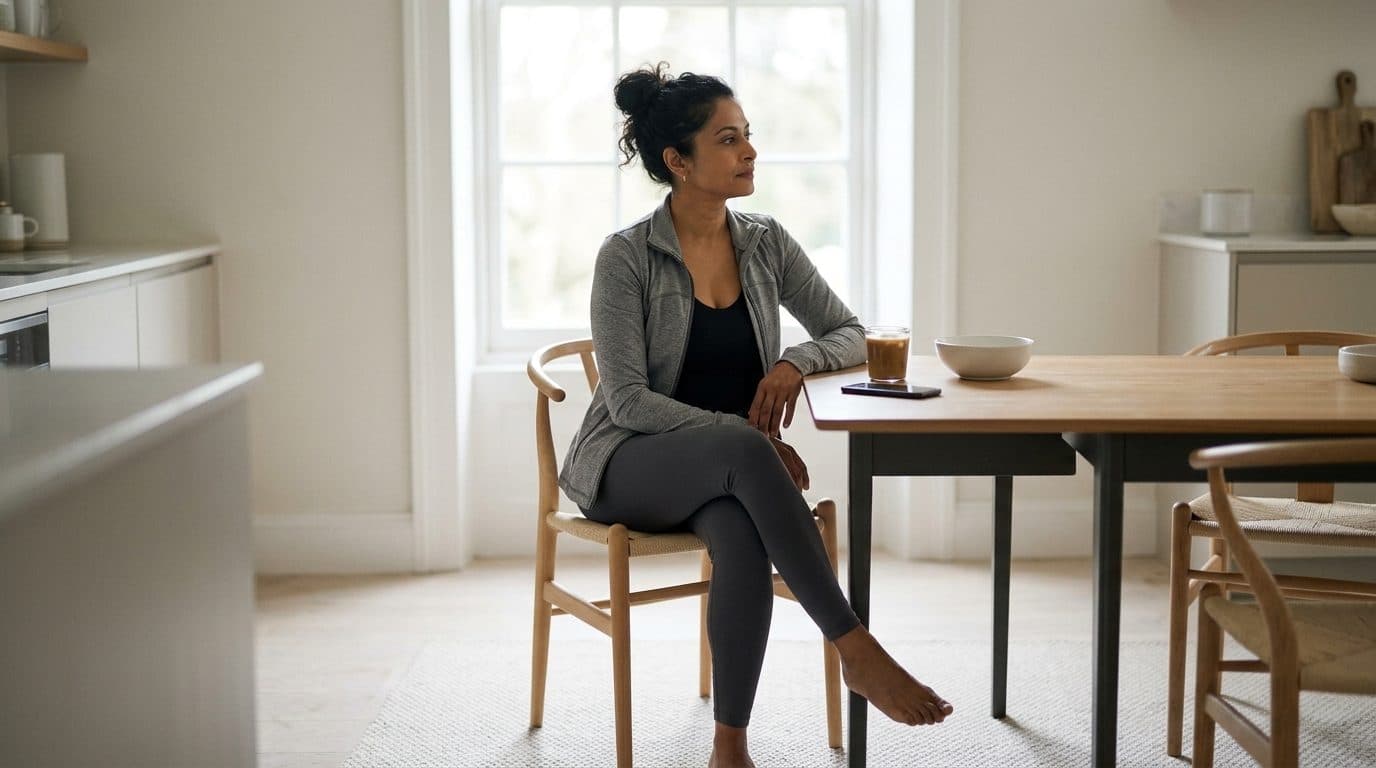
You feel lonely after your kids leave home because a role that structured your days, conversations and sense of purpose has quietly ended, while friendships that depended on school-gate proximity may have thinned without you noticing. It isn't a personal failing. It's an unfamiliar kind of quiet that needs a deliberate new structure, not just time.
Why does an empty house suddenly feel so lonely?
For years your day ran on somebody else's timetable: school runs, packed lunches, the background noise of another person's life alongside yours. When that goes, sometimes quite suddenly, what's left is more than an empty bedroom. It's a missing rhythm. You end up missing the shape your children gave to an ordinary Tuesday almost as much as you miss them.
This deserves more than a stiff upper lip. Losing a major source of daily contact seems to register in the body as well as the mood, not just as a passing low feeling.
For a lot of women, parenting doubled as a social life without anyone quite naming it that way. School gate chat, sideline conversations at Saturday football, the running commentary of shared family logistics. All of that was contact, low-stakes and frequent, and it disappeared along with the packed lunches. You don't need to have loved every minute of the school run to miss what it quietly gave you.
None of this means something has gone wrong with you, or that you should have prepared better. A structure ended. Structures need rebuilding, and rebuilding one is a different job to grieving it.
Is this loneliness, or is it something else?
Empty nest feelings rarely arrive as one clean emotion. There's grief for a stage of life that's finished. There's a genuine identity question, who am I when I'm not managing someone else's schedule. And there's loneliness proper, the specific ache of not having enough contact with other people day to day. They overlap, and untangling them matters, because each one needs a different response.
Grief needs time and acknowledgement, not fixing. Identity questions need slow exploring, often through what you choose to do with newly free hours. Loneliness needs something more direct: more people, more regularly, in your actual week. Address only the first two and you can end up with a fuller sense of self and a calendar that's still empty most evenings.
A rough way to tell them apart. Grief tends to come in waves around anniversaries and reminders, a birthday, the first empty Christmas. Identity questions show up as a flat, unfocused 'I don't know what I want' feeling. Loneliness tends to be steadier, a background hum that's worse on the days with no conversation at all and better the evening you happen to see someone.
It's worth being honest with yourself about which one you're mostly dealing with, because the empty nest gets blamed for all three when usually only one of them is actually asking for company.
Why do my old friendships feel harder to lean on right now?
Friendships don't usually end during the parenting years. They thin, quietly: a text unanswered for a week, a coffee that keeps getting rescheduled, until eventually neither of you suggests it any more. Closeness relies on proximity and repetition as much as it does on chemistry. Remove the school gate, the shared carpool, years of built-in proximity, and some friendships lose the scaffolding that was quietly holding them up.
That's not a verdict on those friendships, or on you. It's what happens to any relationship that relied on circumstance rather than deliberate effort. The friend you saw every day at pickup for a decade might still like you exactly as much as she always did. You've just lost the mechanism that made seeing her easy.
The uncomfortable part is that rebuilding those friendships, or making new ones, now takes initiative in a way it didn't before. Somebody has to suggest the coffee. Somebody has to go first and say 'I've been feeling a bit lonely lately.' In midlife that's rarely going to be arranged for you by circumstance the way the school run once was.
It's worth naming this, because waiting for it to happen naturally, the way it used to, is often exactly why the loneliness sits there unaddressed for months at a time.
What actually helps when you're feeling this kind of lonely?
Small, unglamorous changes tend to work better here than one dramatic reinvention. Loneliness responds to frequency more than intensity, so a short weekly commitment usually does more for you than one big night out a month. The aim isn't to fill every evening. It's to make sure a handful of hours each week reliably involve another person, in a way you don't have to re-plan from scratch every time.
Reaching out first is the part most women resist, often because it feels like admitting something. It doesn't need to be dramatic. A message to someone you've lost touch with, a short note asking to catch up, usually lands better than you expect. Most people on the receiving end are relieved to be thought of, not put off by it. The awkwardness sits mostly on your side of the message, before you send it.
Structure helps more than motivation does. A class, a walk with a fixed weekly slot, a standing phone call, all work because they don't depend on remembering to organise something fresh each time. New connections rarely feel natural in the first few weeks. Give any of them several goes before deciding whether they're worth keeping, the same way you'd judge a new job rather than a single conversation.
None of this needs to happen at once. Rebuilding a social week is worthwhile, ongoing work rather than a task to finish, and it rarely resolves on its own without a deliberate, repeated decision to keep showing up.
- Message someone you've lost touch with this week, briefly and without over-explaining
- Pick one recurring, fixed-time activity rather than several loose plans that keep sliding
- Say plainly to one person close to you: I've been feeling lonelier than I expected
- Judge a new connection over several meetings, not one
Where does movement fit into rebuilding connection?
Movement won't solve loneliness on its own, and it isn't meant to. But a regular class or session does something loneliness responds well to. It puts you in the same room as other people, at the same time, on a repeating basis, without you having to organise the socialising part yourself. The contact is a side effect of showing up for something else.
That's part of why connection sits as one of five pillars in the Midlife Movement Method, alongside sleep, movement, nourishment and rest. A short, regular commitment is one you can actually keep, and keeping it, week after week, is most of what rebuilds a sense of belonging.
The aim here is the longer view, the idea behind Strong Enough for 85™: capable and connected for decades still ahead, not just fit for this particular week. Awaken Barre sessions can help indirectly, by giving you a fixed, repeating reason to be in a room with other people. The benefit comes from showing up consistently, not from the exercise itself.
If you're not ready to commit to anything yet, that's fine. Start by noticing how much real contact you're getting in an average week, and treat any gap the same way you'd treat any other part of your health: worth addressing, not something to apologise for.
Common questions
Is it normal to feel lonely after your children leave home?
Yes, very much so. It's a genuine change in daily contact and structure, not a sign you didn't want this stage of life or that you handled it badly.
How long does empty nest loneliness usually last?
There's no fixed timeline, and it depends more on rebuilding your week than on simply waiting for the feeling to pass. Many women notice it easing once regular contact with others returns.
Can exercise classes actually help with loneliness?
They can help indirectly, by giving you a regular, repeating reason to be around other people. The benefit comes from showing up consistently, not from the exercise itself.
What if most of my old friendships have faded over the years?
That's common once the daily proximity of school runs and shared logistics disappears. Rebuilding usually means being the one to suggest contact first, and giving any renewed friendship several meetings before judging it.
Should I be worried this loneliness means something is wrong with me?
No. It's a response to a real change in your daily contact with people, not a character flaw. If it's persistent and heavily affecting your day-to-day life, it's worth talking to your GP alongside anything you do yourself.