How to Choose Gym Clothes When Your Body Shape Has Changed
Chrissy Sundt · Connection ·
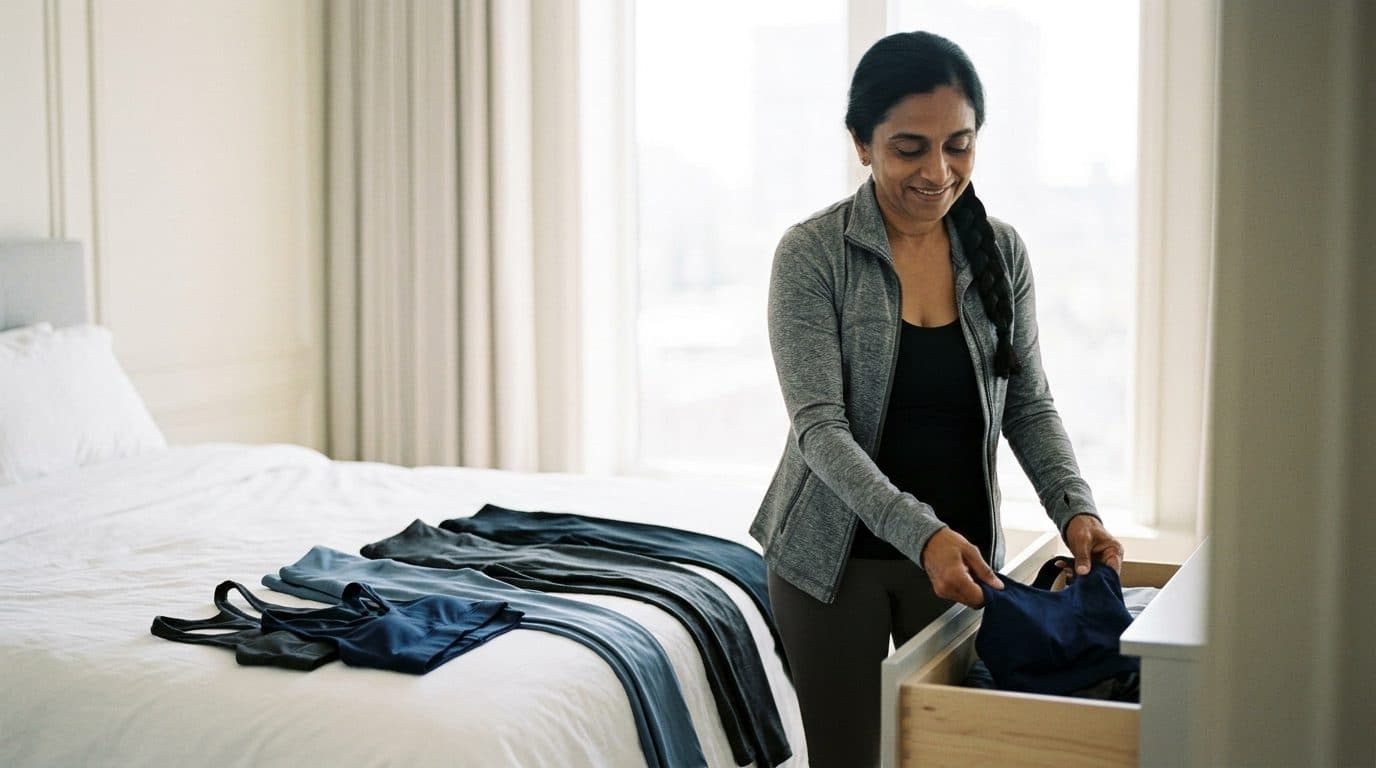
Choose gym clothes for the body you have right now. Prioritise four-way stretch fabric, a wide flat waistband that won't dig in during floor work, and support that doesn't restrict overhead reaches. Fit and function matter more than size labels, and comfortable kit is what lets you keep showing up.
Why does gym clothing suddenly feel so complicated in midlife?
Perimenopause moves fat storage, fluid balance and muscle tone around in ways that have nothing to do with effort or discipline. A waistband that sat flat for a decade now digs in by minute ten. A supportive top from three years ago suddenly gapes at the chest or pulls at the back. None of that is failure. It's fabric that was cut for your old shape, and your shape has changed.
The frustration is real, and worth naming rather than brushing past. Going back to a shop, reaching for your usual size out of habit, and having it not sit right can feel oddly personal, as though the wardrobe is confirming something you didn't want confirmed. It's just information: the shape you're dressing has changed, so the shopping has to change with it.
There's also a practical cost most women don't clock until it's happening mid-session. A waistband that rolls, a top that needs constant adjusting, leggings that ride up during floor work, all of that pulls attention away from the actual movement. In a 20-minute session where every rep is doing a job, that's attention you don't have to spare. Choosing kit that fits the body you're in now removes friction, so your attention stays on the set instead of the waistband.
What should I actually look for when my body shape has changed?
Start with the fabric before the size. Look for four-way stretch, the kind that moves with you in every direction rather than just lengthways, because it flexes as your shape does rather than fighting it at the exact points that have changed. Cotton-heavy blends that used to feel fine often feel restrictive now; a stretch percentage on the label, even a rough one, tells you more than the size tag does.
Waistbands matter more than almost anything else. A wide, flat band that sits without rolling or digging will outlast a narrow elastic one through an entire session of core work, squats and floor transitions. If you're between sizes, size up in the waistband rather than the leg or the arm.
For tops, prioritise support that doesn't restrict the shoulder. Barre and strength work both involve reaching overhead and across the body, so a built-in shelf bra or a separate supportive layer that doesn't pull at the armpit or ride up when you raise your arms is worth more than anything decorative. Temperature is its own category now too. Perimenopause brings heat surges that have nothing to do with room temperature, so moisture-wicking fabric and a layer you can peel off mid-session, a light zip top over a vest rather than one heavy piece, will serve you better than an outfit built for how you used to regulate heat.
- Four-way stretch fabric over cotton-heavy blends
- Wide, flat waistband that sits without rolling
- Shoulder-friendly support for overhead reaches
- A removable layer for sudden heat
How do I choose kit specifically for barre and floor-based strength work?
Barre, the way we teach it in Awaken Barre, is built around small positions held at a chair or barre used as a balance aid: pulses, holds, floor sequences, deep bends. That means your clothes need to move through a full range without catching. Looking right standing still in a mirror doesn't tell you much.
Avoid anything with a wide, loose leg. Flared or baggy bottoms catch under your foot during pliés and floor transitions, and you end up managing fabric instead of managing form. A fitted or slightly tapered legging or a bike-length short gives you a clean line to actually see your alignment, which matters when you're learning to feel a movement rather than just perform it.
Grip socks are worth the small investment if you're working barefoot-adjacent. They stop the small slides that turn a stable balance position into a wobble, and they protect toes during floor kneeling. If bare feet feel exposed at first, socks with grip dots are a reasonable middle step.
For tops, anything that stays put during a forward fold or an overhead reach without needing a mid-session tug is doing its job. You don't need special barre clothing: no leotard, no ballet kit required. It's a fitness discipline that borrows its shapes from ballet rather than a dance class, so ordinary supportive gym kit that moves well is exactly right. Comfort matters here too. It's what lets you focus on precision instead of performance.
What if I'm avoiding classes because of how I look right now?
This is the part that matters more than the fabric. For a lot of women, the real issue isn't which leggings to buy, it's that feeling wrong in your current kit becomes a reason to skip the class, the walk with a friend, the group session altogether. That kind of quiet avoidance, skipping a session because you feel exposed or wrong-sized, is exactly how adult friendships and community ties thin out without anyone deciding to end them. Nobody quits on purpose. They just stop showing up, one small avoidance at a time.
That's worth sitting with, because the cost isn't really about clothes. It's about what you lose access to when discomfort keeps you home: the conversation before the session starts, the person who notices if you didn't show up, the sense of being part of something rather than doing it alone in a room.
So treat sorting out your kit as a practical step toward showing up. It doesn't need to be finished before you're allowed to start. One outfit you feel decent in is enough to get you through the door. You don't need the wardrobe solved. You need one thing that works, and a reason to use it. We're training for the next forty years, and that only happens if you keep turning up.
How many pieces do I actually need to get started?
You don't need a wardrobe overhaul. Two supportive tops and two bottoms you can rotate and wash between sessions is enough to start, especially for 20-minute sessions that don't leave you drenched the way an hour-long class might. Buy one properly, well-fitting piece before you buy five mediocre ones. A single pair of leggings with the right waistband and stretch will get more genuine use than a drawer full of options that all dig in the same spot.
If you can, try before you buy, and actually move in the changing room rather than just checking how it looks standing still. Squat. Raise your arms overhead. Sit down and stand back up. Fabric and cut that pass that test will hold up through an actual session; fabric that looks fine standing still often doesn't.
Check the returns policy before you order online, particularly for anything with a fitted waistband, since sizing varies wildly between brands and what worked in one label's medium won't necessarily work in another's. It's reasonable to buy two sizes and send one back. Budget matters too, and there's no need to spend heavily to start. A well-fitting basic top and bottom from a mid-range range will do the job a premium set does. Spend where it counts, on the waistband and the fabric stretch, and treat everything else as optional.
- Two tops and two bottoms is enough to start
- Move in the changing room before you buy
- Check the returns policy on fitted waistbands
If you want this as movement rather than another article, Awaken Barre is the twenty-minute programme I built for a body that has already changed.
Common questions
Do I need special barre clothing for Awaken Barre?
No specific barre kit is required. Ordinary supportive gym leggings or fitted bottoms and a top that stays in place during overhead reaches are all you need. Barre here is a fitness discipline that borrows its shapes from ballet rather than a dance class, so no leotard or dance-specific clothing is expected.
What size should I buy if I'm between sizes?
Size up in the waistband before anywhere else, since a tight band that digs in during core work is far more disruptive than slightly loose fabric elsewhere. If a brand offers a size guide with actual measurements, use that over your usual go-to size.
Is it normal for my old workout clothes to not fit the way they used to?
Yes. Perimenopause shifts where fat, fluid and muscle sit on the body, so clothes cut for a previous shape can fit differently even if your weight hasn't changed much. It reflects a change in cut and fit. It says nothing about effort or worth.
What fabric is best for hot flashes during a session?
Moisture-wicking, breathable fabric, plus a light layer you can remove mid-session, tends to work better than one heavy outfit. Look for blends that mention wicking or quick-dry on the label rather than pure cotton, which holds moisture and heat against the skin.
Should I wait until my body changes again before buying clothes that fit properly?
No. Waiting means spending sessions distracted by ill-fitting kit, or avoiding sessions altogether, and both cost more than the piece of clothing does. Buy for the body you have now; you can always add to the rotation later.