How to Find a Fitness Accountability Partner After 40
Chrissy Sundt · Connection ·
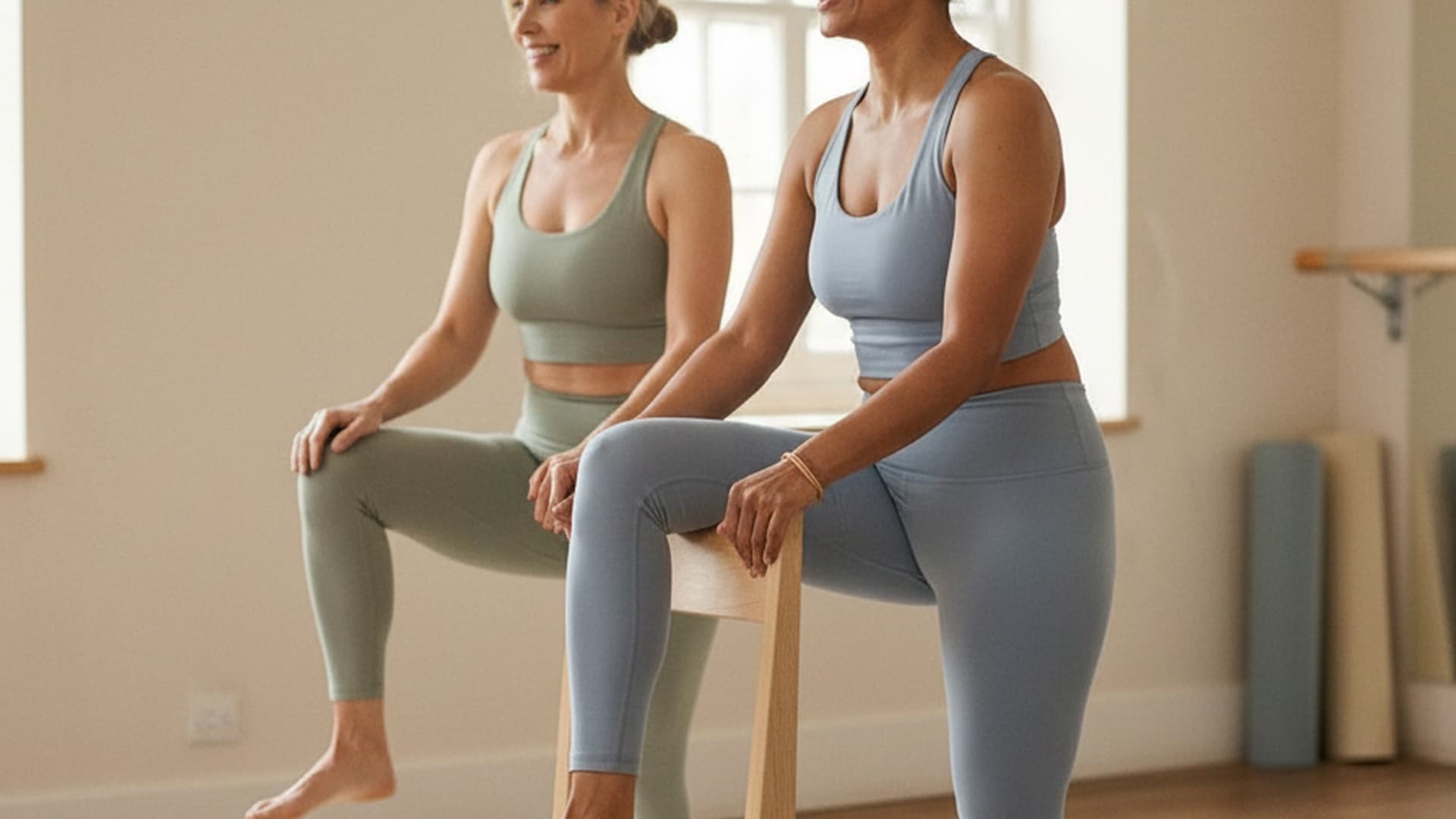
Look for people you already see on a fixed schedule: a class you attend on the same day each week, a neighbour on your regular walking route, or a colleague whose plans keep slipping like yours. Ask directly for a fixed weekly check-in, since the shared schedule is what keeps you both showing up.
Why is this harder to find after 40 than it used to be?
Somewhere in your thirties, the automatic sources of a workout partner disappeared. University flatmates, the friend from your old office gym, the antenatal group you did buggy fitness classes with, all of that ran on proximity and repetition you didn't have to arrange. In midlife those structures are mostly gone, and what's left is a smaller, busier group of people, many of whom are dealing with the same shortage of time and energy you are. You haven't become harder to be friends with. Adult friendship stops happening by accident once nobody's throwing you together daily.
This thinning is structural, the predictable result of losing the daily proximity that used to manufacture friendships for you. Rebuilding it in adulthood takes the same deliberate initiative dating does, something most of us stopped practising once we settled into a routine. That's a useful reframe if you've been quietly assuming you're the only one struggling to find someone to train with.
The other complication is that midlife bodies and schedules vary more than they did at 25. Perimenopause symptoms, caring responsibilities, shift patterns and injuries mean the woman you'd have paired with easily a decade ago might now need a completely different time of day or type of session. You can like her enormously and still be a poor match if her only free hour is 6am and yours is lunchtime.
Where do you actually look?
Start with people you already see on a schedule. The woman who takes the mat next to yours in the same Tuesday class, a colleague who mentioned wanting to move more, a neighbour you already nod to on the school run. These are stronger prospects than a stranger from an app, because the hardest part, actually crossing paths regularly, is already solved. The friendship potential is often already there. What's missing is someone noticing the meeting point and acting on it.
None of these require you to be especially outgoing. Most only need one direct question asked once, which is the part people avoid because it feels exposing to admit you want company for something as ordinary as exercise. Most women you'd consider asking are hoping someone asks them first, they just won't say so.
If none of those produce a name within a couple of weeks, widen the search deliberately: a noticeboard in a local café, a community forum, or the newer members of a class you already attend, since anyone new is looking for exactly what you are. Treat it as a short, active search. Give it a fortnight, ask directly, and don't wait for it to fall into place.
- A regular class at a fixed day and time, so you see the same faces often enough to move from nodding to talking
- Local walking groups or parkrun, where turning up weekly is the whole point
- Existing group chats, school, work, family, where you can just ask outright
- Dog walkers or early risers on your usual route
- A neighbour, colleague or old friend who's mentioned, even in passing, wanting to move more
What actually makes someone a good accountability partner?
Fitness level and shared goals matter less than people assume. A partnership lasts on logistics: whether she's also free on Tuesday evenings, and whether she'll rearrange rather than cancel outright when life gets in the way. A partner who trains completely differently from you, perhaps yoga instead of weights, still works well if you're both reliably free at 7am on a Monday.
The useful partner tells you when she's skipped a session, rather than letting three weeks pass without a word. A missed Tuesday here and there rarely matters. It's the unexplained silence that tends to end things. A partner you see reliably, even at a lower frequency than you'd ideally like, beats an intense arrangement that collapses after a fortnight.
It helps if she isn't someone you need to impress. An old colleague or a neighbour can work better than your closest friend, simply because there's less history, and less risk of the arrangement turning into something other than showing up.
How do you actually ask, and what if it falls apart?
Vague invitations produce vague outcomes. 'We should exercise together sometime' is easy to agree to and easy to forget. A better version is specific about when and for how long: 'I'm doing twenty minutes most Tuesday and Thursday mornings before the school run, want to do it together for a month and see how it goes.' Naming a trial period matters too, since it lowers the stakes on both sides. Neither of you is committing to a lifelong arrangement, just four weeks to see whether the logistics actually work.
If she says no, or it fizzles after two sessions, don't read too much into it. Arrangements between busy adults fail for reasons that have nothing to do with whether the other person likes you, a new job, or a house move that eats every spare hour. Ask someone else. Two or three loose partners, each covering a different day, is often more resilient than a single arrangement that collapses the moment one person's week goes sideways.
When it does work, keep the check-in itself simple. A one-line text the night before, or a shared note of who's doing what and when, does more for follow-through than any amount of enthusiasm on day one. The arrangement only needs to survive contact with an ordinary, busy week.
What if you genuinely can't find a one-to-one partner?
Some women try for months and still don't land on a single reliable partner. A partner is only one route to accountability among several. A class where you see the same handful of women on the same evening every week creates a milder, lower-stakes version of the same effect: someone notices if you're not there, and that's often enough to get you out of the door on the nights you'd otherwise skip.
Being reliably seen by a small group of people does more for follow-through than it sounds like it should. You don't need a best friend for that effect. You need to be recognisable to a small, regular group of people, which a weekly class or walking group provides without you having to engineer a friendship from scratch.
If a one-to-one partner turns up later, good. If she doesn't, a group you show up to on a fixed day does the same job of making it harder to stop without anyone noticing. Either way, the aim is the same: making your movement something other people would notice the absence of.
Common questions
Do we need to be at the same fitness level?
Not really. A shared calendar does more for an arrangement's survival than a shared fitness level ever does. You can train in completely different ways and still make it work, provided you're both reliably free at the same time each week.
What if my only option is online, not in person?
A text check-in or a shared note of who did what and when works almost as well as in-person training, because what makes it work is someone noticing you didn't check in. Distance rarely breaks these arrangements. Silence does.
How long should we try it before deciding it's not working?
Give it around four weeks. That's long enough to see whether the logistics genuinely suit you both, and short enough that neither of you feels locked into something that isn't working.
Is one partner enough, or should I look for more?
Two or three loose partners, each covering a different day of the week, tend to hold up better than a single arrangement, since one person's cancelled week doesn't take the whole plan down with it.