How to Lose Fat Without Losing Muscle After 40
Chrissy Sundt · Nourishment ·
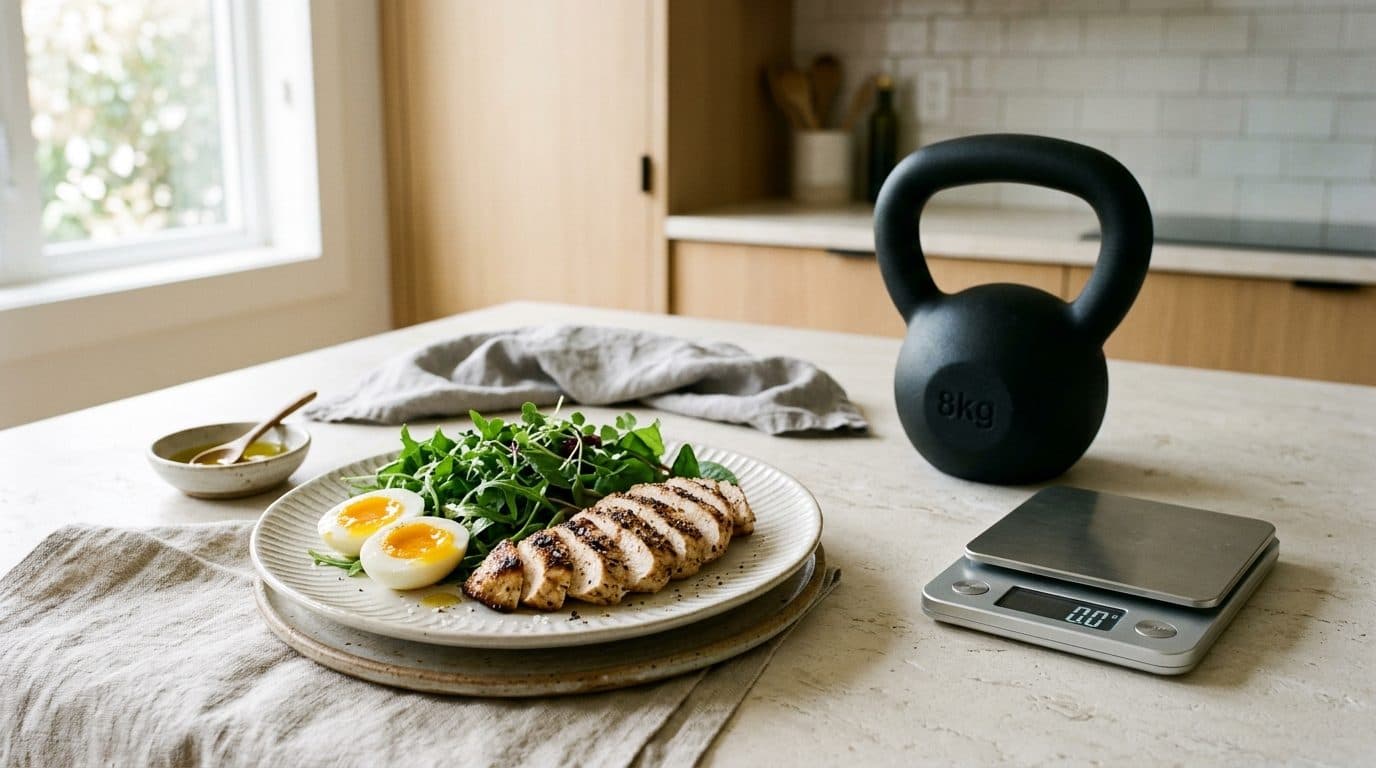
Losing fat without losing muscle after 40 means eating enough protein spread across the day, keeping a moderate rather than steep energy deficit, and strength training regularly so the body has reason to keep the muscle it has. Crash dieting and cardio-only approaches tend to take muscle along with the fat.
Why fat loss after 40 isn't the same equation it was at 25
At twenty-five, a strict week of eating less and moving more mostly cost you fat. At forty-five, the same approach can just as easily cost you muscle, and the scale will not tell you which one went. A steep energy deficit asks the body to find fuel wherever it can reach it, and muscle tissue, being metabolically active, is often the easiest source to raid. Your discipline hasn't changed. The equation your body is running has.
Part of this comes down to where fat tends to settle in this decade and how the body manages it, which is worth understanding on its own terms. The shift in where fat tends to sit around the middle is well documented, and it changes what 'losing fat' even looks like on a woman in her forties compared to her twenties. The number on the scale was never a great measure of progress, and it becomes an even less useful one here, because muscle and fat can move in opposite directions while the total stays still.
The body's metabolism and how it manages food shift across life stages, which is one reason a strategy built for a twenty-five-year-old body does not simply transfer. The aim is a body that keeps its strength while gently releasing the fat it no longer needs to carry.
How much protein do you need, and when should you eat it
Protein is the nutrient most likely to protect muscle during a period of fat loss, because it gives the body material to rebuild with rather than simply fuel to burn. Most women in midlife eat the bulk of theirs at dinner and comparatively little earlier in the day, which leaves long stretches without the raw material muscle needs. Spreading protein across three or four meals, rather than loading it into one, tends to matter more than any single number you could chase.
This does not need to mean a diet overhaul. Small, repeatable swaps, like the ones in this guide to protein swaps for midlife women, do more over months than a strict plan abandoned within a fortnight. Most weeks will not go perfectly, and that is fine. What matters is that the habit is still there the week after.
The instinct, as training increases in midlife, is often to eat less rather than more. Under-fuelling around strength work undermines the very muscle you are trying to keep, so eating enough matters more than eating as little as possible.
- Protein at breakfast, not just dinner
- A source at each meal rather than one large portion
- Enough to support training, not a restrictive minimum
Why strength training matters more than extra cardio here
Cardiovascular exercise burns calories while you do it, but it gives the body little reason to hold on to muscle once the session ends. Resistance work, lifting, pressing, pushing against your own bodyweight, sends the opposite signal: this tissue is being used, keep it. That signal matters more as women move through their forties and fifties, when muscle is naturally harder to build and easier to lose through inactivity or a deep calorie deficit.
This is close to what Muscle as Midlife Insurance™ means: strength you build now so your body can still do what matters in a decade, regardless of how it looks next month. Strength training two or three times a week, even in short sessions, gives the body an ongoing reason to keep what it has rather than let it quietly go.
Fuelling around those sessions matters too: training on an empty stretch and then under-eating afterwards cancels out much of the signal you just sent. The practical ideas in what to eat before and after a barre session apply just as well to any strength session, not only barre, because the principle is the same: give the muscle something to work with, then something to rebuild with.
What a sustainable calorie approach looks like
A deficit steep enough to show fast results is often steep enough to take muscle with it. A more moderate approach, one that still leaves enough energy for training and daily life, tends to protect strength better even if the scale moves more slowly. What matters here is eating enough to support the body you are trying to keep.
Working out roughly how much you need, rather than guessing or copying a plan built for someone else's frame and activity level, is covered in this breakdown of calories for building muscle in your forties. The figure matters less than the habit of checking it against how you actually feel in training, rather than against a number on an app.
Eating for the whole of midlife, rather than for weight alone, tends to work better than chasing a calorie figure in isolation. A plan built purely around a number, with no attention to fibre, variety or how satisfied a meal leaves you, is harder to sustain than one that treats food as more than arithmetic.
How to tell it's working when the scale barely moves
The scale is a blunt instrument for this particular goal, because it cannot tell muscle from fat and often will not move much even when both are changing in opposite, favourable directions. Better signals tend to be how a fitted waistband feels, whether you can lift the same weight for another rep than you could a month ago, whether energy holds through the day rather than dropping sharply, and whether recovery between sessions feels quicker.
Progress here is rarely linear and rarely fast. A missed week of training, or a holiday where food was less structured, does not undo months of consistent protein and strength work; it is the returning afterwards that counts, not an unbroken streak. Judging the whole project by any single hard week tends to lead women to abandon something that was quietly working.
Practical, repeatable meals make this easier to sustain than any strict plan, which is the thinking behind resources like this budget-friendly high protein meal plan: food that is affordable and easy enough to make most days is more likely to still be on your plate in a month than an ambitious plan you only manage on the good days.
- How clothes fit, not just what the scale says
- Strength in training sessions week to week
- How steady energy feels through the day
- How quickly you recover between sessions
If the food side of this never quite settles, the Core Nutrition Reset is Tina explaining it in plain language, not another diet.
Common questions
Can you build muscle while losing fat after 40?
Yes, though it tends to happen more slowly than losing fat on its own. Eating enough protein, keeping a moderate rather than steep calorie deficit, and strength training regularly gives the body reason to hold onto and even build muscle while it releases fat.
Is cardio bad for losing fat without losing muscle?
Relying on cardio alone, without resistance training, is what costs you muscle. Pairing the two most weeks tends to give better protection.
How many times a week should I strength train to protect muscle?
Two to three sessions a week, even short ones, tend to be enough to send the body a consistent signal to keep its muscle, provided they are reasonably challenging and protein intake supports them.
Why does fat loss feel slower and harder after 40?
The body is managing a different set of signals than it was in your twenties or thirties, including how it processes food and where it tends to store fat. A steep deficit is more likely to cost muscle now, which is why a moderate, protein-supported approach tends to serve better.
Do I need to eat less as I get older to lose fat?
The useful shift is usually eating more deliberately, not just less. Under-eating around training can undermine the muscle you are trying to protect, so the more useful shift is often towards enough protein and consistent strength work rather than a smaller plate.