JOMO: The Unexpected Midlife Skill I’m Learning
Chrissy Sundt · Rest & Illumination ·
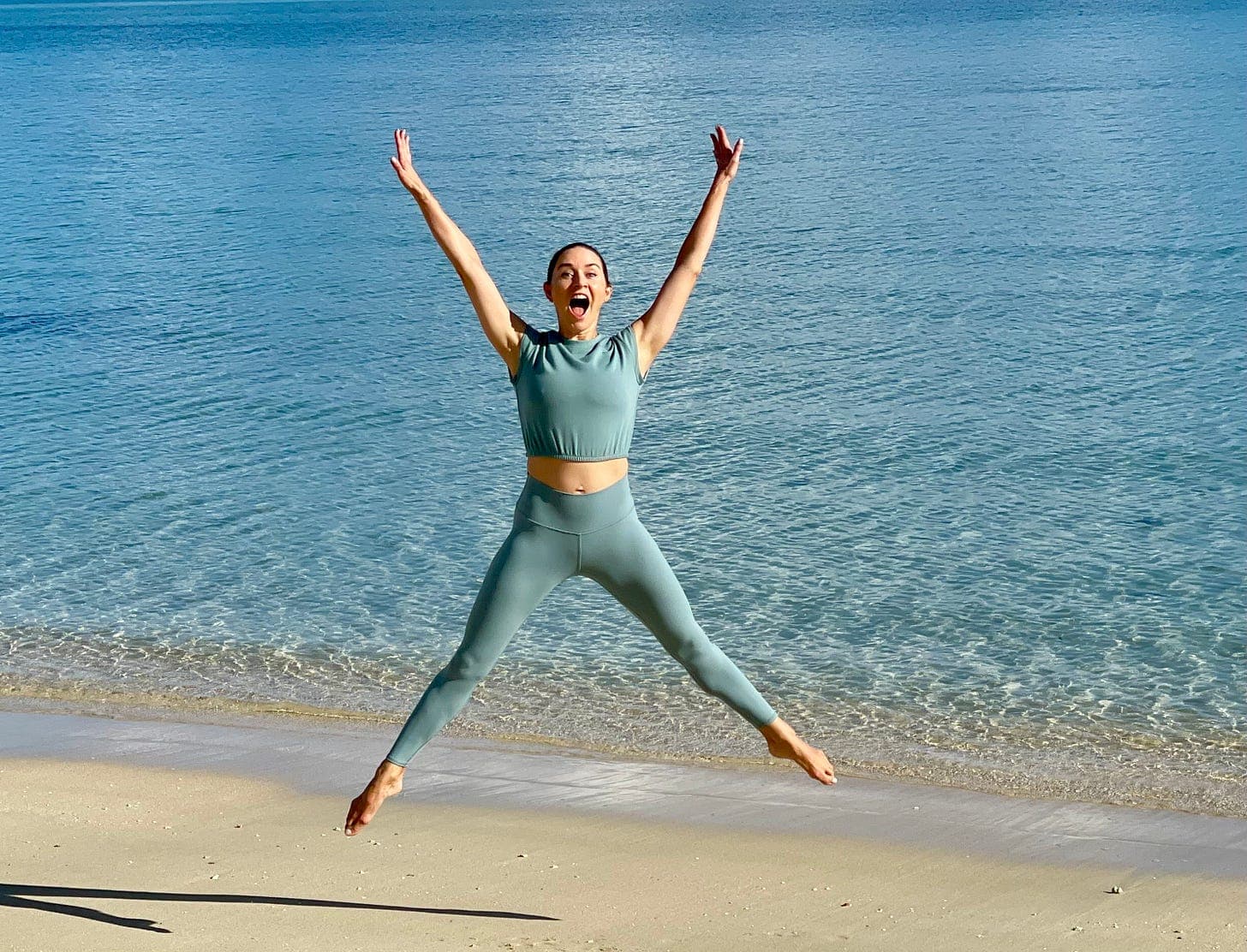
Over the past few weeks, I’ve found myself slowing down in ways that once would have felt almost impossible. After the whirlwind of finishing the school term, a long journey back to Europe, unpacking into a new home, reconnecting with family and friends, and navigating another heatwave, my body wasn’t asking for more.
There was a time when an empty afternoon made me uncomfortable. If I wasn’t teaching, training, travelling, planning a retreat or squeezing in another workout, I felt as though I should be doing something productive. My days were measured by what I could tick off a list rather than how they actually felt.
Perhaps that’s why this summer has felt so different.
It was asking for space. Space to wake up without immediately reaching for my phone.
Space to sit outside with a coffee while everyone else was still asleep. Space to read another chapter of a book. Space to wander down to the water without feeling I should be doing something “more useful.” Space to simply breathe.
For someone who has spent most of her adult life working in the fitness industry, that’s quite a shift.
Recently I came across a phrase that perfectly describes this feeling.
JOMO: The Joy of Missing Out.
At first, I assumed it meant saying no to social plans or giving yourself permission to skip the occasional workout.
But I think, particularly in midlife, it means something much bigger. I think it’s about actively choosing moments of stillness, not because you’ve earned them, not because you’re exhausted but because they’re every bit as important to your health as the workout itself.
For years we’ve been sold the idea that wellness is something we have to chase. More workouts. More supplements. More discipline. More productivity. Even self-care has become another thing to optimise.
Somewhere along the way we forgot that our bodies were designed with rhythms. Yes we need periods of effort but we also need periods of recovery and importantly, periods of quiet.
The irony is that we now understand far more about women’s physiology than we did twenty years ago, and the science points us back towards something beautifully simple.
Recovery isn’t the opposite of progress, it’s where progress happens.
During exercise we create the stimulus for adaptation. During recovery we build stronger muscles, restore depleted energy stores, regulate hormones and allow the nervous system to settle. For women moving through perimenopause, when cortisol can remain elevated for longer and sleep often becomes more fragmented, those quieter moments become even more valuable.
Which makes me wonder whether we’ve been measuring wellness the wrong way all along. Maybe the healthiest women aren’t the ones doing the most? Maybe they’re the women who have learned to spend their energy wisely.
That doesn’t mean abandoning movement. Quite the opposite.
Movement will always be one of the greatest investments we can make in our long-term health. We know strength training protects our bones, preserves muscle, supports metabolic health, protects our cognitive function and helps keep us independent as we age. But equally important is knowing when not to push.
We need to know when today’s walk is enough and recognise when stretching on the living room floor (I put on a rom com and roll around…..it works!) is exactly what your body needs. Knowing when an early night is more beneficial than squeezing in another session and knowing when sitting in the garden in the sunshine with your journal is actually supporting your nervous system, even if nobody gives you a medal for it.
I’ve realised that some of my happiest moments this summer haven’t been the big adventures. They’ve been the smallest ones: watching the sunlight dance across the water, listening to the birds before the rest of the house wakes up, drinking my coffee slowly instead of between meetings, reading simply because I wanted to, walking without tracking my pace and laughing around the dinner table long after the plates had been cleared.
None of those moments looked particularly productive.
Yet every one of them left me feeling healthier.
Perhaps that’s what JOMO really is, not the joy of missing out on life but the joy of finally being present enough to notice it.
It’s a lesson I’m still learning.
As someone who naturally loves movement, goals and creating beautiful experiences for others, slowing down doesn’t always come naturally. But I’m beginning to realise that protecting my energy isn’t a sign that I’m becoming less ambitious.
It’s a sign that I’m becoming wiser.
At The Midlife Movement Method we often talk about intelligent movement. Increasingly, I think we also need to embrace intelligent rest.
The ability to recognise that wellness isn’t built through relentless effort.
• It’s built through balance.
• Through movement and recovery.
• Through strength and softness.
• Through challenge and stillness.
Perhaps that’s the real joy of missing out. Not doing less for the sake of it but making enough room in our lives to fully experience the simple things we’ve been rushing past all along.
Because one day, I suspect those quiet mornings, slow walks, long conversations and peaceful moments in nature won’t feel like the things we missed out on.
They’ll be the moments we remember most.
If you want this as movement rather than another article, Awaken Barre is the twenty-minute programme I built for a body that has already changed.
First published in The Midlife Movement, Chrissy’s newsletter.
Common questions
What does JOMO mean in midlife?
The joy of missing out. At first I assumed it meant saying no to social plans or skipping the occasional workout. In midlife I think it means something bigger: actively choosing moments of stillness, and treating them as every bit as important to your health as the workout itself.
Does more rest mean doing less movement?
Quite the opposite. Movement will always be one of the greatest investments we can make. What I am learning is when not to push: when today's walk is enough, when stretching on the living room floor is exactly what my body needs, when an early night beats squeezing in another session.
Why does recovery matter more now?
Because the quiet part is where the work lands. During exercise we create the stimulus. During recovery we build stronger muscle and restore energy. In perimenopause, when sleep is often more broken and everything takes longer to feel settled, those quieter moments become more valuable, not less.