How to Slow Down When You're Used to Being Busy
Chrissy Sundt · Rest & Illumination ·
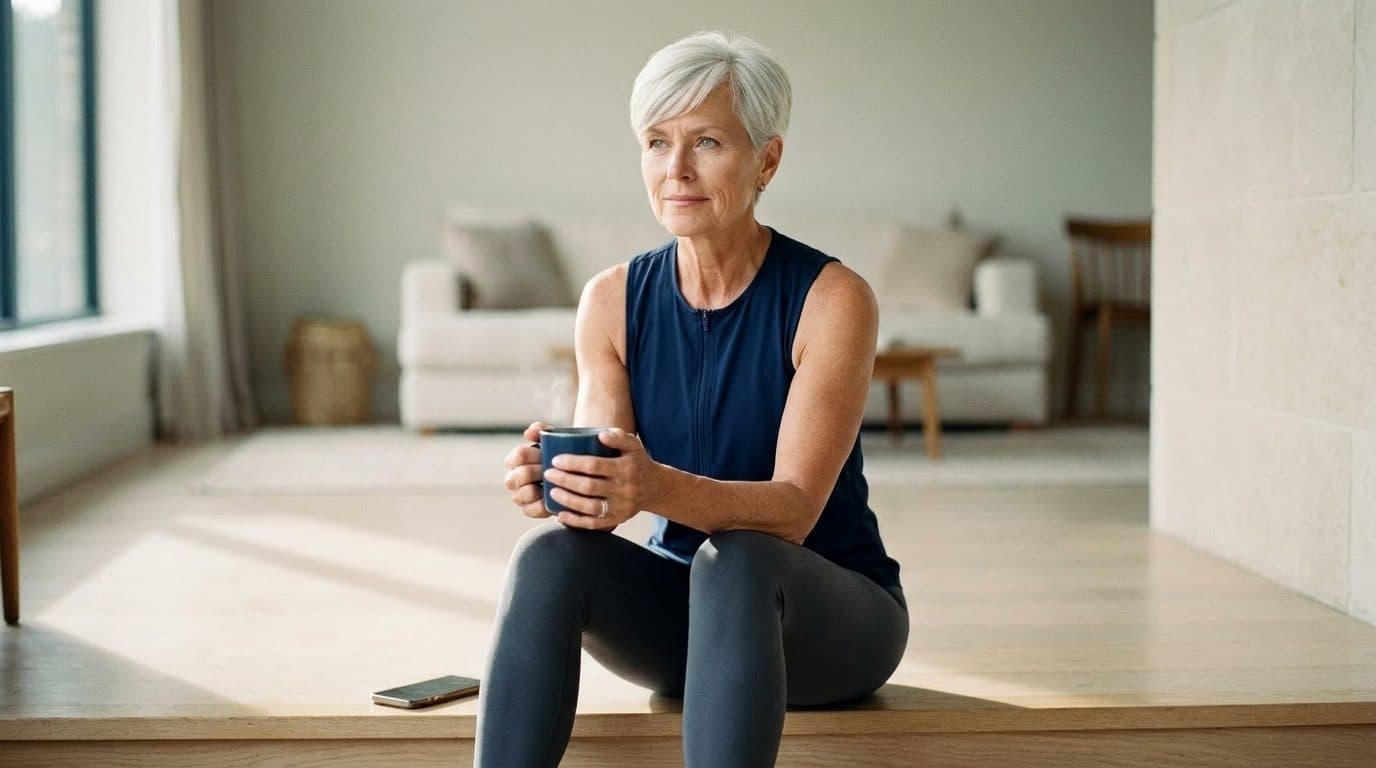
Slowing down when you're used to busy rarely happens through a single decision. Start smaller: a fixed, short pause each day, tied to something you already do, expecting the first attempts to feel restless rather than relaxing. Treat rest as a skill you're rebuilding through repetition, not a mood you're waiting to arrive.
Why does slowing down feel wrong when you've spent years being busy?
For a lot of women, busy stopped being a description of a day and became an identity somewhere along the way. If your value has been quietly tied to how much you get through, an empty ten minutes doesn't feel restful. It feels like evidence you've stopped mattering. That comes from a habit built over decades, and habits built over decades don't dissolve because you decided, on a Tuesday, to relax.
There's a physical layer to this too. A nervous system that's been switched on for years starts to treat that activation as its normal state. Constant motion feels safe because it's familiar. Stillness, by contrast, can feel exposed, because there's nothing left to distract you from whatever the busyness was covering.
That's why the first ten seconds of sitting still often feel worse, not better. Your hands look for something to do. Your mind reaches for the next task. That doesn't mean the attempt has failed, only that you're asking a nervous system that's spent years on alert to try something it hasn't practised.
What changes in your body that makes rest matter more now?
Perimenopause shifts more than your cycle. The same stress load can land differently than it did at thirty. Sleep is often lighter. Mood can swing faster. The margin for absorbing back-to-back busy days without noticing the cost gets smaller.
It isn't cause for panic, or a sign of decline, just a recalibration your week needs to reflect, whether you've decided to or not. It does mean the old approach, pushing through tiredness because you always have, doesn't leave the same room it used to.
A body under this kind of load often responds better to something short and complete than to something long that leaves you depleted. Rest works on the same logic. A short, finished pause does more for a nervous system carrying a heavier load than an hour you spend half-guilty about not doing more with it.
How do you slow down without it feeling like laziness?
The most useful reframe here is mechanical rather than moral. Recovery isn't the opposite of progress. It's part of how progress happens. Adaptation happens in the rest between efforts, in the quiet that follows a session. Muscle gets stronger afterwards, while you're doing something else entirely, ideally something quiet.
Applied outside the gym, that means a pause is the part of the day that lets the rest of it work, rather than time stolen from a productive one. Try naming it as such, out loud if it helps: this is recovery. The words change how it lands, even when the action underneath is identical.
It also helps to put rest on the calendar the way you'd put anything else non-negotiable there. A fixed ten minutes, the same slot most days, treated with the same seriousness as a meeting you wouldn't cancel on yourself, works better than waiting to rest if you get time. The same discipline that built the busy can build the pause.
What does slowing down actually look like in a full day?
It rarely looks like a retreat or a big lifestyle change. It looks like small, specific edits to a day you're already living.
None of these need twenty minutes you don't have. Most take less time than it took to read them. The aim is proof, several times a day, that pausing doesn't cost you anything you actually needed.
- Leave five minutes between two meetings instead of booking them back to back, and spend it looking out of a window rather than at a screen.
- Eat one meal a day without your phone in reach, even if it's only breakfast standing at the counter.
- Give the last ten minutes before bed to something that isn't a screen: laying out tomorrow's clothes, a few pages of a book, or sitting on the edge of the bed doing nothing at all.
- Before you decide what to do next, sit down first, then decide. The order matters more than it sounds like it should.
- Breathe out for longer than you breathe in, four counts in, six or seven out, for as long as it takes a kettle to boil.
What if resting makes you feel more anxious, not calmer?
This is common. Nothing about it means you're doing it wrong. When a nervous system has run on alert for a long time, the first response to stillness can be restlessness, irritability, or a flare of the exact anxiety you were hoping rest would quiet. Sitting still can feel, briefly, like taking your hands off the wheel.
There's a useful line between short stress you recover from quickly and the grinding, low-level kind that never fully switches off. If you've been living in the second kind for a long time, your system has to relearn a calm setting from scratch, gradually, through repetition rather than one long session of trying to relax.
If ten minutes of stillness raises anxiety rather than settling it, shorten it. Ninety seconds of slower breathing still counts. Do it again tomorrow, and the day after, expecting it to feel awkward for a while before it feels like anything close to relief. Missed days don't undo the ones before them. Coming back to it matters more than never having stopped.
If you want this as movement rather than another article, Awaken Barre is the twenty-minute programme I built for a body that has already changed.
Common questions
Do I need to meditate to slow down?
No. Meditation is one route, not the only one. A slower breath, a screen-free ten minutes, or simply sitting down before deciding what's next all count as practising stillness.
How long before slowing down stops feeling uncomfortable?
There's no fixed timeline, and it depends on how long you've been running on busy. Expect it to feel odd for longer than seems reasonable, and count each attempt as progress regardless of how it feels.
Is slowing down the opposite of exercising?
No. Recovery is part of how training works. Adaptation happens in the rest between efforts, not just in the effort itself.
What's the smallest way to start today?
Pick one moment you'd normally reach straight for your phone, a queue, a kettle boiling, the start of a meeting, and let it stay empty instead.