Strength Training for Women Over 50: A Smarter Way to Get and Stay Strong
Chrissy Sundt · Mindful Movement ·
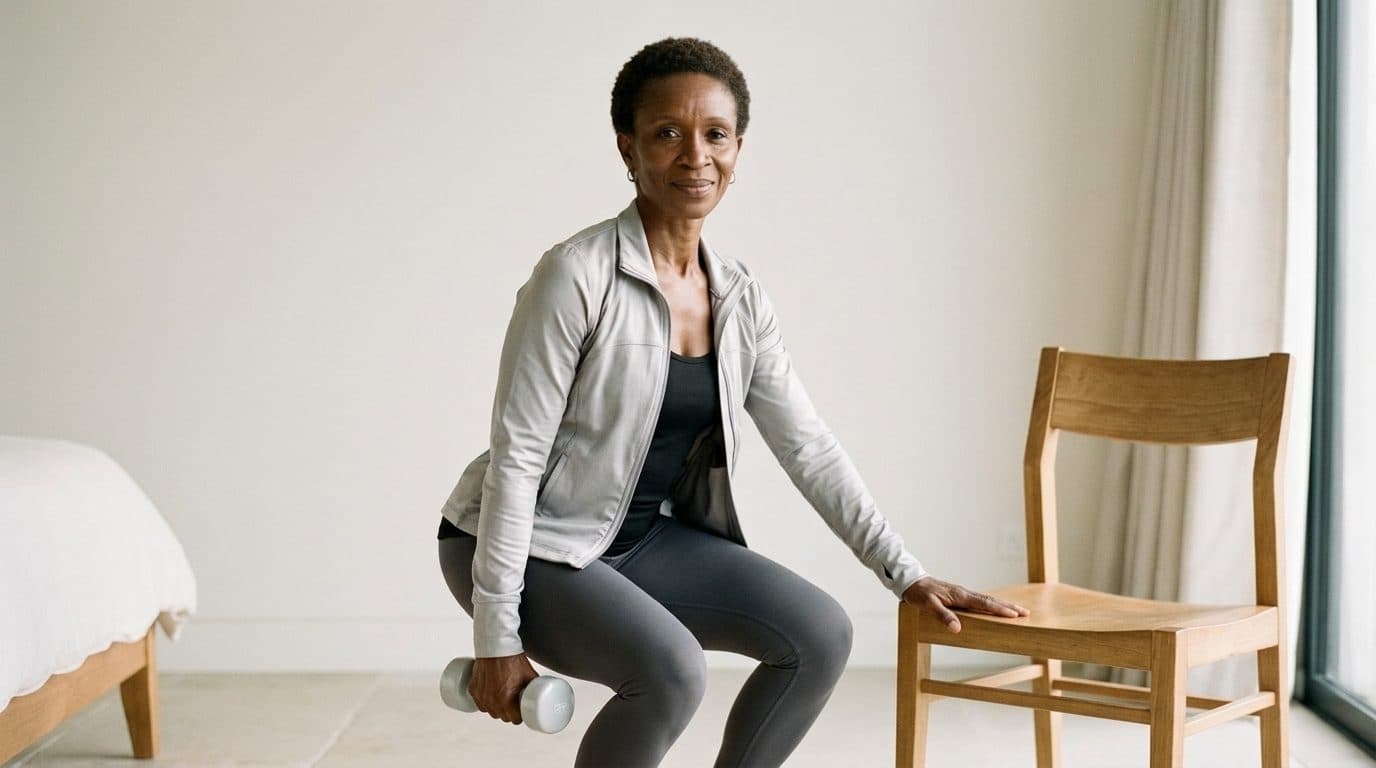
Strength training for women over 50 means regular resistance work, done in short, well-structured sessions, that challenges muscles through compound movements like squats, hinges, pushes and pulls. It should prioritise control and progressive load over long cardio sessions, with proper recovery built in, keeping the overall volume and intensity within what the body can comfortably manage.
Why does strength training need to change after 50?
By the time most women reach their fifties, the strength advice they grew up with, more cardio, lighter weights, don't bulk up, has stopped matching what the body in front of them is asking for now. The body is responding to a genuinely different set of conditions, and meeting those conditions well calls for changing the approach itself.
Training built for a younger, male-normed body doesn't account for a changing hormonal and recovery profile, so pushing harder in the old direction stops working as well as it once did. The practical shift is more deliberate resistance work, closer attention to recovery, and training that respects how this body responds to load now.
That is part of why thinking about progressive overload for women over 50 matters more now than it did a decade ago. The underlying principle, gradually increasing the demand placed on a muscle, still holds. What changes is the starting point, the pace of increase, and how much recovery sits between sessions, because recovery now functions as training in its own right.
What does strength training look like in practice for women over 50?
Strength training for women over 50 still means working against resistance, your own body weight, a resistance band, a dumbbell, a loaded barre position, until a muscle is genuinely challenged by the end of the movement. The basic logic of progressive resistance stays the same as it was in your twenties or thirties. Pace, structure and recovery are what change.
For women managing fatigue, joint sensitivity or a diary with no spare hour in it, low-impact strength training built for exhausted, busy midlife women is worth reading, because it makes the case that low-impact does not mean low-effect. Control and precision can load a muscle just as thoroughly as a heavier, higher-impact approach, with considerably less wear on joints that may already be asking for more care than they used to.
None of this requires special equipment or a gym membership to start. A pair of light dumbbells, a resistance band and a sturdy chair or wall for balance will cover most of what a well-built session needs. A simple routine that fits into the rest of a full week matters more than the exercises themselves for keeping it going.
- Compound movements that train several muscle groups at once: a squat or hinge pattern, a push, a pull, a carry
- Slow, controlled tempo, so the muscle stays under tension for longer
- Two or three full-body sessions a week, each covering the major movement patterns in one go
- Planned rest days, built into the week as part of the programme
How much strength training do you need each week?
The honest answer is less than most women expect. What counts as enough looks different in midlife. It comes down to what you can sustain week after week, more than how hard any single session feels. Short, focused sessions, something closer to twenty minutes, done with proper attention to form and load, several times a week, tend to produce better results in midlife than one long, exhausting session that leaves you too depleted to want to repeat it.
A full-body strength workout built around that twenty-minute window can cover the major movement patterns a body needs without asking for an hour most women don't have spare. The length is deliberate. A session you will actually finish and come back to beats a longer one you dread and quietly stop doing.
In midlife, cortisol and the nervous system are already more easily disrupted, so training that is relentlessly long or constantly high-intensity tends to undermine the goal it's meant to serve. That still means full effort, concentrated into a short, well-structured window, with proper recovery built in afterwards, protected from being squeezed out by the next thing on the list.
Can barre training count as strength training?
Barre tends to get filed under flexibility or toning in most people's minds, but done properly it is resistance training. Small-range, controlled movement, held under tension, against your own body weight and sometimes a light prop, for long enough that a muscle has genuinely been asked to work. It is a fitness discipline inspired by ballet, not a ballet class, and no dance background is needed to do it. The barre itself is simply something sturdy to hold onto for balance, in much the same way you might use the back of a chair.
The question of how barre and traditional weight training compare for building strength through menopause comes up often, and the honest answer is that they do different jobs. One builds raw load tolerance; the other builds control, stability and the smaller, deeper muscles that keep bigger lifts safe and well supported.
As part of a varied week, barre adds a kind of strength a dumbbell routine alone struggles to reach: the deep, stabilising, posture-holding strength that shows up in how steady you feel standing, bending and turning, as much as in what you can lift.
How do you stay consistent with strength training long term?
Consistency is the part strength training lives or dies on, far more than any single session's intensity. Missing a week, or three, is normal, and the strength built before it is still there when you come back to it.
Women who keep training through their fifties and beyond usually rely on structure more than daily motivation: a session already on the calendar, one that starts without needing a fresh decision each time, other people doing it alongside them. Mindful movement for midlife women is as much about building a routine the body can rely on as it is about any one exercise.
That is really what a programme like Awaken Barre offers: a short, structured session, built around resistance and control, that fits into a week that already asks enough of you. Forget a particular look by Friday. This is about being Strong Enough for 85™, capable and stable enough to do what you want to do, for decades still ahead.
If you want this as movement rather than another article, Awaken Barre is the twenty-minute programme I built for a body that has already changed.
Common questions
Do I need heavy weights to build strength after 50?
Not necessarily. What matters most is that a weight or resistance level genuinely challenges the muscle by the end of a set; that can come from a heavier dumbbell, a resistance band, or your own body weight loaded well through barre-style holds.
Is barre enough strength training on its own?
For many women, a well-built barre practice covers a meaningful amount of the resistance work a body needs, particularly for the smaller stabilising muscles. Many women combine it with some additional loaded work for the biggest muscle groups, depending on their goals.
How many days a week should I strength train over 50?
Two to three sessions a week, with at least a day of recovery between sessions working the same muscles, is a reasonable starting structure for most women. Consistency across weeks matters more than cramming extra sessions into one busy week.
Can I start strength training for the first time in my fifties or sixties?
Yes. Starting later simply means beginning at a lower load and building gradually, with good form prioritised over speed of progress. A body that hasn't trained resistance before often responds well once it is given consistent, appropriate stimulus.