Progressive Overload for Women Over 50: A Smarter Way to Get Stronger
Chrissy Sundt · Mindful Movement ·
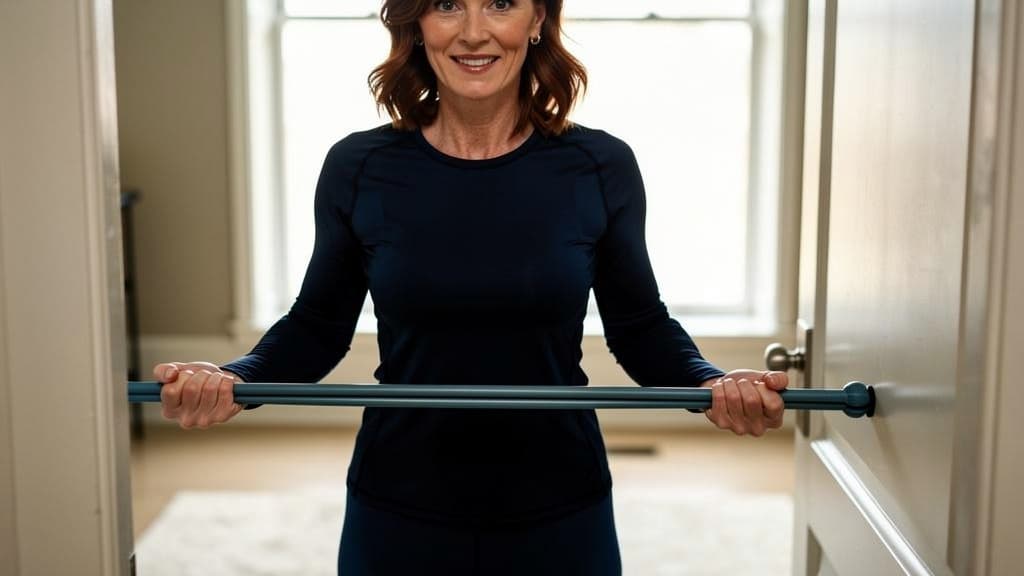
Progressive overload for women over 50 means giving your muscles a genuine reason to adapt, not necessarily by lifting heavier, but by deepening range of motion, slowing tempo, adding holds and reducing rest. Built in small, sustainable steps that match your recovery capacity, it builds real strength without overtraining an already changing nervous system.
What does progressive overload actually mean once you're over 50?
Progressive overload is simply the principle that a muscle only keeps building strength if you keep giving it a reason to. In your twenties that mostly meant one thing: add more weight to the bar, week after week, and your body adapted. It is still the same principle at fifty, but the lever you pull to create that "more" changes, and that is the part most generic fitness advice skips.
Weight is only one form of overload. Range of motion is another: taking a movement from a small pulse into a full, controlled extension asks more of the muscle without adding a single gram. Tempo is another: slowing the lowering phase of a squat or a lift so the muscle works longer under tension. A hold at the hardest point of a movement is another, instead of moving straight through it. Stability is another: doing the same move on one leg instead of two. All of these are progressive overload. None of them require a heavier dumbbell.
This matters because chasing heavier and heavier loads, the way training advice aimed at twenty year olds tells you to, can outpace what your joints and connective tissue are ready to absorb. Progressing through precision instead of pure weight gives you a genuine adaptation with far less risk, and it is a more honest match for where your body is, not where it was fifteen years ago.
Why does progressive overload feel different in perimenopause?
If you have tried applying the old rules, add weight every week, push through fatigue, chase the burn, and found your body pushing back, that is not you doing it wrong. It is your body asking for a different approach, because the terrain has genuinely changed. Perimenopause shifts how quickly you recover between sessions, how your joints and connective tissue respond to load, and how much your nervous system can absorb before it asks you to stop.
A training approach that keeps stacking intensity on top of intensity, more weight, less rest, no let up, can leave you more depleted rather than stronger. That does not mean go gentle and hope for the best. It means keep the challenge real but contained, so each session gives you a genuine strength stimulus without tipping into overtraining that leaves you running on empty for the rest of the day.
This is also why progress can feel less linear than it used to. Some weeks your body is ready for more range, more hold time, less rest between sets. Other weeks the same session feels like plenty. That fluctuation is not a sign the plan is failing, it is the plan working with a nervous system that is running on different rules than it was a decade ago. Your body is not broken here, it is recalibrating, and you cannot run outdated training software on new hardware and expect the old results.
How do you progress without adding heavier weights?
Once you stop treating heavier as the only form of progress, you have far more honest levers to pull, and barre style training is largely built around them already. Here is what progression actually looks like week to week, none of it requiring a bigger dumbbell.
The order matters more than the list. Range and control come first, always. There is no benefit in adding a hold, a weight, or a faster tempo to a movement your body has not fully learned yet, that is how compensation patterns creep in and small aches start to appear in the wrong places. Once a movement feels genuinely stable through its full range, breath steady, form even on the last repetition as the first, that is your signal you are ready for the next layer. Not a fixed number of weeks ticked off on a calendar, not a target set by someone else's programme.
This is precision over volume in practice, and it is a genuinely different skill to learn than just adding plates to a bar. You are not being asked to do more, more sets, more minutes, more days a week. You are being asked to do the same amount with more intention, and that intention, held consistently, is what a body over fifty actually responds to. It is a deep core burn without the burnout, built through control rather than force.
- Range: move from a small pulse into a fuller, controlled range of motion
- Tempo: slow the lowering or lengthening phase of a movement
- Hold time: pause at the hardest point instead of moving straight through it
- Stability: shift from a two-legged base to single-leg or an unstable one
- Density: reduce the rest between sets while keeping form solid
- Layering: add a light hand weight or resistance band once bodyweight control is genuinely there
How often should you increase the challenge?
Not on a fixed weekly schedule, and not by comparing yourself to a plan built for someone in their twenties. The honest signal that you are ready to progress is that the current version of a movement feels solid: your breath stays steady through it, your form holds through the last repetition the same as the first, and you recover by the time your next session comes around rather than still feeling it two days later.
If any of those are not true yet, that is not a setback, it is information. Staying at the same range, the same hold time, the same tempo for another week or two is not standing still, it is letting the adaptation actually land before you ask your body for more. Progress that outruns recovery is not progress, it is just a countdown to a plateau or a niggle that takes you out for a fortnight.
Missed sessions do not erase what you have already built. This is not a streak app, where a few skipped days sends you back to zero. A week off for travel, illness, or a diary that fell apart does not undo the strength your body has learned, it just means your next session might sensibly stay at the same level rather than jump ahead. Returning matters far more than never missing a day.
Consistency, not intensity, is what your nervous system trusts. A realistic, repeatable rhythm of sessions you can sustain for months will out progress an ambitious plan you abandon after three weeks, every single time.
What does progressive overload look like in a 20-minute Awaken Barre session?
Awaken Barre is built around exactly this idea, progression through precision rather than pure load. The barre itself is just a balance aid, much like the back of a sturdy chair, there for support so you can put your attention into range, tempo and control rather than into staying upright. You do not need any dance background or ballet experience to use it well. The barre's job is stability, not choreography.
Inside a session, progression shows up as small pulses building into fuller extensions, held pauses at the point of most effort, and sequences that ask your stabilising muscles to work a little longer before you rest. Twenty minutes is intentional, not incidental: long enough to genuinely challenge a muscle group through a full sequence of range, tempo and hold, and short enough that you can recover properly and come back ready for the next one.
That is what progression through range, tempo and hold is building towards: strength that actually holds up in daily life, not just inside the session. It is not about doing less because you are older. It is not less ambition, it is more intelligence, and it is a genuinely different way of getting stronger than anything built for a twenty five year old's recovery capacity.
Common questions
Do I need to lift heavy weights to benefit from progressive overload after 50?
No. Range of motion, tempo, holds and stability are all valid forms of progressive overload, and they are often a better starting point than chasing heavier weights while your recovery capacity is changing.
Can barre alone build real strength, or do I need weights too?
Barre uses your own bodyweight, controlled range and isometric holds to create a genuine strength stimulus, so no additional weight is required to progress. Some women layer in light hand weights or a band once their form is solid, but it is a choice, not a requirement.
How long before I notice progressive overload working?
It depends on where you are starting from and how consistently you train, so there is no fixed timeline. What matters more than the calendar is whether each session feels a little more controlled and steady than the one before it.
Do I need any dance or ballet experience to start?
None at all. The barre is a balance aid, not a dance requirement, there to hold onto, much like the back of a chair, while your body does the actual work.
What if I miss a week of sessions?
Missed sessions do not erase what you have already built. Come back at the same level you left off rather than trying to make up for lost time, and let your next session tell you whether you are ready to progress.