Active Ageing
Chrissy Sundt · Mindful Movement ·
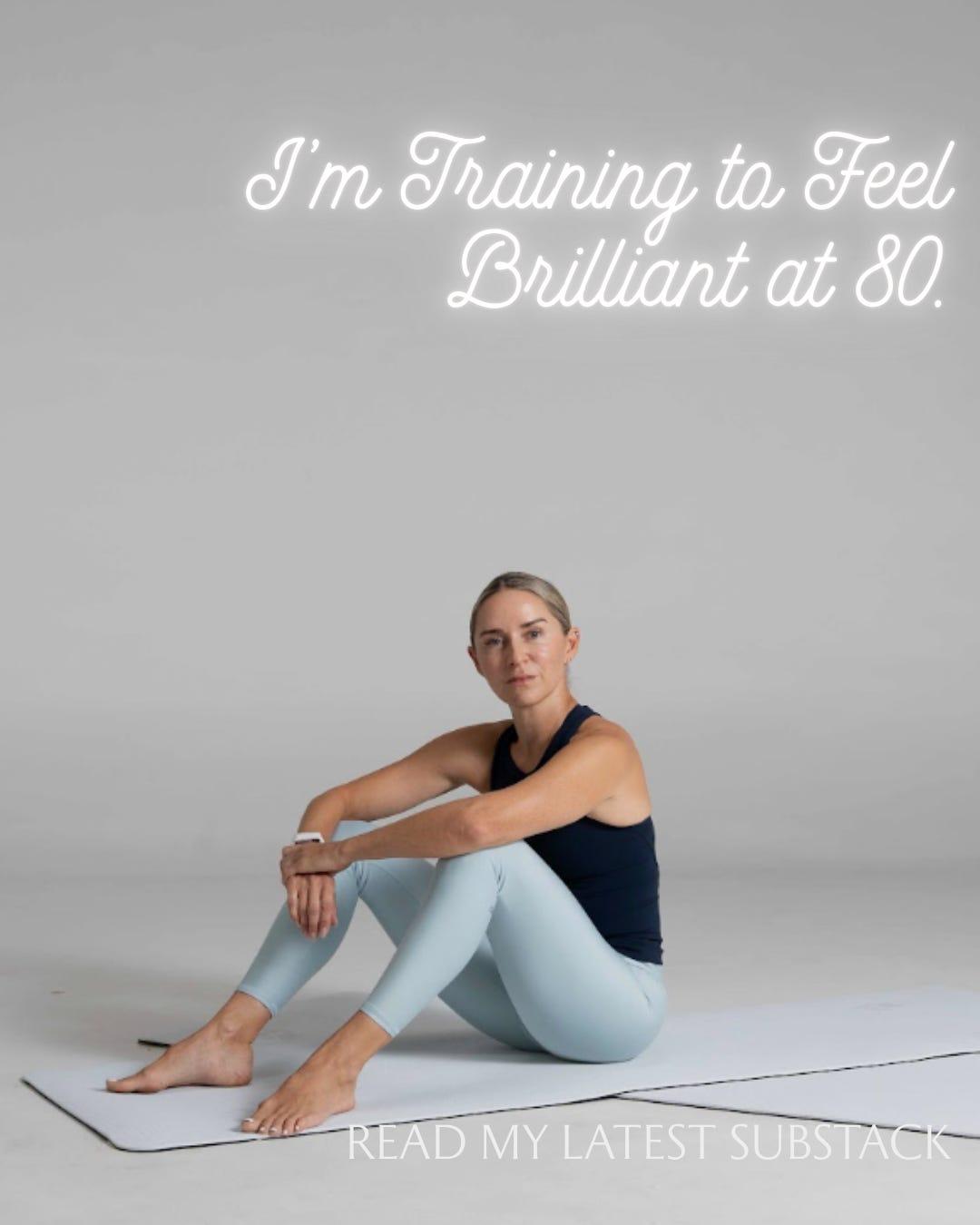
I’m turning 50 next year, and despite everything I know about health, movement and ageing, I am certainly not immune to the occasional moment of vanity. But then something rather wonderful happens, I remember what my body has just done.
Perhaps it’s time we stopped measuring how well we’re ageing by what we see in the mirror.
I’ve spent a lot of time in front of a camera recently. We’re filming new sessions for The Midlife Movement Method, which means long days under bright lights, watching myself back on monitors and occasionally getting rather more familiar with my face than I’d like and goodness, it’s easy to become hyper-critical.
A new line here. A wrinkle there. Is that really what my neck looks like from that angle?
Last week, I recorded five 30-minute STRONG sessions in a row on one day!
That’s two and a half hours of demonstrating, teaching, talking, concentrating, moving and maintaining good form. As I looked around the studio realised that, at almost 50, I was probably the only person in there who could have done it.
Not because I’m particularly extraordinary but because I’ve spent decades investing in what my body can do. Suddenly, those wrinkles seemed rather less interesting.
The problem with anti-ageing
For years, the wellness and beauty industries have sold us the idea that ageing is something to fight. Prevent the wrinkles. Reverse the signs. Turn back the clock.
Now, seemingly everywhere I look, there’s a new conversation emerging: active ageing, healthy ageing and longevity are the watch words
I’m delighted we’re talking about it but I also think we need to be a little careful because there’s a difference between wanting to age well and feeling that we must somehow become exceptionally good at not ageing.
We can spend a fortune (and I am definitely guilty of this) on supplements, skincare, treatments and technology, measuring every biological marker and optimising every possible process. Yet, we forget to ask ourselves a rather simple question: what do I actually want my body to be able to do?
I don’t want to be younger. I want to be capable and I think this is where the conversation becomes really interesting.
When I think about getting older, I’m not particularly interested in recreating my 30-year-old body. That body was wonderful, of course (even if I do say so myself!), but it was also a body that I pushed terribly hard during my ballet career. A body that I sometimes ignored, punished and expected far too much from.
Today, my relationship with movement is very different. I’m interested in strength that supports me, mobility that gives me freedom, balance that keeps me confident, cardiovascular fitness that allows me to enjoy adventures and lots of everyday capability. For example, the ability to get up off the floor, carry my own luggage, walk for miles, dance at a party and play with future grandchildren without giving any of it a second thought.
I don’t want to spend the next 30 years trying to look younger. I want to spend them becoming wonderfully capable of getting older and that’s a very different ambition.
The midlife opportunity
Perimenopause has a rather clever way of making us pay attention. Suddenly, things that once felt effortless can require a little more thought.
As many of you reading will have experienced: our sleep might change, recovery can feel different, our energy can become less predictable and the movement routines that served us beautifully for years may need adjusting.
It’s tempting to see all of this as evidence that our bodies are letting us down but what if we looked at it differently?
What if midlife were the moment we became more intelligent about how we moved? Not necessarily harder, not always more, just better. This is the philosophy behind The Midlife Movement Method.
We need strength, absolutely. Maintaining muscle, bone health and physical capacity becomes increasingly important as we age. We also need mobility, flexibility, balance, cardiovascular fitness and the ability to recover.
We need to understand when to challenge ourselves and when to restore and perhaps most importantly, we need to stop treating our bodies as projects that are never quite finished.
Our bodies are not problems to solve. They’re extraordinary things to look after!
There’s room for a little vanity, too
Now, before anyone thinks I’ve suddenly abandoned my skincare routine and embraced every wrinkle with unbridled enthusiasm, let me reassure you. I haven’t.
I love beautiful skincare, I like feeling attractive, I enjoy looking after my appearance and I don’t think there’s anything wrong with that.
The trouble begins when appearance becomes the principal measure of how well we’re ageing because the mirror can only tell us so much.
It cannot tell us how strong our legs are, how well we balance, how easily we recover from physical effort, how confidently we move through the world, or how much freedom our bodies might give us in another 20 or 30 years.
Those are the things I increasingly want to celebrate and unlike the pursuit of looking perpetually younger, they’re things we can meaningfully work towards.
Strong enough for 85
There’s a phrase I keep coming back to as I build The Midlife Movement Method: Strong Enough for 85.
Not because 85 is some magical number (I am definitely aiming higher) but because it changes the perspective. When we think about exercise in terms of next summer, next month or the next big event in the calendar our goals can become rather small.
When we think about the woman we want to be at 75, 80 or 85, everything shifts. Suddenly, lifting weights isn’t simply about sculpting our arms, it’s about maintaining the strength to live independently.
Balance work isn’t just another exercise, it’s an investment in confidence and stability.
Mobility isn’t something we squeeze in when we’re feeling stiff, it’s part of preserving our freedom to move.
And rest isn’t a reward for working hard enough, It’s part of the work.
Of course, none of us can guarantee how we’ll age. Genetics, illness, and circumstances will all play their part but we can give ourselves a better chance of remaining strong, active and engaged with life and that feels like a rather wonderful reason to move.
So, back to those wrinkles…
I’ll probably still notice them when I watch tomorrow’s footage. I’ll still occasionally wonder whether the lighting could be a little kinder. I’m human, after all. But I hope I’ll also remember the five STRONG sessions.
• The energy.
• The stamina.
• The strength.
• The extraordinary privilege of having a body that continues to do so much for me.
Because perhaps the most radical thing we can do in a world obsessed with ageing is to stop judging our bodies exclusively by how they look and start celebrating everything they allow us to do.
I don’t want to be the youngest-looking woman in the room, I want to be the woman who’s still moving brilliantly, long after everyone else has sat down and if I happen to have a few wrinkles while I’m doing it?
Well, I think I can live with that.
With love,

Founder, The Midlife Movement Method
If you want this as movement rather than another article, Awaken Barre is the twenty-minute programme I built for a body that has already changed.
First published in The Midlife Movement, Chrissy’s newsletter.
Common questions
What does active ageing actually mean?
It means measuring how well you are ageing by what your body can do rather than how it looks. Think strength, balance, recovery and everyday capability, like getting up off the floor or carrying your own luggage, rather than wrinkles or grey hair.
Why focus on capability instead of appearance as we age?
Because a mirror can only show the surface. It cannot tell you how strong your legs are, how well you balance, how easily you recover, or how much freedom your body might give you in another twenty or thirty years. Capability is something you can actually work towards.
What does Strong Enough for 85 mean?
It is a guiding phrase, not a literal target, that shifts the perspective on training. Instead of exercising for next summer or the next event, it asks what strength, balance and mobility you will need to live confidently and independently decades from now.
How does perimenopause affect movement and training needs?
Sleep, recovery and energy can all become less predictable, and routines that worked for years may need adjusting. Rather than seeing this as the body letting you down, it can be viewed as a prompt to move more intelligently, not necessarily harder or more.
Is rest considered part of training in this approach?
Yes. Rest is not treated as a reward for working hard enough but as part of the work itself, alongside strength, mobility, balance and cardiovascular fitness, all contributing to long-term capability.