The Best Non-Alcoholic Drinks for Women in Midlife
Chrissy Sundt · Nourishment ·
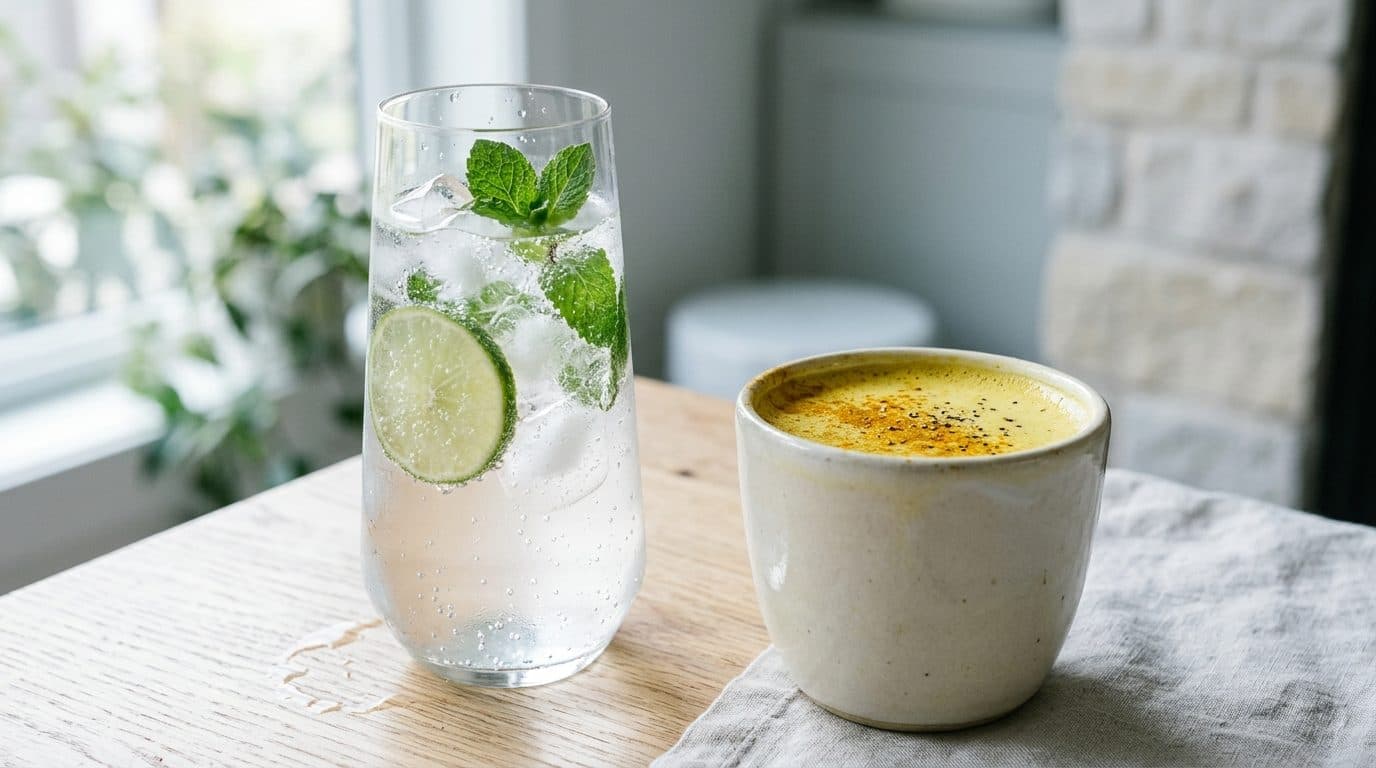
The best non-alcoholic drinks for women in midlife are the ones that still feel like a proper drink: good glassware, real flavour, nothing thrown together as an afterthought. Think kombucha, alcohol-free spirits with a proper garnish, sparkling water with fresh citrus and herbs, warm golden milk, and protein-rich shakes that double as an evening wind-down.
What makes a non-alcoholic drink worth drinking?
Most non-alcoholic drinks are designed for people who don't really want one. A warm orange juice in a highball glass, a 'mocktail' that's just cordial and ice. If you're used to a proper glass of wine with dinner, that doesn't replace anything, it just reminds you what you're missing. The drinks worth keeping around are the ones that earn their place on the table: something with bitterness or complexity, served in the glass you'd use for the real thing, with ice and a garnish you'd actually bother cutting. Ritual matters here as much as flavour. Part of what you're replacing isn't the alcohol itself, it's the pause, the glass in your hand, the signal that the day has shifted gear.
What's in the drink matters as much as how it looks, and this is where the supermarket aisle gets tricky. Many bottled alternatives are built from the same ultra-processed base as any fizzy drink, just with a more grown-up label. Cutting back on ultra-processed food and drink tends to do more for most people than any single clever swap, and that holds here too: a sparkling water with real citrus and crushed herbs will usually serve you better than a 'wellness' can full of additives and not much else. If you're rebuilding habits from scratch, starting with a few repeatable nutrition habits tends to work better than overhauling the whole fridge overnight.
- Served in a proper glass, with ice and a real garnish
- Built from whole ingredients rather than a long list of additives
- Chosen for flavour and bitterness, not just because it isn't wine
Why does alcohol feel different now?
If a single glass of wine leaves you wide awake at 3am in a way it never used to, you're not imagining it. Many women notice the same pattern through their 40s and 50s: the hangover arrives faster, hits harder and lingers longer than it did after exactly the same drink a decade earlier. Sleep gets lighter and more easily disrupted, and a flush of heat partway through the evening can turn a relaxed glass of red into something you're fanning yourself through instead. None of this means you're doing anything wrong. It means your body is processing the same input differently than it used to, and that's worth listening to rather than overriding.
Perimenopause changes the backdrop against which everything else happens, including how a drink sits with you. Hormone levels fluctuate rather than following any tidy script, and that shows up in sleep, mood and plain physical comfort in ways that can make the next-day cost of a drink feel steeper than the evening itself was worth. This isn't a reason to give up wine forever if you enjoy it. It's a reason to treat the choice as a genuine one each time, rather than a default you reach for because that's what you've always done. Noticing how you feel the next day is more useful than any rule about units.
What should I drink across an ordinary day?
Start the day with plain water before anything else, since most people wake up quietly dehydrated and reach for caffeine when fluid is the thing actually missing. Herbal tea or a weak black tea with milk covers the mid-morning slot without the jitteriness a second strong coffee can bring. Through the day, sparkling water with a wedge of lime or a splash of unsweetened kombucha gives you something with a bit of bite, which matters if you're used to reaching for a drink with texture and flavour rather than just topping up on tap water. Dry skin and stiffer-feeling joints often get blamed on everything except the basics, and plain hydration is one of the basics worth getting right first; the foods that help with dryness in your 40s are a useful next step once the water itself is sorted.
Evenings are where the ritual matters most, because that's when a glass of wine traditionally marked the end of work and the start of your own time. Warm drinks tend to suit that mood better than cold ones: a cup of golden milk with turmeric and black pepper, a caffeine-free chai, or simply hot water with lemon and ginger in a mug you'd normally keep for tea. If you're eating close to bedtime or want something that won't sit heavy, the same logic that applies to foods that are easy to digest before bed applies to drinks too: keep it light, warm rather than iced, and well away from anything heavily carbonated right before you lie down.
- Morning: plain water first, then tea or weak coffee
- Daytime: sparkling water with citrus, or unsweetened kombucha
- Evening: golden milk, caffeine-free chai, or hot water with lemon and ginger
What do I order when everyone else is drinking wine?
Social occasions are usually where the non-alcoholic question gets hardest, not the quiet Tuesday night at home. The trick that works for most women is ordering something that looks and feels considered, not like a consolation prize. A good alcohol-free gin with tonic, a bitter aperitif-style soda with a twist of orange, or a proper mocktail built with fresh juice and bitters rather than cordial all sit naturally in your hand at a bar or a dinner table. Nobody needs an explanation for what you're drinking, and if they ask, 'I fancied this one' is a complete answer. The point isn't to perform abstinence, it's to have a drink you genuinely wanted.
Non-alcoholic beer and wine have improved a great deal in the last few years, and they're worth trying properly rather than dismissing from one bad bottle years ago. Look for ones that mention de-alcoholisation by vacuum distillation rather than simply never fermenting in the first place, since the flavour tends to be rounder. If you're hosting, keep a few good options in the fridge so there's no awkward scramble, and consider making a jug of something with fresh fruit and herbs that drinkers and non-drinkers both reach for, so the non-alcoholic choice isn't singled out on its own tray in the corner. Small details like that take the decision out of the spotlight, which usually makes it easier to keep making.
- A bitter aperitif-style soda with orange
- Alcohol-free gin or spirit with tonic and a proper garnish
- A mocktail built with fresh juice and bitters, not cordial
Do protein shakes and electrolyte drinks count as nourishment?
Yes, and it's worth thinking of them that way rather than as a separate category from 'real' drinks. A shake made with a decent protein powder, milk or a milk alternative, and something like frozen berries or banana is a genuine contribution to the protein you need across the day, not just a gym extra. If mornings are rushed or appetite is low first thing, a shake can cover what a proper breakfast would otherwise need to do. The main thing to get right is the powder itself, since quality varies hugely and some are mostly sugar and flavouring dressed up as fitness food; the detail worth checking before buying a protein powder is covered properly elsewhere, so it's worth reading before you buy the first tub you see.
Electrolyte drinks are a smaller piece of the picture and mostly relevant around exercise or in hot weather, when you're losing more salt through sweat than an ordinary day accounts for. For most of a normal day, plain water and food with a bit of salt in it does the job without needing a sachet. Where a shake earns its place more consistently is as something you can rely on at the same time each day, which matters more than any single ingredient in it. Consistency in what and when you drink or eat does more for how you feel over weeks than chasing the exact right formula ever will.
If the food side of this never quite settles, the Core Nutrition Reset is Tina explaining it in plain language, not another diet.
Common questions
Does alcohol-free wine or beer contain any alcohol at all?
Most still contain a very small trace of alcohol, which is why they're labelled alcohol-free rather than zero-alcohol. Check the label if you need to avoid alcohol completely for a specific reason.
Will cutting out alcohol make hot flushes or sleep easier?
Alcohol is a common trigger many women identify for themselves, though the pattern isn't universal. The only reliable way to know is to drop it for a couple of weeks and notice what changes for you, rather than relying on anyone else's experience.
What's a good non-alcoholic drink for a meal out?
An alcohol-free aperitif-style soda, a bitters-based mocktail, or a good quality non-alcoholic wine all sit comfortably on a dinner table. Order it in the glass it's meant for rather than asking for 'just water' if you want the evening to still feel like an occasion.
Are non-alcoholic drinks full of sugar?
Some are, particularly flavoured waters and ready-made mocktail mixers, so check the label the same way you would for a soft drink. Options built around fresh fruit, herbs, bitters or plain soda water usually carry far less sugar than the bottled alternatives near the till.
Does a protein shake count towards my daily protein?
Yes, a shake made with a good quality powder and milk or a milk alternative counts the same as a protein source eaten at the table. It's a practical option on busy mornings, not a lesser substitute for real food.