The Best Time to Take Magnesium for Perimenopause Sleep
Chrissy Sundt · Rest & Illumination ·
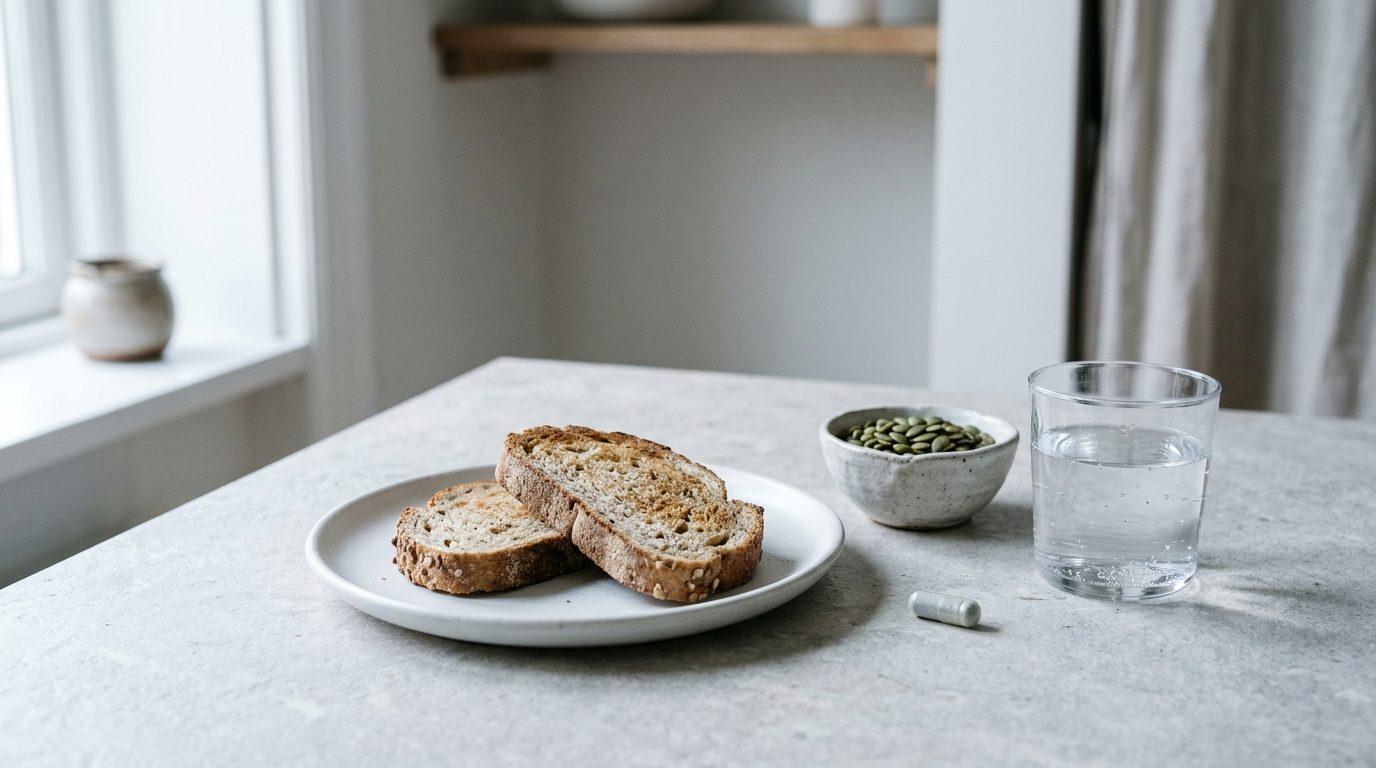
A sensible starting point is the evening meal, because it fits a wind-down routine and food can soften the stomach upset magnesium sometimes causes. I cannot point you to firm evidence for any one time, or promise that magnesium will help your sleep, so treat this as a practical choice, not a proven one. Check the form and dose with your GP or pharmacist before you start, especially if you take medication or have kidney concerns.
Is there a best time of day to take magnesium for sleep?
I am in perimenopause myself, and I know how broken sleep feels: lying awake at 3am, doing sums about tomorrow, and getting up already behind. So I understand why you want a tidy answer. Search for this and you will find confident answers pointing in different directions: morning, bedtime, split the dose. I have not seen evidence that settles a best time, and I cannot promise magnesium will help your sleep at all. Evening, with dinner, is my starting point.
I pick evening for a practical reason. It slots into a routine you already have. If you brush your teeth at the same point each night, the capsule can sit beside the toothbrush.
Choose a quiet evening to begin. A Sunday before an ordinary Monday is easier than the night before a deadline, because you are more likely to notice how your stomach responds and less likely to give up after two nights.
Give it a few weeks at the dose on the label. If your sleep feels the same, do not raise the dose; talk to your GP. Poor sleep that carries on for several weeks, or leaves you struggling through the day, is worth an appointment whatever you are taking.
Keep a simple note for those weeks. Each morning, write two lines in your phone: roughly what time you went to bed, and how the night felt. After three or four weeks you have something concrete to show your GP, which is far more useful than a general sense that you slept badly. It also stops you changing three things at once and then not knowing which one made the difference.
Before you buy anything, tell your GP or pharmacist you want to try magnesium. This matters most if you take regular medication or have kidney concerns, because magnesium can build up in the body when the kidneys are not clearing it well. Follow the dose on the label and whatever they advise.
Should I take magnesium with food or on an empty stomach?
Taking it with food may help, because magnesium can upset the stomach or loosen the bowels and a meal can soften that for some people. If you eat dinner most evenings, that gives you the timing too.
If dinner is late or changes from night to night, take it with whatever you eat last. If that is toast on the sofa after the children are in bed, that is your moment. Swallow it with a full glass of water rather than a sip.
If you use a powder rather than a capsule, mix it as the label says and read the amount per scoop, because scoop sizes differ between brands.
Magnesium can interfere with how some medicines are absorbed. If you take regular medication, ask your pharmacist whether you need a gap, and bring the bottle so they can see the form and the amount.
Start one new supplement at a time, so that if your stomach objects you know which one it was. Stop taking it and speak to your pharmacist if you get diarrhoea that does not settle, or any new symptom that worries you.
Does the form of magnesium make a difference?
Magnesium comes in several forms, and the label should name the one you are buying. Your pharmacist can tell you which is likely to suit your stomach and any medicines you take.
I have not seen good evidence that one form helps sleep more than another, so I would not pay extra for that claim. Look for the form by name and for the amount of elemental magnesium per dose, since the total weight of the capsule is a different figure.
Before you go to the shop, note the form and the elemental amount per serving. Some tubs list a serving as two or three capsules, and it is easy to compare one product's single capsule with another's three and think the first is weaker.
A short ingredient list is easier to assess and easier to stop if the product does not suit you. Keep the box or take a photo of the label until you have finished the tub.
What else helps a magnesium habit sit well in the evening?
Our guide to building an evening wind-down routine for better sleep in midlife covers the rest of the hour, without turning it into a second job.
A supplement is a small part of sleep, and the routine around it matters more than the capsule itself.
If the bottle lives in the bathroom cabinet you will forget it at dinner, so put it in the kitchen beside the kettle or on the table where you eat. If you work away or travel, tip a few days into a small pill box and keep the original packaging in your bag so the label travels with you.
Where does food fit in before I reach for a supplement?
Before adding a capsule, look at what is on your plate most days. Pumpkin seeds and almonds both contain magnesium, and a handful of seeds over yoghurt is a lot easier to keep up than a new pill. Food comes first in my thinking because there is no dose to get wrong and no form to choose.
Keep a jar of pumpkin seeds on the worktop and scatter some over soup or porridge without measuring anything. A small bag of almonds in your handbag or desk drawer, eaten with a piece of fruit, covers a snack too.
If tiredness follows you through the day as well, why you feel exhausted all the time in perimenopause is the next thing to read.
If you want this as movement rather than another article, Awaken Barre is the twenty-minute programme I built for a body that has already changed.
Common questions
Should I take magnesium in the morning or at night in perimenopause?
Evening, with dinner, is a sensible place to start, once you have checked with your GP or pharmacist. It is easy to repeat, and that matters more than the exact hour.
Can I take magnesium on an empty stomach?
Some people get an upset stomach or a loose bowel that way, so taking it with a meal or snack is a sensible way to start.
Which type of magnesium is best before bed?
I have not seen good evidence that one form helps sleep more than another. Ask your pharmacist which form suits your stomach and any medication you take.
Is magnesium safe to take with my medication?
Not always. Magnesium can affect how some medicines are absorbed, and it can build up if your kidneys are not working well. Speak to your GP or pharmacist before starting, and follow the dose on the label.