Is a DEXA Scan Worth It for Body Composition in Your 40s?
Chrissy Sundt · Nourishment ·
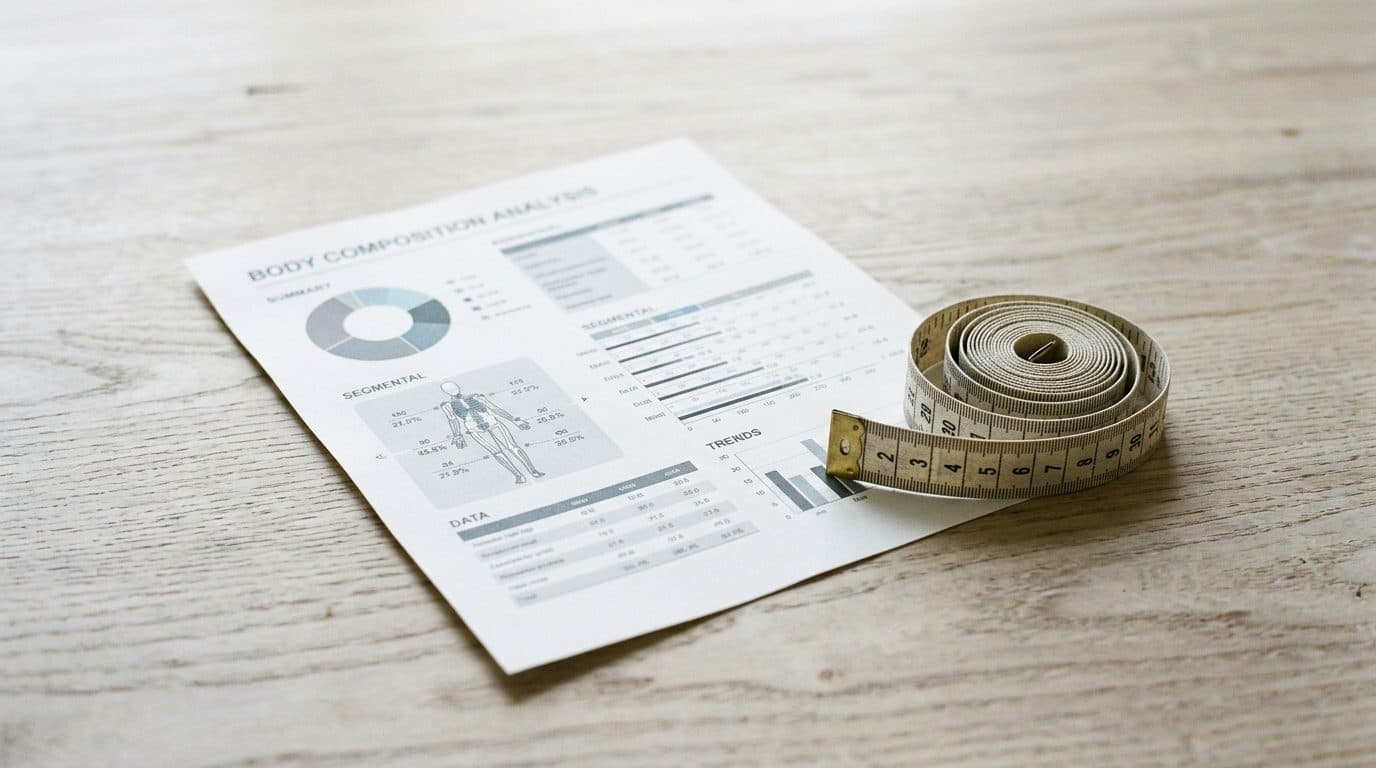
For most women in their 40s, a DEXA scan is worth it as an occasional data point, not a routine habit. It gives a precise breakdown of fat, lean mass and bone, useful for tracking change over time, but it won't explain why your body is shifting or say anything about your worth.
What Does a DEXA Scan Measure?
A DEXA scan, short for dual-energy X-ray absorptiometry, passes two low-dose X-ray beams through the body. Because fat, muscle and bone absorb those beams differently, the scanner can separate them out rather than just weighing you as one lump sum, which is the main thing that makes it different from a set of bathroom scales.
The output is a breakdown of total mass into fat mass, lean mass (muscle, organs and fluid together) and bone mineral content, usually with a regional split for arms, legs and trunk. You get a number for how much of you is fat, how much is everything else, and roughly where it sits, rather than a single combined figure.
DEXA was built for clinical bone density assessment, and that is still its main medical use, usually reserved for cases where a GP has a specific reason to check. Body composition has become a secondary service that some private clinics and a growing number of gyms now offer as a standalone scan, separate from any diagnostic reason for having one.
Lying still for the few minutes the scan takes is the only part that takes any effort. There's no fasting, no exercise beforehand and nothing to prepare, which is part of why it has become an easy add-on service rather than something that needs a referral.
Why This Question Comes Up in Your 40s
This is usually the decade where the scale says one thing and the mirror says another. Clothes fit differently even when weight hasn't moved much, and that gap between the number and how your body feels day to day is exactly what sends women looking for a more precise measurement.
Some of what you're noticing is a genuine redistribution of where fat tends to sit as hormones shift through perimenopause, which is covered in more depth in why menopause belly fat happens and what to do about it. None of that means anything is going wrong. The body is changing shape, which is simply a normal part of this stage of life.
At the same time, muscle takes more deliberate effort to hold onto than it used to. The strength work you did without thinking about it at 25 now has to become a decision you make on purpose.
I notice this myself. I've spent 25 years teaching movement and I'm navigating this transition in my own body right now, which is partly why the curiosity for data makes sense to me. Wanting a clearer picture than the scale gives you is a reasonable response to a body that's genuinely different from the one you had at 30.
What a DEXA Scan Can and Can't Tell You
A DEXA scan can give you a precise snapshot and, if you repeat it on the same machine over time, a reasonably reliable trend line. That's genuinely useful if you're making a deliberate change to how you train or eat and want to see whether lean mass is holding or shifting, rather than guessing from how your clothes feel.
What it can't do is explain why. It won't tell you whether a dip in lean mass is down to training, sleep, stress or simply hydration on the day of the scan, and a single reading says nothing about your health, your effort or your worth. It's a measurement, not a verdict, and it has no view on whether you're doing enough.
It also can't compare you meaningfully to anyone else. Different machines calibrate slightly differently, so a number from one clinic isn't reliably comparable to a number from another, and population averages printed on the report tell you very little about what's right for your own frame.
Muscle is the number worth paying closer attention to in midlife, more so than fat percentage on its own. A DEXA scan can show you where it sits, but moving that number takes consistent strength training in the weeks afterwards.
- Can: give a precise fat, lean mass and bone breakdown
- Can: show change over time on the same machine
- Can't: explain the cause of any change
- Can't: tell you anything about your health or your worth from one reading
Is It Worth the Time and Cost in Your 40s?
Practically, DEXA for body composition is usually booked privately through a clinic or a gym that offers it as a service, rather than through routine GP care, which tends to reserve bone density scans for cases with a specific clinical reason. Costs vary a good deal by clinic and region, so it's worth checking locally rather than assuming a figure.
If you do book one, the number only means something alongside a second scan on the same machine later, so a single one-off reading has limited value beyond curiosity. Once every year or so, around a period of deliberate change, is plenty. There's no need for anything more frequent than that.
Body composition comes up often in conversations with midlife women, which simply tells you the curiosity is common and entirely reasonable.
You can also track most of what matters without a scan at all: whether you can lift heavier or move with more control in sessions like Awaken Barre, how your clothes sit, and whether your energy through the day has shifted. For many women, those signals are enough on their own.
What to Do With the Numbers Once You Have Them
If you get a scan, the most useful thing you can do with the result is treat it as a baseline rather than a target to chase. A single lean mass figure is useful mainly as a starting point, something to notice movement against over time rather than a score to improve for its own sake.
On the nourishment side, that usually means paying attention to protein across the day rather than overhauling everything at once. What actually matters when choosing a protein powder is a reasonable place to start if supplementing is part of your routine, and the practical answer to how many calories you need to build muscle in your 40s is more useful day to day than any single scan reading.
On the training side, lean mass responds to consistent strength work carried out over months. That's the thinking behind being Strong Enough for 85™: today's effort as an investment in future capability.
A DEXA scan can be useful if you're curious and want precision. Whether you book one or not, it won't be the thing that tells you if you're doing enough.
Common questions
Does a DEXA scan check for osteoporosis?
DEXA is the scan doctors use clinically to assess bone density, usually when there's a specific medical reason to check. The body composition version offered by clinics and gyms measures fat, muscle and bone for tracking purposes only, so speak to your GP if bone health is the actual concern.
How much does a DEXA body composition scan cost?
Costs vary depending on the clinic, the region and whether it's bundled with other testing, so it's worth checking with a provider near you rather than assuming a price.
Is a DEXA scan more accurate than a smart scale?
DEXA uses a different method to separate fat, lean mass and bone, and is generally considered more precise than the bioelectrical impedance used in home smart scales. Both give you an estimate, so neither should be treated as the final word.
How often should I repeat a DEXA scan?
Body composition doesn't shift meaningfully month to month, so repeating a scan more than once a year rarely tells you anything new. It's most useful around a period of deliberate change in training or eating, compared on the same machine each time.