Does Barre Help You Sleep Better in Midlife?
Chrissy Sundt · Sleep ·
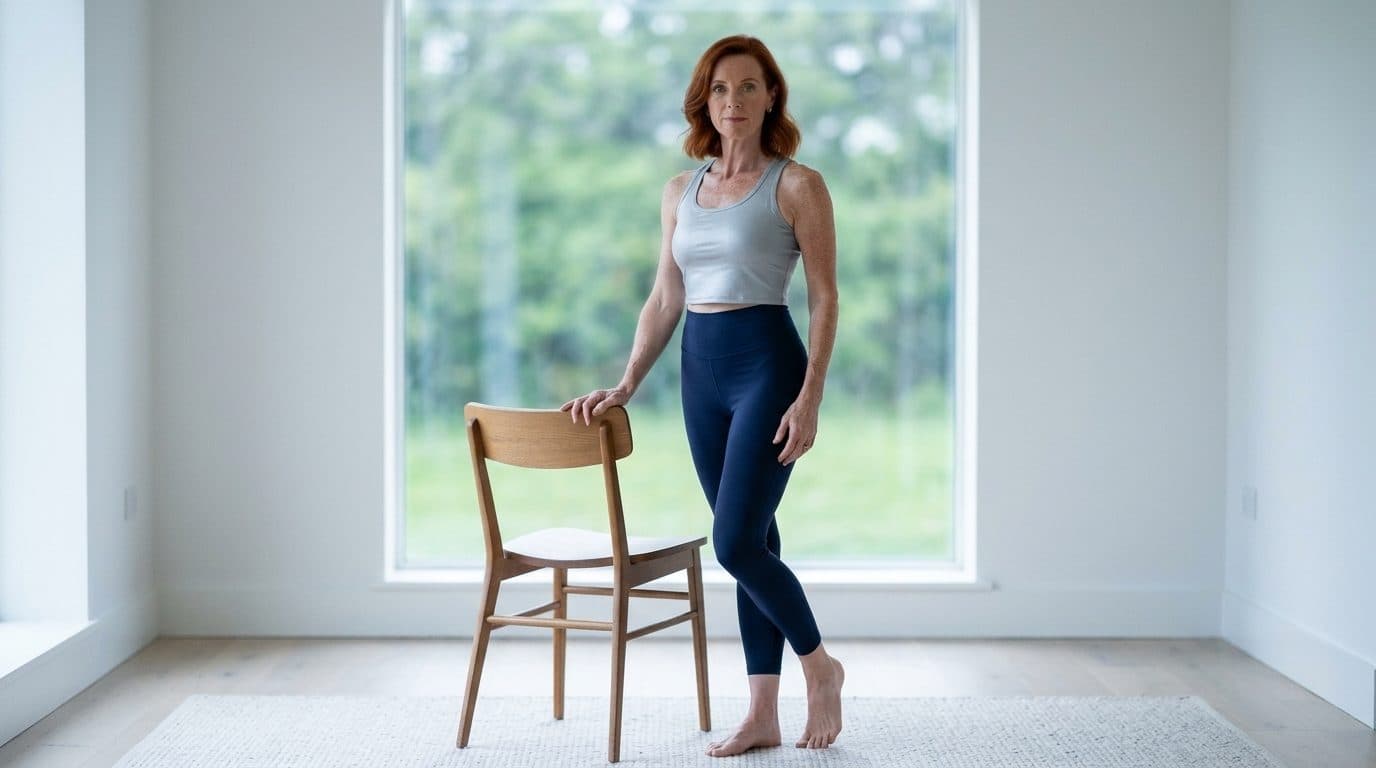
Barre will not knock you out like a sedative, but the right session, done at the right time of day, can help. Short, controlled, low-impact strength work calms an already-busy nervous system rather than revving it further, and a 20-minute practice earlier in the day supports the wind-down your evening needs.
Why Might Barre Help You Sleep Better?
Barre is a strength and mobility discipline inspired by ballet, not a ballet class itself. You hold the barre the way you would hold the back of a sturdy kitchen chair, there for balance while the real work happens in your legs, hips and deep core. No dance background is needed, and nobody is watching your feet. What makes barre relevant to the sleep question has less to do with what it looks like and more to do with the quality of the movement itself.
Sleep depends heavily on how settled your nervous system is in the hours before bed. A barre session built around slow, controlled holds and small ranges of motion asks something different of your body than sprinting through a high-intensity circuit. It still works the muscles properly. It just doesn't flood you with the same adrenaline spike. For a lot of women in perimenopause, where cortisol is often already doing more than it used to, that distinction between a stimulating workout and a settling one matters.
This is part of why barre tends to sit alongside strength work rather than replace it. The control and stability it builds show up elsewhere too, which is part of why the barre works better for balance than the gym floor. The same qualities that help with balance, patience, precision, a body that trusts its own footing, are what make it a plausible lever for sleep rather than something to be wary of in the evening.
None of this makes barre a treatment for insomnia, and it isn't being presented as one here. What a regular practice can do is change how your body feels by the time you get into bed. Less wired. Less braced. More like you've used your muscles well rather than pushed them past the point of use. That's a fair thing to expect from twenty minutes of intelligent movement.
Does It Matter What Time of Day You Practise?
Barre doesn't come with a fixed bedtime rule, but when you do it changes what you get from it. A session first thing in the morning or over lunch tends to leave you alert and settled by evening, the kind of tired that makes the sofa feel earned rather than the kind that keeps your mind running through tomorrow's list. For a lot of women, that's the simplest way to use it: a daytime practice that supports a calmer evening, rather than the evening practice itself.
Timing matters partly because of how body temperature behaves around sleep. Your core temperature needs to drop for you to fall and stay asleep, which is part of why a warm bath an hour before bed can help, the heat loss afterwards does the work. Any activity that raises your core temperature follows a similar pattern. There needs to be enough of a gap before bed for your body to cool back down.
That's the practical argument for doing barre earlier rather than right before lights out, not because the session is too stimulating, but because your body needs the runway. If a later slot is genuinely the only one that fits your week, how you wind down afterwards matters more than when you started, and it's worth building that into the plan rather than leaving it to chance.
The honest answer is that consistency of timing beats finding the perfect hour. A barre session at roughly the same time most days does more for your sleep than an occasional ideal slot squeezed in when the diary allows. Twenty minutes, done regularly, earns its place in a routine in a way an hour done twice a month never quite manages.
Why Does Gentle, Controlled Movement Beat High Intensity at Night?
Not all exercise asks the same thing of your nervous system, and the difference is especially noticeable in midlife. A hard cardio session or a punishing circuit floods you with adrenaline and raises your heart rate well past the point where your body is thinking about winding down. That's a fine trade on a morning when you want to feel switched on. It's a harder trade late in the day, when cortisol is often already doing more than it used to in perimenopause.
Barre works differently because of how it's built. The holds are slow, the ranges are small and precise, and the burn you feel in a set of pulses is deep and local rather than a whole-body flood of stress hormones. It still trains strength properly. It just leaves your system calmer afterwards rather than wired. That's the quiet argument for barre over a harder session on the evenings when sleep is the thing you're trying to protect.
This is also tied to how tired you feel generally. If you're already running low, which is a familiar feeling for plenty of women trying to work out through perimenopause, stacking a high-intensity session on top rarely leaves you more rested. A shorter, more controlled practice can do real work on your strength without borrowing against tomorrow's energy, or tonight's sleep.
Gentle doesn't mean easy, and it certainly doesn't mean pointless. Twenty minutes of barre done with proper attention to form will leave your legs and core genuinely worked. The difference is what happens after you finish: a settled kind of tired rather than a jittery one, which is the version of tired that actually helps you drop off.
Does Barre Help With the 3am Wake-Ups and Night Sweats?
Barre will not stop a hot flush at 3am, and nothing here claims that it can. Night sweats and sudden waking in perimenopause have their own physiology, and no amount of strength training switches that off. What barre can realistically do is change what happens around that waking, not the waking itself.
Briefly waking in the night is a normal feature of sleep, not evidence that something has gone wrong, and treating every wake-up as a crisis can itself be arousing. Applied to barre, the connection is a modest one: a calmer, less wired body going into the night may find its way back to sleep more easily once woken, which has more to do with how the evening felt than with anything barre does directly at 3am.
If that hour has become a familiar fixture in your night, there are specific reasons perimenopause tends to wake women at that exact hour, and barre is one small piece of a much bigger picture rather than the answer on its own. Treat it as part of how your day is structured, not as a fix aimed at the wake-up itself.
Where it probably helps most is in the hours before bed rather than the hours you're trying not to think about. A body that has moved well during the day, rather than been sedentary all day or pushed hard right before bed, tends to settle into the early stages of sleep more easily. What happens at 3am is still mostly down to hormones. What happens between 7pm and midnight has more room for you to shape.
How Do You Build Barre Into a Routine That Supports Sleep?
If you want barre to earn its place in your sleep routine, start with when rather than how much. Late morning, lunchtime or early evening are the easiest slots to build a habit around, because they give your body time to cool down and settle long before you're lying in bed. If mornings and lunchtimes are impossible with your week, the earlier side of evening still works better than the later side.
Keep the session itself short and genuinely finished. Twenty minutes is enough to work the muscles that matter and leave you with that settled kind of tired, and a short session you actually complete beats a long one you keep putting off. Pair it with whatever already helps you wind down, because a consistent bedtime routine does more for sleep than any single ingredient inside it, barre included.
Consistency matters more than any individual session. Missing a few days doesn't undo what the last fortnight built, and chasing a perfect streak is its own kind of stress. What matters is that barre becomes a regular enough fixture in your week that your body starts to recognise it, the same way it recognises a regular bedtime or a regular wake time.
None of this needs to be complicated. A chair for balance, twenty minutes, and a time of day that leaves room for your body to cool down and settle. That's the whole method, applied to one specific question: whether the way you move during the day changes how you sleep at night.
If you want this as movement rather than another article, Awaken Barre is the twenty-minute programme I built for a body that has already changed.
Common questions
Can barre replace medical care or medication for poor sleep?
No. Barre is not a substitute for medical care, and nothing here claims otherwise. What a regular practice can change is how settled your body feels by bedtime, which is separate from any medical issue affecting your sleep.
What time of day is best for barre if I want to sleep better?
Late morning, lunchtime or early evening tend to work best, because they give your body time to cool down and settle before bed. A later session isn't off limits, it just needs a proper wind-down afterwards.
Do I need any dance experience to try barre?
None at all. Barre is a strength and mobility discipline inspired by ballet, not a dance class, and the barre itself is simply something sturdy to hold for balance.
Will barre stop night sweats or 3am waking?
No single form of exercise does that, and barre doesn't either. It can change how your evenings feel and how easily you settle once you do wake, but the waking itself has its own causes.
How long should a barre session be to help with sleep?
Around 20 minutes is enough to work the major muscle groups properly and leave you with a settled kind of tired, without tipping into the kind of session that leaves you wired.