Fibre Intake for Women in Perimenopause: How Much You Need and Why It Matters
Chrissy Sundt · Nourishment ·
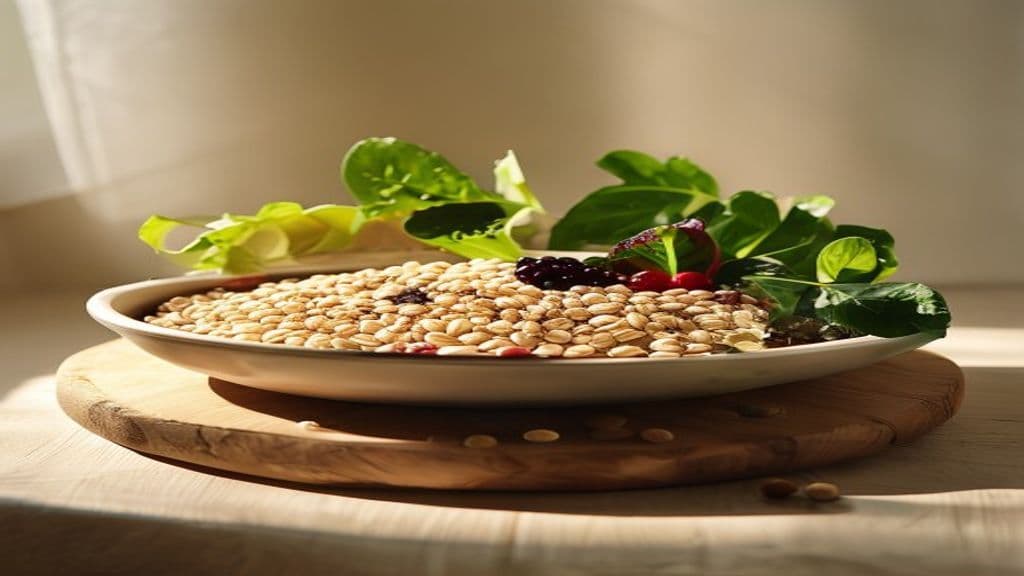
Most women need roughly 30 grams of fibre a day, and perimenopause is when hitting that target starts to matter more, since digestion, appetite and energy can all feel less predictable. A varied mix of pulses, wholegrains, vegetables and fruit, increased gradually and with plenty of water, supports steadier digestion and comfort.
How much fibre do you actually need in perimenopause?
Most guidance for adult women points to around 30 grams of fibre a day, and the honest starting point is that many women fall short of it without realising. Perimenopause doesn't change the target dramatically, but it changes how much it matters. Your gut, like the rest of you, is adjusting to a new hormonal environment, and the food choices that once felt optional start to feel foundational.
Rather than fixating on a single number, it helps to think about fibre the way you'd think about strength training: consistency over intensity. A sudden jump in one day is more likely to leave you uncomfortable than nourished. The aim is a steady upward shift, built meal by meal, not a single virtuous Monday that collapses by Wednesday.
What matters more than the exact gram count is variety. Fibre isn't one thing, it's a family of different plant structures, and your gut benefits from meeting all of them, not just the one that happens to be in your usual porridge. That means spreading fibre across the whole day and the whole plate, rather than loading it into one bran-heavy breakfast and calling it done.
Why does fibre matter more once perimenopause starts?
Hormonal shifts in perimenopause touch far more of the body than most women expect, and digestion is one of the quieter parts of that story. Oestrogen and progesterone both interact with gut function, which is part of why bloating, irregularity or a digestive system that suddenly feels less predictable are such common experiences in this decade. Fibre doesn't override that shift, but it gives your gut more of what it needs to keep working steadily through it.
Fibre also plays a role in how full and steady you feel after eating. Soluble fibre slows digestion, which means meals tend to feel more satisfying for longer, rather than leaving you reaching for something an hour later. For a lot of women in perimenopause, whose appetite and energy can feel less predictable than it used to, that steadiness is genuinely useful, not just a nice-to-have.
There's also a knock-on relationship between fibre and the rest of what you eat. A fibre-rich plate is, almost by definition, built around vegetables, pulses, wholegrains and fruit rather than heavily processed food. So increasing fibre rarely happens in isolation. It tends to nudge the whole pattern of eating in a more supportive direction, which matters more now than it did in your twenties, when your body was more forgiving of an inconsistent approach.
Which foods actually get you there?
You don't need exotic ingredients or a specialist food order to hit a genuinely varied fibre intake. Pulses, lentils, chickpeas and beans are some of the most efficient sources going, delivering a meaningful amount of fibre alongside protein, which makes them useful well beyond just the fibre count. A cup of lentils in a soup or dahl does more work than most supplements ever will.
Wholegrains matter here too, but the swap is simple: oats instead of a refined cereal, wholegrain or seeded bread instead of white, brown rice or quinoa instead of the polished version. None of this requires giving up the foods you enjoy, just choosing the less processed version of the same thing most of the time.
Vegetables and fruit round it out, and the skin-on, whole version usually carries more fibre than the peeled or juiced one. An apple with its skin, a jacket potato with its skin, a handful of berries eaten whole rather than blended away: small choices, repeated daily, that add up far more than one dramatic dietary overhaul.
- Pulses: lentils, chickpeas, black beans, kidney beans
- Wholegrains: oats, wholegrain bread, brown rice, quinoa
- Vegetables and fruit, eaten skin-on where possible
- Nuts and seeds, particularly chia, flax and almonds
How do you increase fibre without bloating or discomfort?
The single biggest mistake is speed. If your gut has been used to a lower-fibre pattern for years, doubling your intake overnight is far more likely to produce bloating and discomfort than steady comfort. Increase gradually, over two to three weeks, giving your gut bacteria time to adjust to the new workload.
Water matters just as much as the fibre itself. Fibre needs fluid to do its job properly, particularly the insoluble kind found in wholegrains and vegetable skins. If you're increasing fibre without also increasing water, you're more likely to feel congested rather than comfortable. A practical marker: if your urine is pale rather than dark through most of the day, you're probably drinking enough alongside it.
Spread your intake across meals rather than concentrating it in one. A fibre-heavy breakfast followed by two low-fibre meals still leaves you short by the end of the day, and tends to produce a single uncomfortable spike rather than steady, manageable digestion. Aim for a source of fibre at every meal, pulses at lunch, vegetables at dinner, fruit or oats at breakfast, so your gut is working with a consistent supply rather than feast and famine.
Is fibre the whole picture in perimenopause?
It's tempting to look for a single nutrient that does all the work on its own, and fibre isn't that. What it does offer is a genuinely useful piece of a wider pattern: steadier digestion, a more settled gut, and meals that keep you satisfied for longer rather than leaving energy dipping an hour after lunch. That's not a small thing when so much else feels less predictable than it used to.
Fibre intake rarely works well in isolation from the rest of what's on your plate. Protein, healthy fats and fibre together tend to leave you feeling fuller and more satisfied through the day than any one of them alone, which is part of why we teach nutrition as a whole pattern in The Core Nutrition Reset rather than a single rule to follow. It's not about counting grams in isolation, it's about building meals that work together.
If you're not sure where your current eating pattern sits, or what a realistic, gradual increase looks like for your specific week, that's exactly the kind of practical detail worth getting right rather than guessing at. This is education, not a medical fix, and if you have ongoing digestive symptoms that concern you, that's a conversation for your GP. But for building a steadier, more supportive everyday pattern, fibre is one of the most useful places to start.
Common questions
Do I need more fibre in perimenopause than I did in my twenties?
Not necessarily more in terms of grams, but it tends to matter more. Digestion and appetite can feel less predictable during this stage, so meeting a genuinely varied fibre intake becomes more useful than it may have felt before.
Can I get enough fibre from supplements instead of food?
Whole foods give you fibre alongside the fluid, protein and micronutrients that make it work well together, which a supplement on its own can't replicate. Food first, with a supplement only as a genuine gap-filler, tends to sit more comfortably.
Will increasing fibre cause bloating?
A sudden, large increase often does, mostly because your gut hasn't had time to adjust. Increasing gradually over a few weeks, alongside more water, is the more comfortable route.
What's the easiest way to start?
Swap one refined food for its wholegrain version and add one extra serving of vegetables or pulses to a meal you already eat most days. Small, repeatable changes beat a dramatic one-off overhaul.
Is fibre alone enough to manage perimenopause nutrition?
No single nutrient does that job on its own. Fibre works best as part of a wider pattern of protein, healthy fats and varied plants, which is the whole-pattern approach we teach in The Core Nutrition Reset.