How to Join a Women's Group in Your 40s (When You're Out of Practice)
Chrissy Sundt · Connection ·
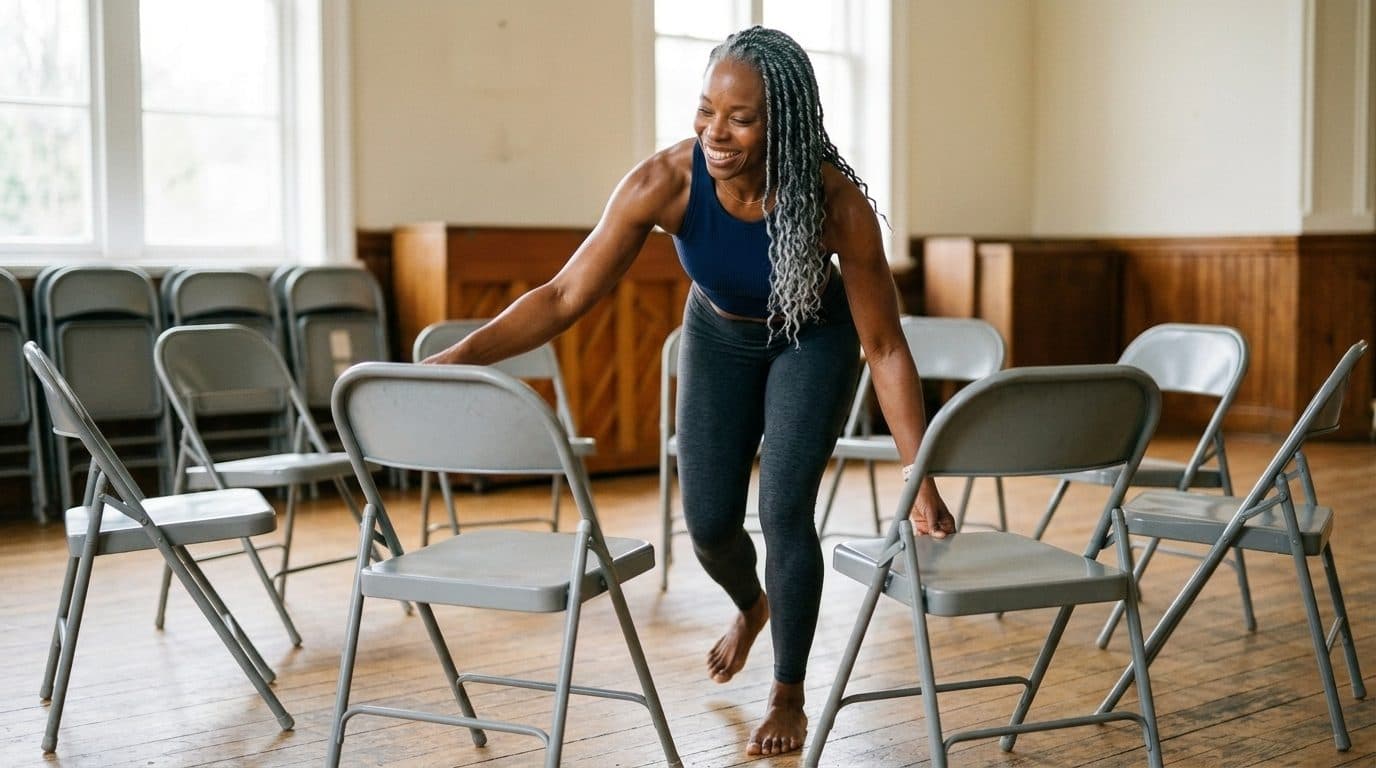
The fastest route is a recurring group built around a shared activity: a class, a walking group or a hobby community. Commit to three sessions minimum and let the friendship grow out of the routine. Women in their 40s tend to bond over doing something together, week after week, more than through any single conversation.
Why does it get harder to find a women's group in your 40s?
In your twenties and thirties, friendship mostly happens without a decision. It comes bundled with the school run, the same corridor at work, the same antenatal class, the same five people who show up to every leaving party. You don't choose those friendships so much as fall into them, repeatedly, in the same rooms.
Somewhere in your forties, most of that scaffolding is quietly dismantled. Children need less minute-by-minute company. Jobs change or go remote. The women you saw every day at nursery drop-off scatter into different schools and different lives. Nobody removes your friendships on purpose. The rooms you used to stand in together simply stop existing.
This matters more than it sounds like it should. Loneliness and social isolation are well studied as a long-term health risk. A thinning address book in your forties is a genuine variable in how you age.
None of this is a verdict on your effort or your likeability. You didn't get worse at friendship. The infrastructure that used to manufacture it for you disappeared, and now the manufacturing has to be done on purpose. It's a logistics problem, and logistics problems have workable fixes.
Where do you actually find a women's group in your 40s?
Skip anything that bills itself purely as networking or making friends, because that framing puts all the pressure on a single conversation to prove itself. Look instead for groups organised around a shared activity, somewhere the conversation grows naturally out of doing something together.
Recurring movement classes, walking groups, choirs, allotments, book clubs, running clubs and craft groups all work for the same reason: you see the same faces, at the same time, in the same place, week after week, without having to engineer it. That repetition is what turns strangers into familiar faces, and familiar faces into something more.
Practically, start with what already has infrastructure. Local Facebook groups and community apps list recurring meet-ups by postcode. Libraries and community centres pin noticeboards with everything from walking netball to knitting circles. A gym, studio or class you already attend may run a version of this you haven't noticed, because you've been leaving the moment the session ends.
Old interests are a shortcut too. A hobby you dropped when life got busy, whether that was choir, tennis or life drawing, usually still has a local group running it, and returning to something familiar is easier than starting completely cold. Pick one with a fixed, recurring slot, and give it several goes before judging it. Nobody finds the perfect group on the first try.
- Recurring movement or exercise classes
- Walking or running groups
- Choirs, allotments and craft groups
- Local Facebook or community app meet-ups
- Reviving a hobby you already know
What if you feel too awkward or out of practice to just turn up?
Most women who avoid joining a group are stuck on the walking-in part. That feeling gets worse the longer it's been since you last did it to anyone.
There's a well-documented pattern called the liking gap: people consistently underestimate how much a new acquaintance likes them after a conversation. You are very likely misjudging how your first session went, and probably underestimating how well it was received.
Practically, lower the stakes before you raise the ambition. Go once with no goal beyond attending. Ask one specific question, something like what brought you here or how long have you been coming. Specific questions are easier to answer than general ones, and easier to ask than you'd think.
Treat the first two or three sessions as information gathering, before deciding whether you belong there. Awkwardness at the start is data about being new. It says nothing about whether you're suited to the room. It fades with repetition in a way that willpower alone won't fix.
How do you turn a group into actual friendships, not just familiar faces?
Showing up regularly gets you acquaintances. Friendship needs something extra: contact you keep choosing to make, even once you no longer have to. Sitting next to the same woman at barre or book club every week is a start, but it stays at the level of familiar faces until one of you takes it outside the room.
That doesn't have to be dramatic. It can be as small as messaging one person after a session to ask how the rest of their week went, or suggesting a coffee before or after the class instead of heading straight home each time. Small, low-effort extensions of contact are what move a relationship from context-dependent to portable.
That's the shift worth noticing when a Tuesday class or a Thursday walk feels like a small, ordinary thing. Over months, this is what quietly turns an ordinary week into the kind of relationships you can lean on when things get harder. It builds from showing up, choosing the same people on the same day, week after week.
Be the one who follows up first, more than once. Most people are waiting for someone else to make the next move, which means a group can stall at familiar faces indefinitely if nobody takes the small, slightly vulnerable step of reaching out between sessions.
Does a movement-based group like Awaken Barre count as a women's group?
It counts more than people expect, because the format solves the exact problem this article started with: repeated, unplanned contact with the same people, on a fixed recurring slot, doing something together that gives you plenty to talk about. That's the ingredient friendship research keeps returning to, regardless of whether the activity is barre, choir or a walking group.
Awaken Barre is a barre-based strength and mobility programme, and barre here means a discipline inspired by ballet. The barre itself is a balance aid, similar to the back of a sturdy chair. You don't need dance experience, rhythm, or a leotard's worth of confidence, just a willingness to turn up to the same short session.
The sessions are kept short, which matters for showing up consistently, week after week. It is easier to protect a short, recurring slot in your week than an hour you will cancel when life gets loud, and a slot you actually keep is the one that eventually produces a familiar face worth talking to.
None of this replaces deliberately building friendships outside a class, but if you want a low-pressure way to be in the same room as the same women on the same day each week, while also doing something for your own strength and mobility, it's a reasonable place to start.
If you want this as movement rather than another article, Awaken Barre is the twenty-minute programme I built for a body that has already changed.
Common questions
How long should I give a new group before deciding it isn't for me?
Aim for at least three to four sessions. The liking gap is a well-documented pattern: first impressions of how well you're received are usually too harsh, and repetition is what turns a room of strangers into familiar faces.
What if there's no local women's group that fits my interests?
Check community apps and library noticeboards before assuming nothing exists, since most recurring groups aren't advertised widely. If genuinely nothing fits, ask one acquaintance to start something small and recurring with you, even a weekly walk counts.
Do online women's communities count, or does it have to be in person?
Online communities are a reasonable starting point, but they tend to lack the accidental, repeated contact that in-person recurring groups create. Use them to find local, in-person options, since that's where lasting contact really happens.
Is a fitness class like Awaken Barre a substitute for close friendship?
No. It's a low-pressure setting where the repeated contact friendship tends to grow from happens naturally. The closeness still has to be built deliberately, one session and one conversation at a time.