How to Get Back Into Exercise in Your 40s Without Getting Hurt
Chrissy Sundt · Mindful Movement ·
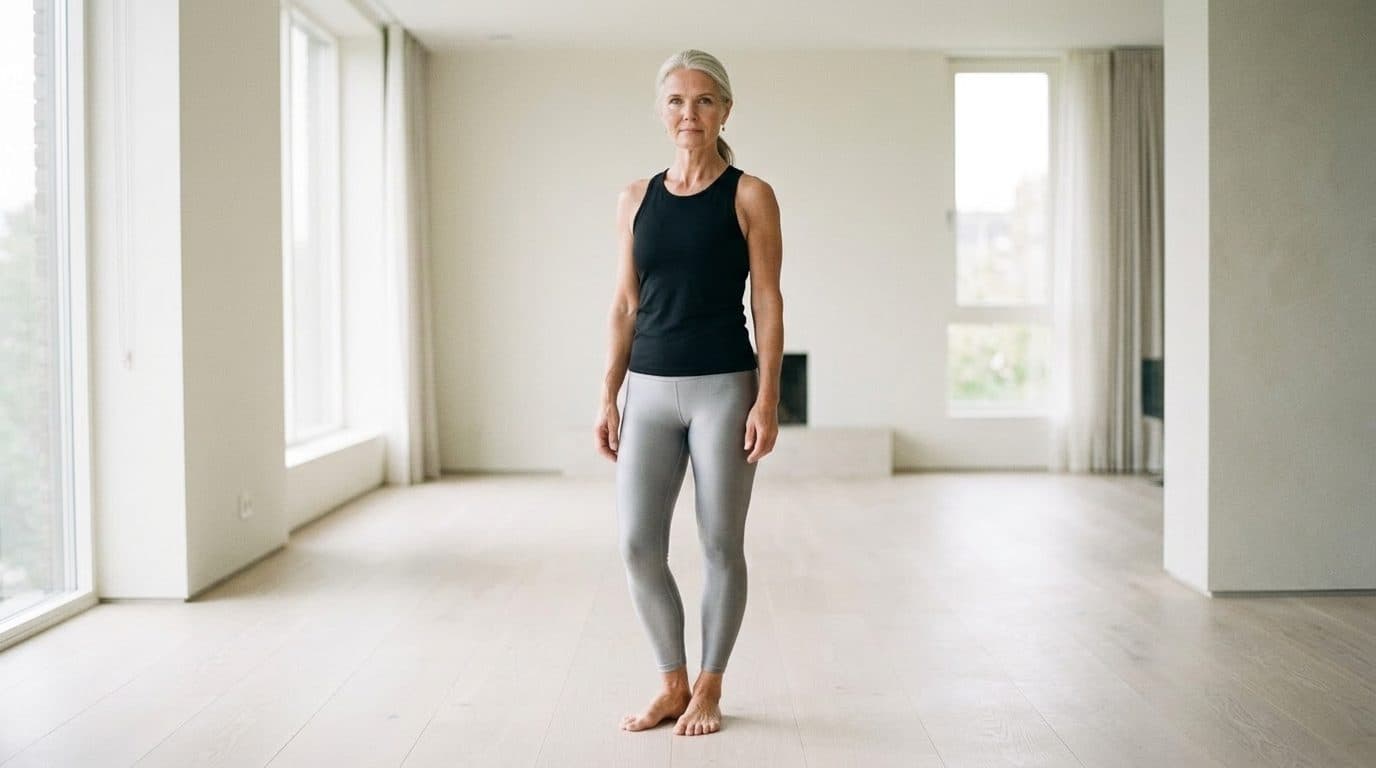
Start with lower-impact strength and mobility work, two or three sessions a week, and build load gradually over weeks rather than days. Prioritise control and recovery over intensity, track how joints feel the day after rather than just during a session, and treat consistency, not a big comeback week, as the measure of progress.
Why does getting back into exercise feel different in your 40s?
If you've tried to restart exercise recently and found yourself more sore, more tired or more wary of hurting something than you were a decade ago, that isn't a sign you've let yourself go. It's a sign your body is operating under different conditions than it was in your 20s and 30s, and the training that worked then is being asked to work on a different system now.
In perimenopause, training has to work with your own physiology rather than being a scaled-down version of what worked at thirty. Recovery takes longer. Joints and connective tissue tolerate sudden, high-impact loading less comfortably than they once did. None of that means you should stop. It means the entry point has to be different.
The common mistake is trying to pick up where you left off, whether that was years of running, a gym habit that lapsed, or nothing structured at all. Jumping straight back into the volume or intensity you remember is a common way people in their 40s get hurt restarting. A slower, more deliberate ramp back up is what actually protects the comeback.
This is also where a lot of women quietly give up a second time. One tweaked back or sore knee in week two feels like proof it was a bad idea, when it's usually just proof the first few weeks need a different shape.
What's the safest way to start strength training again?
Strength work is where most comebacks go wrong, usually because people either avoid it entirely out of caution or treat the first session like the fifteenth. Neither serves you. The safest route is to begin with movements you can control through a full range with good form at a light load, and only add weight once that control is genuinely boring to you, not once you're bored of the lightness.
Think squats, hinges, presses and rows, done slowly enough that you can feel exactly where a joint is at every point in the movement. Strength training for women over 50 covers why this type of training matters more in midlife than it did earlier, even if you're not yet in that decade: the principle of building a base before you build load applies from your 40s onward.
Progression should be measured in weeks, not sessions. A sensible pattern is two to three strength sessions a week with at least one rest day between sessions working the same muscle groups, increasing load or reps only when the previous week felt genuinely manageable rather than just survivable. Progressive overload for women over 50 sets out how to add difficulty gradually without the jumps that tend to cause injury.
If you're working with resistance bands, light dumbbells or just your own bodyweight at home, that's entirely sufficient to start. The equipment matters far less than the pacing.
What should a realistic weekly routine actually look like?
A routine that survives contact with a real week, school runs, work, poor sleep, needs to be simpler than most fitness advice suggests. For someone returning to exercise, two to three strength or barre-style sessions and one or two shorter mobility sessions a week is a realistic and sustainable starting structure, not a compromise.
Barre-based movement is a useful entry point for exactly this reason. It's low-impact, it trains balance and control alongside strength, and because the barre itself works as a support rather than a dance requirement, there's no coordination barrier to clear before you get the benefit. Barre for beginners over 50 walks through what an actual first session looks like, which is worth reading before you book one if the idea feels intimidating.
Mobility deserves its own slot rather than being treated as a warm-up afterthought. A short routine done most mornings, focused on hips, shoulders and spine, does more for how your body feels through the rest of the day than an occasional long stretch session. The best morning mobility routine for women over 40 is a good template if you don't already have one.
Sessions around twenty minutes are genuinely enough at this stage. The limiting factor on a comeback is rarely how long each session is. It's whether you're still doing it in week six.
How do you tell normal soreness from an actual injury?
This is the question that stops a lot of comebacks before they've properly started, because nobody wants to push through something that turns out to be real damage. The useful distinction is timing and location. Muscle soreness from new or increased activity, delayed onset muscle soreness, typically builds over twenty-four to forty-eight hours, feels symmetrical if you worked both sides evenly, and eases as you move and warm up.
A joint issue tends to behave differently. Pain that's sharp rather than achy, concentrated on one side of a joint, present the moment you start moving rather than easing with movement, or still there first thing the next morning without improving through the day, is worth paying attention to rather than training through.
Balance and stability work reduces a lot of the risk here, because many midlife injuries come from a joint being asked to stabilise in a position it hasn't practised recently, not from weakness alone. Barre for balance over 50 explains why that kind of control training does a job that pure strength work doesn't.
If something doesn't settle within a few days of rest, or it changes how you walk or move through normal daily life, that's the point to see a physiotherapist rather than guess. This is education, not a diagnosis, and a professional assessment is always the right next step for anything that persists.
What if you've been hurt before and you're nervous to start again?
Being cautious after a previous injury isn't a confidence problem to push through. It's useful information your body is giving you, and ignoring it is usually what causes the second injury, not the first one healing badly. A slower, more controlled approach builds enough trust that the caution eases on its own.
In practice that means starting well below what you think you can manage, choosing movements where you control the range and pace yourself rather than ones dictated by a class tempo or a treadmill belt, and giving yourself permission to repeat an easy week rather than advancing on schedule if something still feels unfamiliar.
I've spent over twenty-five years teaching movement, including barre and Pilates, and I'm navigating my own changing body through perimenopause right now. What I see most often is women who've been given one generic plan for every age and decided, reasonably, that it isn't for them. It usually isn't. The plan needs to change, not the woman.
Returning after a lapse, whether that lapse was months or years, deserves a method built for where your body is now, not where it used to be. That's a different starting point to most generic fitness advice, and it's the one worth looking for.
If you want this as movement rather than another article, Awaken Barre is the twenty-minute programme I built for a body that has already changed.
Common questions
How long before I notice a difference after getting back into exercise?
Most women notice daily movement, like getting up from the floor or carrying shopping, feels easier within a few weeks of consistent short sessions. Visible strength changes tend to take longer, so judge early progress by how you move rather than how you look.
Is it safe to start strength training in your 40s with no recent experience?
Yes, provided you start with light loads and controlled movement rather than matching what you remember doing years ago. The risk comes from the pace of the ramp-up, not from strength training itself.
Do I need to warm up differently now than I did in my 30s?
A slightly longer warm-up that includes the specific joints you're about to use, rather than a generic few minutes of cardio, tends to make a noticeable difference to how a session feels, particularly for hips and shoulders.
What's a reasonable number of rest days when starting again?
At least one full rest day between sessions that train the same muscle groups is sensible for most people restarting, with recovery prioritised over adding another session before you're ready.