Should You Still Do HIIT in Perimenopause?
Chrissy Sundt · Rest & Illumination ·
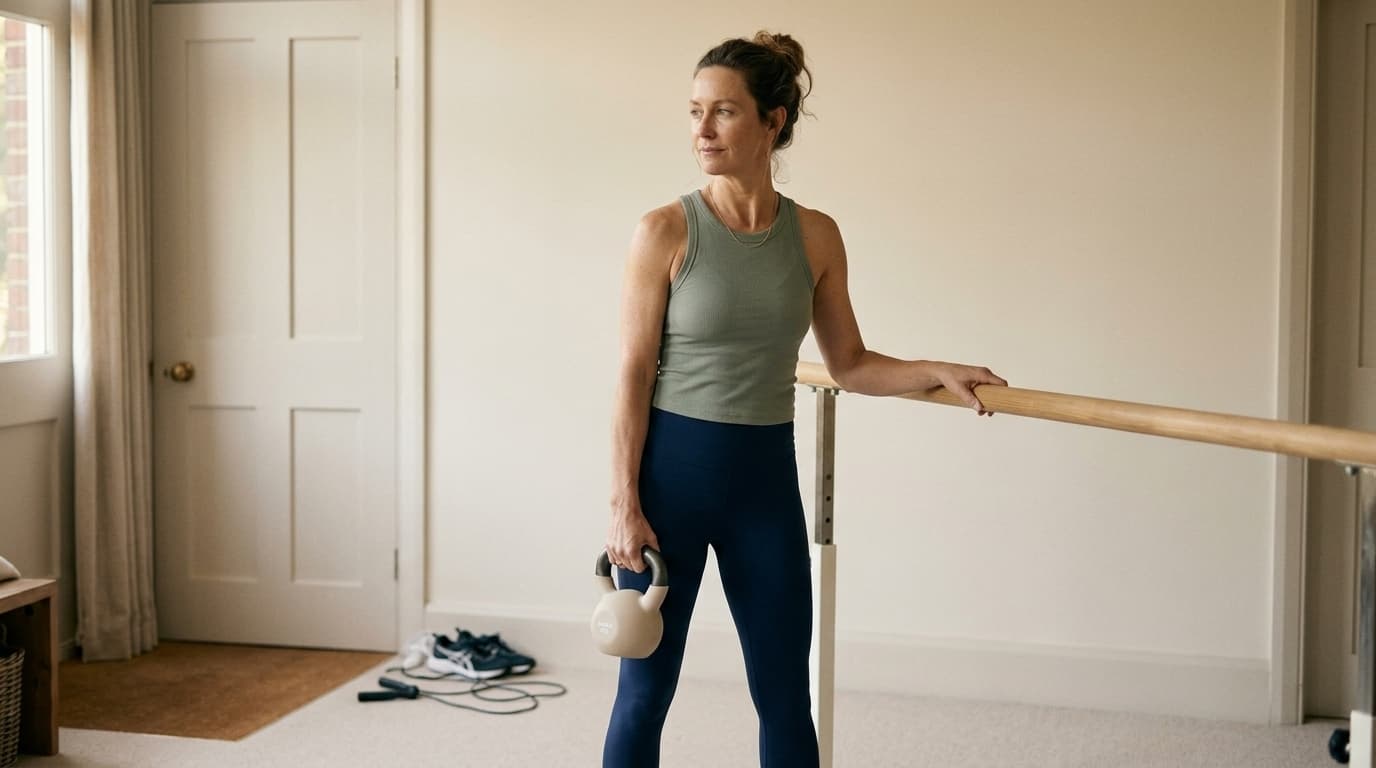
HIIT is not off-limits in perimenopause, but it often stops paying off the way it used to. When your nervous system is already carrying a lot, repeated high-intensity sessions can leave you wired and under-recovered. The real question is how much, how often, and what to do in between.
Why does HIIT feel different in perimenopause?
In your twenties and thirties, HIIT worked because your system could go hard, spike, and recover within hours. Perimenopause changes the recovery side of that equation as much as the workout itself. Oestrogen and progesterone become erratic in perimenopause, rising and falling unpredictably from one week to the next, and that fluctuation touches sleep, mood and how your body handles physical stress. The session that used to leave you satisfied and pleasantly sore can now leave you wired at midnight, or dragging for two days afterwards.
It helps to separate stress that is short and recoverable from stress that is chronic and accumulating. A single hard interval session is, on its own, a short stress. The complication in perimenopause is that it rarely arrives alone. Disrupted sleep, a demanding job, family load and hormonal fluctuation are often already asking a lot of your nervous system before you add six rounds of sprints on top of it.
None of that makes intensity something to fear. It simply means the maths has changed. The same session, at the same effort, now lands on a different baseline than it did a decade ago. Feeling worse after HIIT this year doesn't mean you've let anything slip. It usually just reflects where your capacity sits this week, which shifts naturally through perimenopause.
Is HIIT making things worse, or is it just badly timed?
There's a difference between HIIT being wrong for you and HIIT being wrong for this particular Tuesday. If you slept five hours, you're three coffees in, and you already feel tense before you've started, that's a different starting point to a week with steady sleep and a lighter load. Same session, different starting point.
This is where stress on the nervous system actually matters, without turning it into a scare story. Some rise and fall in physical stress through the day is entirely normal. The concern in perimenopause is less about any single hard session and more about a nervous system that is already running closer to its ceiling, so a hard session has less headroom to work with before it tips from useful stress into simply more stress on top of what is already there.
In practice, it helps to check in before any hard session. How did you sleep, and does your body feel ready or already tense before you've even started. If cancelling it would come as a relief, pay attention to that. Hard efforts still have a place. Treat intensity as something you spend deliberately, on days you actually have it to spend. Skip the idea of a fixed slot in the diary that gets pushed through regardless of the week you've had.
Do I have to give up intensity altogether?
Intensity is doing a lot of work in that question. It isn't the same thing as exhaustion. You can load a muscle hard, work close to your limit for a set, and finish a session genuinely challenged, without the all-out, breathless, repeated-sprint format that HIIT usually means. Strength work with real resistance is intense in the way that matters for muscle and joint loading, without spiking your heart rate and stress response for thirty minutes straight.
This is the actual argument for choosing barre-based strength training over classic HIIT at this stage. Often there's a quicker way to the same result. A short, focused session working through full ranges of motion, real resistance and control can ask more of a muscle in twenty minutes than a longer cardio-heavy circuit does, without leaving you flattened for two days.
If you love HIIT and it still feels good the next day, that's genuinely useful information too. Your age or your cycle doesn't automatically rule it out. What actually matters is whether this particular format, at this frequency, is still giving you back more than it's costing you in recovery.
What should replace HIIT on the hard days?
If you're pulling back on HIIT, the temptation is to either stop training altogether or swap it for something so gentle it barely touches your fitness. You don't need either extreme. Strength-based sessions with control and full range of motion still build the muscle and mobility you're after. They just build it through load and precision.
This is the thinking behind Awaken Barre: twenty-minute sessions built around real strength and full-range movement, not padded out for the sake of a longer workout. The ambition is the same. What's changed is the belief that harder and longer is the only route to get stronger.
Raising your heart rate is still on the table. It just stops being the default setting and becomes a deliberate choice, made on days your body can actually absorb it and turn it into something useful, so you're not still recovering from it three days later. That's a different relationship with intensity than treating it as proof you're still trying hard enough.
- Barre-based strength work, using the barre only as a balance aid, no dance experience required
- Slower resistance training that takes a muscle through its full range, with slow, controlled reps
- Walking, cycling or swimming at a pace where you could still hold a conversation
- One properly hard session a week, if you're sleeping and recovering well, not four
How do I know if I'm overdoing it?
There's no single test for this, but patterns over a couple of weeks tell you more than one bad day does. If hard sessions are consistently followed by poor sleep, a flat mood, or a body that feels more tender and rundown than trained, that's a pattern, not a coincidence. You don't need to be perfect about this, or track every session forensically. The point is noticing a trend over two or three weeks.
Signs to watch for: waking at three in the morning with your mind racing after a hard session, needing much longer than usual to feel recovered, or noticing your motivation for movement generally, not only for HIIT, is dropping. Any of those is useful feedback to notice. Pushing through with willpower alone won't help.
The most reliable signal is how you feel across the following two days. Right after a session, endorphins are still doing their job, so that feeling isn't a fair test. If two hard days in a row consistently leave you flatter, that's the pattern to adjust. Swapping one of those sessions for something built around control is a reasonable response.
Common questions
Is HIIT bad for perimenopause?
It depends what else is going on. The issue is less about HIIT itself and more about doing it on top of a nervous system that's already carrying disrupted sleep, stress and hormonal fluctuation. Matching intensity to how recovered you actually are matters more than avoiding it altogether.
Can I still do HIIT if I feel fine on it?
Yes. If your sleep, mood and recovery are holding up and you feel genuinely restored within a day or two, that's a sign it's still working for you. Track how you feel over the following two days. How the session felt at the time won't tell you as much.
What's a good alternative to HIIT in perimenopause?
Strength-based sessions that take muscles through a full range of motion, done slowly and with control, still build fitness without the same recovery cost. Barre-based training is one option that loads muscle and challenges balance in a short session.
Does HIIT put too much stress on the body in perimenopause?
A single hard session is a short, normal stress on the body. The concern is cumulative: when hard training stacks on top of poor sleep and everyday stress that's already elevated, there's less room to recover before the next one.
How often should I do intense exercise in perimenopause?
There's no fixed number that suits everyone. As a general guide, one properly hard session a week, alongside steadier strength work, tends to give you the challenge without the two-day crash that comes from doing it more often.