HIIT vs Strength Training in Perimenopause: Which One Actually Serves You Now?
Chrissy Sundt · Rest & Illumination ·
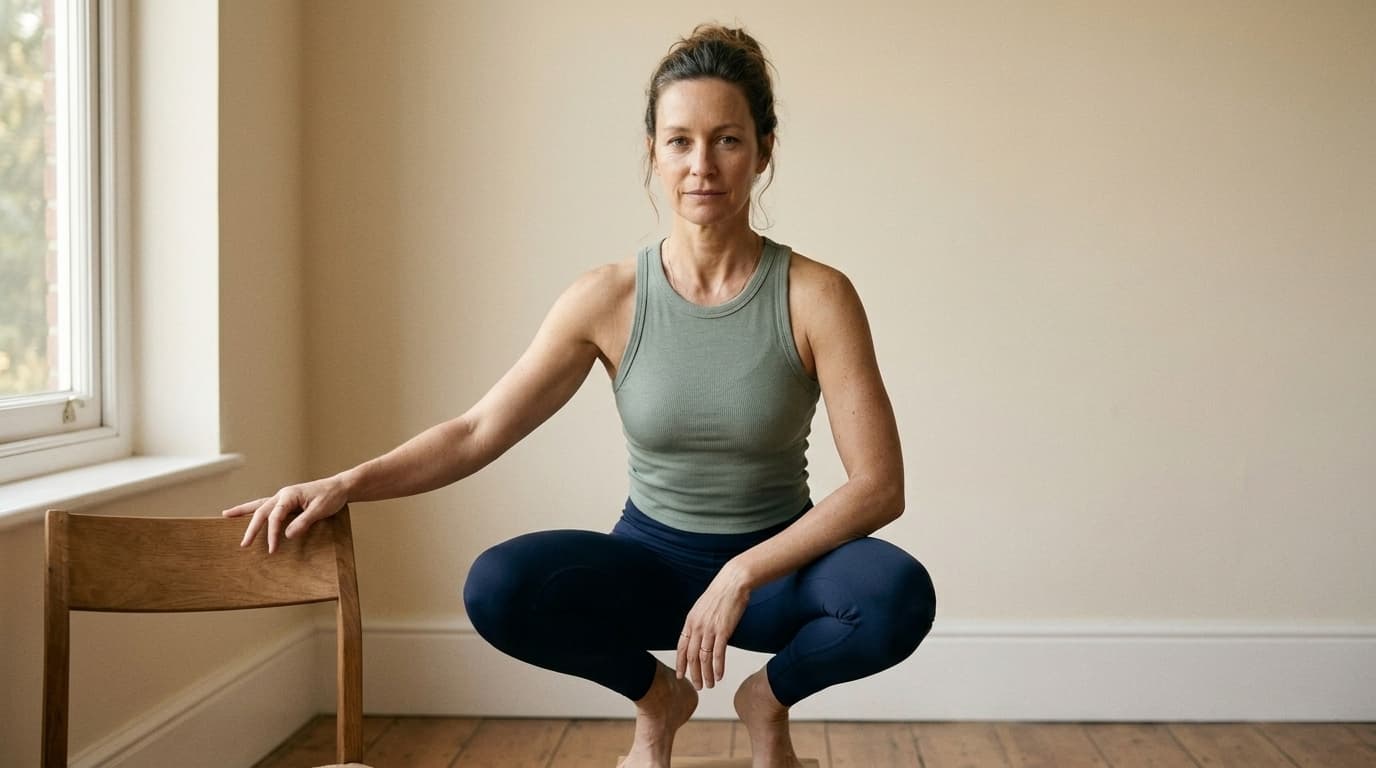
Strength training, done with control and focused sessions, tends to suit a perimenopausal nervous system better than frequent HIIT, because intervals add another stress spike on top of a system already managing disrupted sleep and shifting hormones. HIIT can still have a place, but the intensity needs choosing on purpose, with recovery built into the plan from the start.
Why does HIIT feel harder to recover from now?
HIIT is built to work by spiking your heart rate and stress hormones sharply, then letting you recover before the next spike hits. That works well when your baseline recovery capacity is solid. In perimenopause, fluctuating oestrogen and progesterone change how quickly your body clears cortisol and how well you sleep afterwards, so the same session that used to leave you buzzing can now leave you flat for two days.
There's a useful distinction between short, recoverable stress, the kind that builds resilience, and grinding, chronic stress that accumulates a cost over time. A single hard interval session sits in the first category on its own. The problem is what it's stacked on top of: broken sleep, a demanding job, teenagers, a nervous system already working overtime to regulate hot flushes or mood swings.
HIIT isn't bad training. The maths behind it has simply changed. The training stimulus that once made you fitter within days can now take a week to recover from, and if you can't feel the difference yet, your sleep and your mood usually will.
Is strength training gentler on the nervous system?
Strength training is still a stressor, in the proper physiological sense: you're asking muscle to do more than it's used to, and that's what makes it adapt. But it doesn't have to spike your system the way repeated sprints or jump-heavy circuits do. Lifting a weight with control, or holding a position at a barre with good form, can be demanding on the muscle without tipping your nervous system into fight-or-flight territory.
The difference is largely about pacing and predictability. A controlled squat or a slow, loaded hinge gives your body time to recruit muscle properly rather than firing everything at once under time pressure. You can work close to your limit in a set and still walk out calmer than you walked in, because the breath stays steady and the movement stays deliberate.
Bracing and breathing through a loaded movement matters more than people expect, because it helps regulate effort from the inside, so you're not just pushing through it. Strength training still asks real effort of you, and it should. The difference is that here the effort is chosen, which feels meaningfully different for a nervous system already managing a lot.
Does this mean I should stop HIIT completely?
No, and it would be a mistake to treat this as a ban. Some women in perimenopause still tolerate intervals well, especially if sleep is solid, stress elsewhere is manageable, and the sessions stay occasional. HIIT still works the way it always did. What's changed is how much spare capacity your system has to absorb it. Now it needs to earn its place in the week instead of anchoring it.
The more useful question is what your week already contains. If work is intense, sleep is patchy, and you're already running on adrenaline most days, adding an early HIIT class most likely just adds load to a system with no spare capacity. If your week is genuinely calmer, an occasional hard session may sit just fine.
Pay attention to how you feel the day after, not just during. Energised and slightly tired is a normal training response. Wired, irritable, or flattened for 48 hours is your body telling you the dose was too much for what else it's carrying right now. That feedback matters more than any fixed rule about how many HIIT sessions a week is correct.
How do I know if I'm overtraining in perimenopause?
The signs are often quieter than exhaustion during the workout itself. Overtraining in perimenopause tends to show up afterwards: in your sleep, your mood, and how you feel about showing up to the next session.
These signs are useful information about where you're at right now. Your body is telling you the current dose of intensity doesn't match your current recovery capacity, and that capacity moves around during perimenopause in a way it didn't in your thirties.
Usually the fix is adjusting the shape of training, not stopping it: fewer high-intensity sessions, more strength work done with control, and rest days that are genuinely restful. Track how you feel for a couple of weeks. It tends to be more revealing than any fitness metric.
- Sleep that gets worse, not better, on the nights after hard sessions
- A sense of dread before training that wasn't there a few months ago
- Mood that swings lower in the 24 to 48 hours afterwards
- Persistent soreness or niggles that don't clear between sessions
- Feeling flat or wired rather than steady through the rest of the day
What does a rest-and-regulation approach to strength training look like?
In practice, this looks like shorter, more focused sessions. Around 20 minutes of strength work, done with attention to form and breath, tends to ask more of your muscles and less of your stress response than 45 minutes of mixed cardio and conditioning.
It also means treating rest days as part of the programme. A body recovering from a hard strength session needs that recovery to actually happen, which means the next day isn't automatically another hard session just because you have the time.
This is the thinking behind Awaken Barre. It uses a barre, much like the back of a sturdy chair, as a balance aid for controlled strength and mobility work. There's no dance element and no ballet background needed. The sessions are built around slow, loaded positions, held with steady breathing throughout. That's a different pattern from the spike-and-recover rhythm of interval training, so the effort feels demanding without leaving you wired afterwards.
This is about choosing the training that suits the nervous system you actually have right now, not about doing less. Strength built this way still adds up. It just doesn't cost you the rest of your week to get it. That's what Intelligent Movement™ means in practice: the right movement, at the right dose, for the body you're actually in.
Common questions
Can I still do HIIT during perimenopause?
Yes, for many women, especially if sleep and stress levels are otherwise stable. The key is keeping it occasional and noticing how you recover afterwards.
How many strength sessions should I do a week in perimenopause?
There's no single number that suits everyone, but two to three focused sessions with rest or gentle movement in between tends to work better than daily high-intensity training. Consistency across weeks matters more than any single session.
Will strength training stop menopause weight gain?
Strength training builds the strength and capability you'll rely on for decades. It isn't a fix for any single symptom of perimenopause, including weight or hormones.
What's the actual difference between HIIT and strength training for stress?
HIIT trains your body to handle short, sharp stress spikes. Strength training, done with control, builds muscle without necessarily triggering that same spike, which is often gentler for a nervous system already managing a lot.
Is walking enough on the days I'm not doing HIIT or strength training?
Walking is genuinely useful for recovery and regulation, but it doesn't replace the muscle-building stimulus of strength work. The two do different jobs and work well alongside each other.