Training Your Inner Athlete in Perimenopause
Chrissy Sundt · Mindful Movement ·
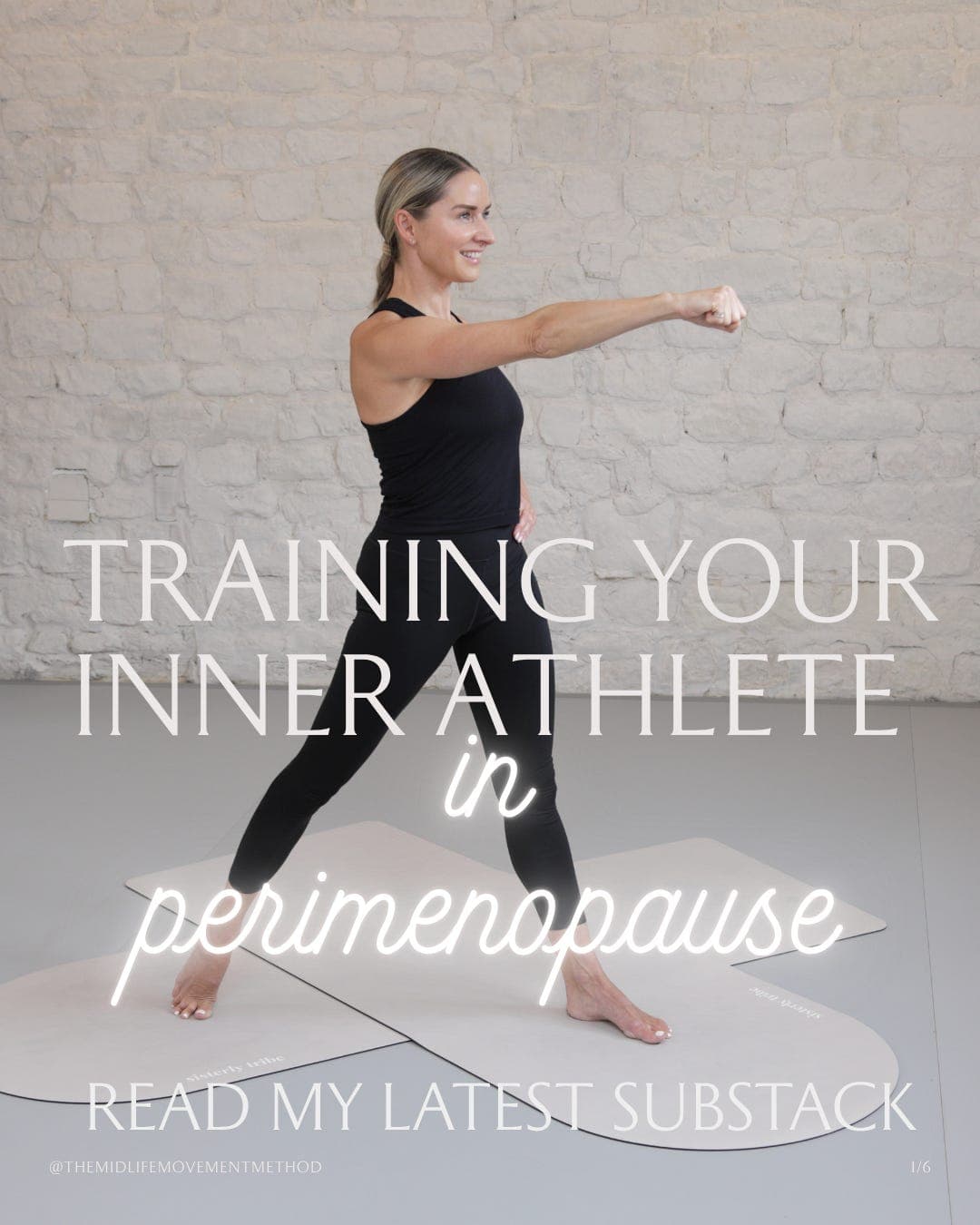
For many women, the word conjures up images of elite competitors, marathon runners, impossibly strong gym-goers or people who have dedicated their lives to sport. Not women juggling careers, children, relationships, fluctuating hormones and the thousand other demands of midlife. But I think it’s time we reconsidered what being an athlete really means because I believe there is an athlete in every woman and perimenopause might just be the perfect time to discover her.
The Midlife Movement Method™️ | By Chrissy Sundt
When was the last time you thought of yourself as an athlete? Perhaps never.
My Meno Moment: From Dancer to Midlife Athlete
Movement has been at the centre of my life for as long as I can remember. I trained as a ballet dancer from the age of ten, spending years developing strength, endurance, flexibility, coordination and an extraordinary awareness of my body.
As a dancer, I didn’t necessarily think of myself as an athlete. I thought of myself as an artist but looking back, of course I was both. My body was my instrument. I trained it to perform, to adapt, to recover and to achieve things that once seemed impossible.
When an ankle injury ended my ballet career, Pilates became my rehabilitation and eventually my profession. It taught me a different way to approach physical strength, one rooted in precision, alignment, control and intelligent movement. Now that I am navigating perimenopause, I find myself drawing on all those years of experience while also discovering something new.
I’ve been exploring heavier weight training, challenging myself in unfamiliar environments and thinking more deeply about what it means to build a body that will serve me for decades to come.
Here’s the interesting thing, the more I explore strength in midlife, the more convinced I become that we need to broaden our definition of athleticism because being athletic isn’t simply about how much you can lift, how fast you can run or how hard you can push.
It’s about developing a body that is strong, responsive, adaptable and capable and that is something every woman deserves.
The Midlife Athlete Looks Different
Somewhere along the way, exercise became rather narrowly defined. We talk about burning calories, sculpting muscles, losing weight and achieving particular body shapes and in the menopause conversation, we’ve increasingly focused on the importance of lifting heavier weights.
There are very good reasons for encouraging women to build and maintain muscle and strength as they age but I worry that the message can sometimes become another set of rules women feel they must follow: yet another thing we’re not doing enough of and another reason to feel we’re falling behind.
What if we approached movement differently?
What if, instead of exercising to correct something about our bodies, we began training to develop their potential?
An athlete doesn’t train simply to look a certain way. She trains to be able to do something and that distinction changes everything. Suddenly, strength training becomes about lifting your suitcase into the overhead compartment. Balance becomes about navigating uneven mountain paths with confidence. Mobility becomes about getting down onto the floor to play with your grandchildren and getting back up again.
Cardiovascular fitness becomes about having the energy to explore a new city on foot and coordination becomes about moving through life with ease, confidence and joy.
This is the kind of athleticism I’m interested in cultivating. Not necessarily for a competition but for life.
Why Perimenopause Is an Opportunity to Rethink Our Training
Perimenopause brings changes that can influence how we feel, move and recover. Fluctuating hormones can affect sleep, energy, mood and our experience of exercise. As we move through midlife, maintaining muscle, bone health and cardiovascular fitness becomes increasingly important.
But I don’t believe the answer is simply to exercise harder, I believe it’s to exercise more intelligently. An athlete understands that performance isn’t built through one type of training alone. She develops different physical qualities:
• Strength.
• Endurance.
• Mobility.
• Balance.
• Coordination.
• Recovery.
And perhaps most importantly, she learns to understand her own body.
This is the philosophy at the heart of The Midlife Movement Method™️. We don’t need to train every woman in exactly the same way. We need to give women the tools to understand what their bodies need and how to build a balanced approach to movement. One that supports them through perimenopause, menopause and the decades beyond.
Building Your Athletic Portfolio
I like to think of our physical capabilities as an investment portfolio. We wouldn’t necessarily invest everything we have in one place, so why would we approach our physical wellbeing that way?
Strength matters enormously but so does mobility. So does cardiovascular fitness.
So does balance and coordination and so does recovery. This is why I love combining Pilates, Barre, functional strength training, yoga, walking and restorative movement.
Each offers something different. Pilates develops control, strength and body awareness. Barre challenges muscular endurance, balance, coordination and concentration. Progressive resistance training helps us develop the strength needed to maintain muscle and physical capability.
Yoga can support mobility, balance and a deeper connection with our bodies. Walking, cycling and other aerobic activities build cardiovascular endurance and restorative practices give us space to recover, recharge and return to movement feeling ready.
There is no need to choose just one. In fact, I believe the magic lies in the combination.
We are not training for a single performance. We are training for a lifetime of movement.
The Athlete’s Mindset
There’s another aspect of athleticism that I think is particularly relevant to women in midlife. Mindset.
Athletes understand that progress requires consistency, patience and adaptability.
They know that some days are for pushing forward and others are for recovering and they recognise that improvement isn’t always linear. They also understand that listening to their bodies is part of training, not a sign of weakness.
This is something I feel particularly passionate about.
During perimenopause, we may experience days when we feel incredibly strong and energetic, followed by days when sleep has been elusive and our bodies feel less cooperative. Rather than fighting those fluctuations, we can learn to work with them.
At MMM, we use a simple Red, Amber and Green approach to help women adjust their movement according to how they’re feeling.
Some days we challenge ourselves. Some days we adapt and some days we rest.
All three are part of intelligent training because the strongest women aren’t necessarily those who push themselves hardest. They’re the women who learn how to keep showing up for themselves.
Your Inner Athlete Is Waiting
I would love more women to start thinking of themselves as physically capable beings with enormous potential.
Not bodies that need fixing. Not women desperately trying to hold on to their younger selves but women who can continue to learn, adapt, develop and become stronger.
Perhaps your inner athlete is the woman who completes her first proper push-up. Perhaps she’s the woman who returns to movement after years of putting everyone else first. Perhaps she’s learning to lift weights for the first time. Or perhaps she’s rediscovering the joy of dancing around her kitchen.
It doesn’t matter where you begin.
What matters is recognising that your body is capable of learning new things at every stage of life and that your physical future is something worth investing in.
For me, this is one of the most exciting opportunities of midlife, not to reclaim the body we had at twenty-five but to discover what the body we have today can become.
So here’s my invitation. Start thinking of yourself as an athlete.
• Train your strength.
• Nurture your mobility.
• Challenge your balance.
• Build your endurance.
• Respect your recovery.
And above all, find joy in what your body can do because your inner athlete isn’t interested in how old you are, she’s interested in where you’re going next.
With love,
The Midlife Movement Method™️
Intelligent movement for a stronger, healthier and more capable midlife.
If you want this as movement rather than another article, Awaken Barre is the twenty-minute programme I built for a body that has already changed.
First published in The Midlife Movement, Chrissy’s newsletter.