How to Stay Social in Perimenopause When Going Out Feels Like Too Much
Chrissy Sundt · Connection ·
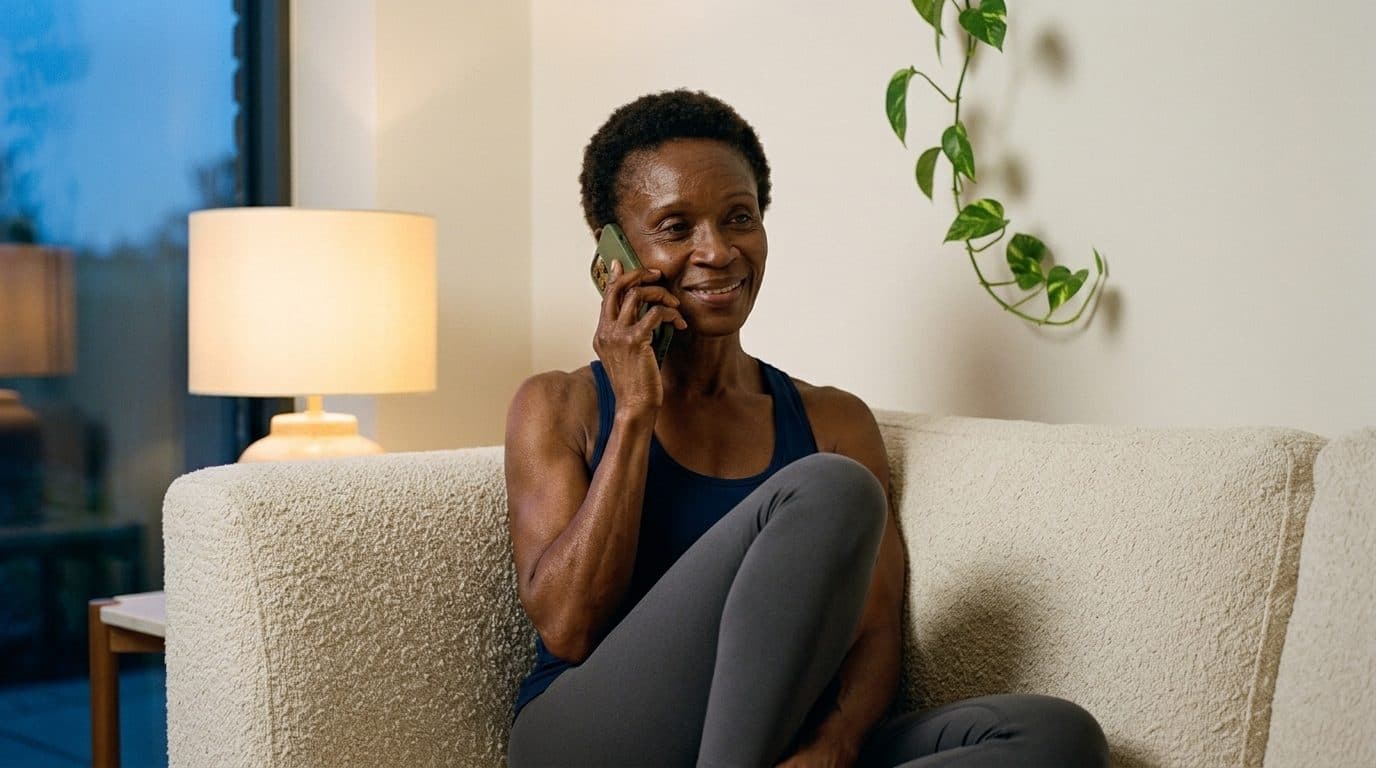
Staying social when you don't feel like going out means lowering the bar, not abandoning connection altogether. Swap the full evening for a ten-minute call, a voice note, or a short session spent alongside someone rather than performing conversation with them. What matters in perimenopause is keeping contact regular and low-cost, not forcing yourself through plans that leave you more depleted than before.
Why don't I feel like going out anymore?
Some weeks the invitation lands and your first feeling is dread, not excitement. You said yes because you always say yes, and now you are working out how to get out of it without sounding rude. You do not dislike the people. What wears you down is the sequence of things a night out demands: the shower, the outfit, the small talk, the journey there and back, all stacked on top of a day that has already used up everything you had.
This is not a personality change. Energy in perimenopause does not arrive in the same steady supply it used to, and social effort draws from the same pool as everything else you are managing. Wanting fewer, quieter interactions is not you becoming antisocial. It is your capacity redistributing itself, and it makes sense that the loudest, longest, most demanding version of socialising is what falls away first.
The trouble is what happens next. You decline a few times, people stop asking, and the quiet you needed for one evening becomes the quiet you are stuck with for months. That is the part worth catching early, because withdrawing from a single night out is reasonable. Withdrawing from people altogether, by accident, is harder to undo later.
Is it normal to pull away from friends in perimenopause?
Yes, and it rarely happens as one dramatic decision. It is easy to read your own withdrawal as rejection of the people around you, when what has actually changed is what you have currently got to give. It is the group texts, catch-up drinks and full evenings you are choosing less of, not your friends, because those cost more than they used to.
What tends to hold up is the smaller, steadier stuff: a message that does not need an instant reply, a walk with one person rather than a table of six, a conversation with no performance in it. If you want to understand why old friendships fade in midlife rather than simply in your twenties, the honest answer usually has more to do with capacity than with the friendship itself.
None of this means you are becoming someone who does not need people. The version of socialising that worked at thirty needs adjusting at forty-five, in the same way everything else does right now. Noticing that early is what stops a quiet season turning into a permanently smaller life.
What still counts as staying social when a night out feels like too much?
Staying social does not have to mean the dinner, the birthday drinks or the group holiday you are dreading. A voice note sent while you are doing the washing up counts. A fifteen-minute phone call on the walk to collect the post counts. Turning up to one thing for forty minutes and leaving before you are drained counts. The bar most of us measure ourselves against, a full evening of performed enthusiasm, was never the only version of being connected.
Some of the easiest company is the kind that asks the least of you. Sitting with someone while you both do your own thing, reading in the same room, cooking alongside a friend rather than hosting a dinner for them, still registers as connection even though it looks like almost nothing is happening. If you naturally find groups draining rather than energising, that preference is not a flaw to fix.
It is worth building a version of social life around what you actually have energy for, rather than what you think you are supposed to want. Building community as an introvert in midlife is a useful place to start if quieter, smaller interactions suit you better than the version everyone else seems to be doing.
- A voice note instead of a call
- A ten-minute walk with one person, not a group
- Sitting together while you each do your own thing
- Leaving after forty minutes without apologising for it
How do I stay close to people without leaving the house?
A recurring slot does more work than a spontaneous one. If you and a friend both know that Wednesday at eight is your time, you stop relying on the energy to organise something, which is often the actual barrier, not the socialising itself. It can be a phone call, a video chat with the laundry going in the background, or a shared game you both check in on. The point is that it happens without needing to be planned each time.
This matters more if you work from home, where entire days can pass with barely a conversation that is not about a task. Feeling isolated working from home in midlife is worth reading if that is your pattern. The same applies if the friends you would normally see are not nearby. Staying close with friends who live far away does not require the energy of travel, just a habit of checking in that survives distance.
Short and regular beats rare and long. A ten-minute call every week keeps a friendship current in a way that one enormous catch-up every six months does not, and it asks far less of you on any single day.
Could twenty minutes of movement be the easier way back into being around people?
There is a version of being around people that sits between staying home alone and forcing yourself out for the evening you are dreading, and it is worth considering if small talk is what is putting you off. Moving alongside other women, in a session with a clear start and finish, asks almost nothing of you socially. Nobody needs conversation from you. You are simply in a room with other people instead of on your own.
This is part of why I built Awaken Barre around sessions of around twenty minutes rather than an hour you have to steel yourself for. You arrive, you follow the session, you leave, and the connection happens sideways, through being in it together, not through performing sociability on top of everything else you are managing that day. It needs no dance background. The barre is there for balance, the same way the back of a sturdy chair would be.
If your resistance is less about the movement and more about not wanting to be watched or judged, barre for women who hate the gym covers that particular fear directly, and it is more common than you would think.
If you want this as movement rather than another article, Awaken Barre is the twenty-minute programme I built for a body that has already changed.
Common questions
Is it normal to not want to socialise during perimenopause?
Yes. Fluctuating energy affects social capacity the same way it affects everything else, and wanting fewer, smaller interactions is not the same as needing none. Notice when avoidance starts to feel like relief and when it starts to feel like isolation, that is the real signal.
How do I stay social when I don't have the energy to go out?
Lower what socialising is allowed to look like. A phone call, a voice note or a short session alongside someone else all count. The size of the gesture matters less than how regularly it happens.
Will pulling back from friends now damage those friendships long term?
A quiet season rarely damages a genuine friendship on its own, but months of silence can, so keep small, low-effort contact going even when you skip the bigger plans. A short message costs little and keeps the door open.
Is it better to push through and go out anyway?
Not always. Occasionally showing up when you would rather not can be worthwhile, but consistently forcing yourself into events that leave you depleted tends to backfire. Pick the version of social contact you can sustain, not the one you feel you should want.
Does exercise count as socialising?
It can, particularly done alongside other people rather than alone, because it gives you company without requiring conversation. It is not a replacement for close friendship, but it is a low-pressure way to be around people on the days a night out feels like too much.