Why Everything You Were Taught About Exercise Stops Working in Perimenopause
Chrissy Sundt · Rest & Illumination ·
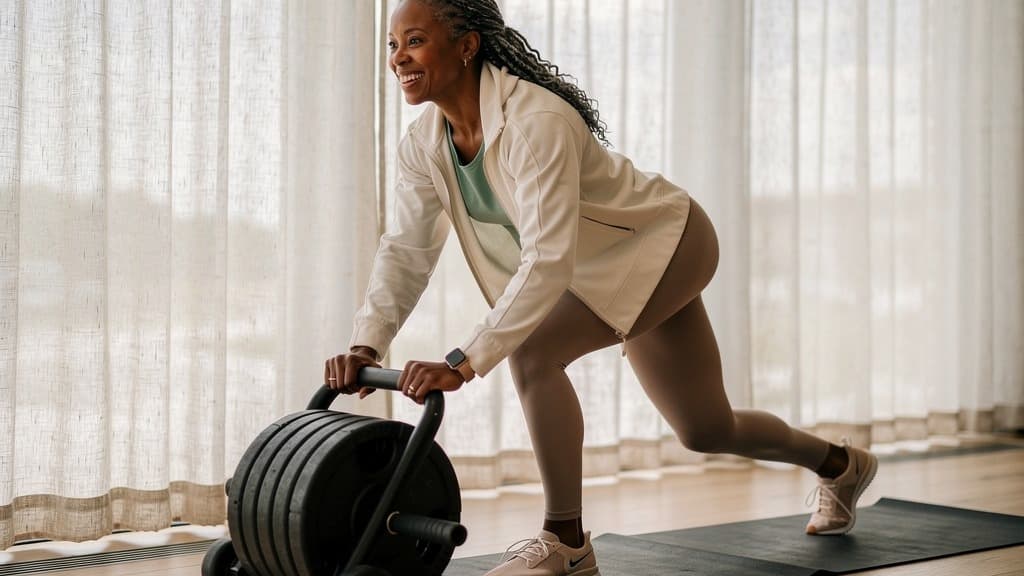
The old formula of move more and eat less often stops working in perimenopause because recovery, hormones and stress load have changed. Pushing the same intensity can leave you more depleted, not leaner. What helps instead is strength, controlled low-impact work, adequate fuel and rest that matches the body you have now.
I remember the moment clearly because it made no sense. I was doing everything I had always done:daily Yoga, regular Barre and Pilates sessions. Long shoot days filming multiple workouts for SL by Chrissy. Moving constantly. Eating well. Showing up for myself and my clients.
And yet, my body was changing in ways I could not control. A softness appeared around my middle that would not shift. My muscle definition began to fade. And underneath it all, there was a level of exhaustion I had never experienced before. Not the satisfying fatigue of a good workout, but something deeper, heavier and slightly unsettling.
I have spent my entire career understanding movement and the body and suddenly, it felt like the rules had changed.
At first, I did what most of us do. I doubled down. I am after all a wellness warrior, and I set myself very high standards. So, I added more sessions. I tightened my nutrition (meaning I was under-fuelled and over caffeinated!). I tried to push through, assuming this was a temporary phase or a dip in discipline. But nothing worked.
This is where the realisation began to unfold. Around me, my girlfriends were having conversations about perimenopause. Hormonal changes in midlife were being discussed more openly on social media. And in general, the whole topic of Menopause and how disruptive it can be seemed to be becoming less of a taboo.
But something was missing. Almost no one was talking about training.
There were references to exercise being “important” or “supportive,” but very little clarity on what that actually meant. No real guidance. No structure. No understanding of how dramatically our bodies are shifting during this phase of life.
As someone who had built a career in movement, I found that gap both surprising and deeply frustrating because this is where so many women are getting stuck and losing their confidence in themselves and their bodies.
We have been taught a simple formula: move more. Eat less. Stay consistent.
And for many years, that formula works. But perimenopause changes the internal environment in ways that make that approach not only ineffective, but often counterproductive.
As oestrogen and progesterone begin to fluctuate, the body becomes more sensitive to stress. Cortisol plays a more dominant role. Recovery becomes slower. Muscle becomes harder to maintain. Fat storage, particularly around the abdomen, increases. For many, this is not subtle, it’s seriously disruptive and confusing.
Yet most women are still applying the same training habits they used in their thirties and early forties.This is where the disconnect lies.
It is not that Yoga, Barre or Pilates are no longer valuable. They are foundational, and I still believe deeply in their benefits. They are what Dr. Stacy Sims calls ‘soul food’.
But the frequency, intensity and balance of the techniques you choose to spend time on become everything.
Without enough strength work to support muscle, without adequate fuel, and without intentional recovery, even the most beautiful movement practices can begin to work against us.
What I began to understand, both through my own experience and through deeper research and conversations with experts and clients, is that midlife training requires a completely different lens.
Not more effort but a more intelligent approach and this is the big shift.
We move from chasing output to supporting the body. We begin to prioritise strength and resistance training to maintain muscle and metabolic health. We limit the cortisol spikes by limiting (but not removing) cardio from our schedule. We become far more conscious of recovery, and we start to fuel our bodies properly, rather than restricting them.
Perhaps most importantly, we begin to regulate the nervous system, rather than constantly pushing it.Honouring the fluctuating energy and really checking in with your body and emotional state to see what’s really going to serve you each day.
At The Midlife Movement Method, everything is built around five core pillars.
Sleep, because without it the body cannot repair or rebalance.
Mindful movement, which is structured, supportive and aligned with the physiology of this phase.
Rest and illumination, allowing space to step out of constant output and into awareness.
Nourishment, which becomes a tool for stability and strength rather than control.
Connection: to yourself, to others (we love our MMM community!) and to a bigger meaning beyond roles and expectations.
This is not about doing less for the sake of it. There are no ‘get out of jail free’ cards here, we have toshow up for ourselves for the long term BUT
It is about doing what works now and releasing some of those rigid ideas about what a fitness and wellness routine has to look like.
If your body feels unfamiliar. If your workouts are no longer delivering the results they once did. If you feel like you are doing everything “right” and still not seeing change. There is nothing wrong with you.
You are simply being asked to meet your body in a new way, and once you do, everything begins to shift.
Inside The Midlife Movement Method, we guide you through exactly how to adapt your training, nutrition and recovery for this stage of life, so you can feel strong, energised and back in control of your body again.
Try a free MMM workout on SL by Chrissy 🤍
If you want this as movement rather than another article, Awaken Barre is the twenty-minute programme I built for a body that has already changed.
First published in The Midlife Movement, Chrissy’s newsletter.
Common questions
Why does exercise stop working in perimenopause?
As oestrogen and progesterone fluctuate, the body becomes more sensitive to stress and cortisol plays a bigger role, which slows recovery, makes muscle harder to maintain and increases fat storage around the middle. This means the old approach of moving more and eating less stops delivering the same results.
Should I stop doing yoga or pilates in perimenopause?
No, yoga, barre and pilates remain valuable and foundational. What changes in perimenopause is the balance, since enough strength and resistance training, proper fuelling and intentional recovery are also needed to support these practices rather than leave them working against the body.
What are the five pillars of the Midlife Movement Method?
The Midlife Movement Method is built around five pillars: sleep, mindful movement, rest and illumination, nourishment, and connection, to yourself, others and a bigger sense of meaning. Together they support the body through this stage rather than pushing it to do more.
Why do I feel exhausted despite working out and eating well?
During perimenopause, cortisol can play a more dominant role and recovery slows down, so exhaustion can feel deeper and heavier than normal workout fatigue. The shift involves regulating the nervous system and checking in with energy and emotional state each day, rather than constantly pushing through.