Does Walking Strengthen Bones, or Just Maintain Them?
Chrissy Sundt · Mindful Movement ·
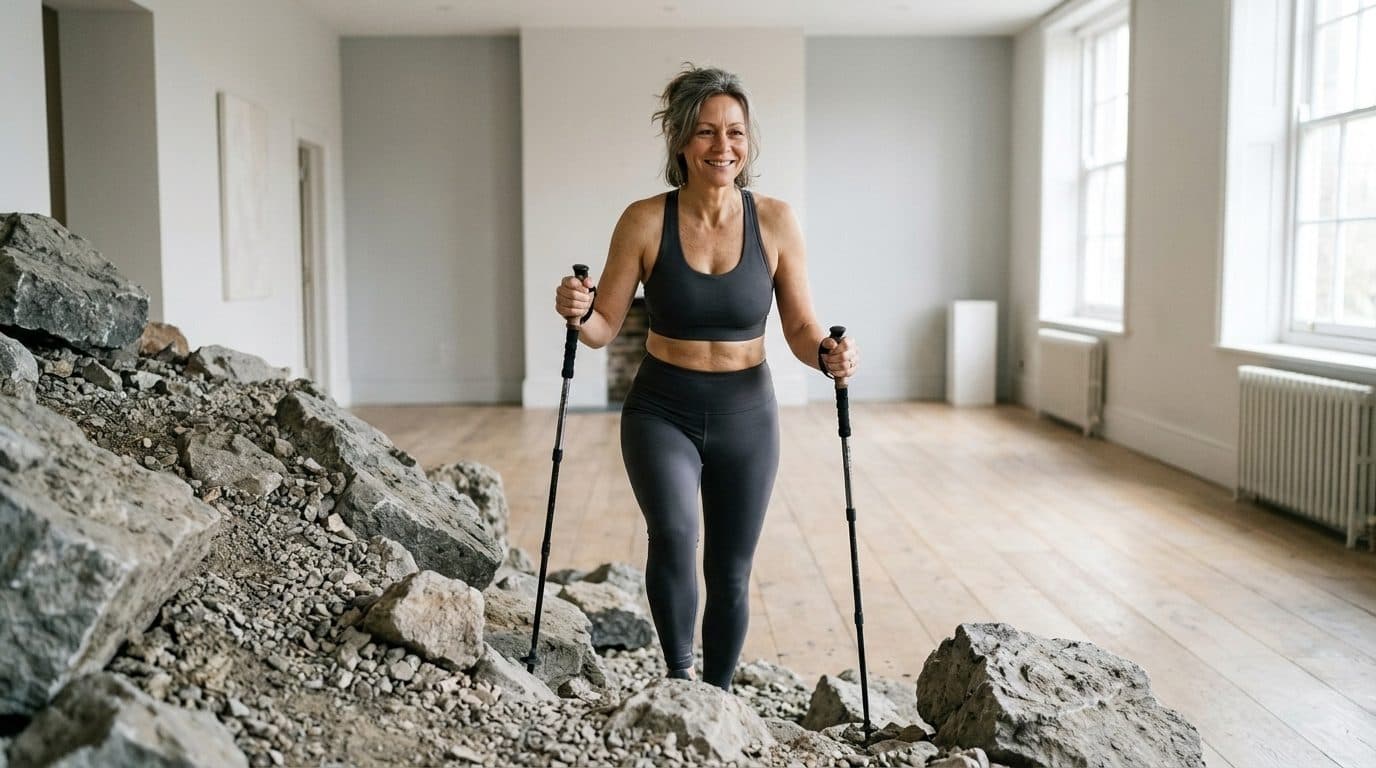
Walking maintains bone density by keeping bones loaded and blood flowing to them, but it rarely builds new bone past midlife because the impact is too low and too repetitive to signal adaptation. Bones respond to varied, progressively loaded force, the kind resistance and barre-style strength work provide, not steady walking alone.
What walking does for your bones, and where it stops
Walking is weight-bearing movement, so it keeps bone loaded rather than idle, and that matters: bone doesn't thrive on rest, it thrives on being asked to do something. A regular walking habit also keeps blood moving, joints lubricated, and tends to support balance and mood in ways that have nothing to do with impact at all. None of that is in question.
What walking doesn't do, on its own, is give bone much reason to add density. Once your body is used to a movement, that movement stops being a stimulus. A woman who has walked the same loop for years is giving her skeleton the same signal over and over, and a body that's already adapted to a signal has little reason to respond to it further. Walking at a steady pace, on a flat surface, at a familiar effort, is maintenance work. It is not asking anything new of the skeleton.
That distinction matters more in midlife, when the hormonal backdrop that used to support bone turnover shifts. It's a change in what your body needs from movement, not a sign that walking has stopped working or that your bones are somehow failing you. The habits that used to be enough now need a companion alongside them.
Why bone tissue needs variety, not just repetition
Bone is living tissue, and like muscle, it remodels in response to the forces placed on it. The forces that provoke the most adaptation are the ones the body isn't used to: load from an unfamiliar angle, resistance pushed against, a change of direction, a controlled landing. Walking supplies very little of that variety, because its demand is the same, step after step, mile after mile. That's useful for everything walking is good at, but it isn't the kind of novelty bone responds to.
The common thinking behind training women through perimenopause has shifted toward movement that loads the body in ways low, repetitive cardio simply doesn't: resistance work, power, and variety, rather than more volume of the same steady effort. Walking isn't the problem. Walking alone is answering a question your skeleton stopped asking a long time ago.
This is also why 'just walk more' tends to fall flat as advice for women who are already walking plenty and still feel like nothing is changing. This has little to do with effort; the stimulus itself is mismatched with what the body needs in order to adapt.
What counts as a bone-loading signal in midlife
Bone responds well to force that's higher than what it's used to, applied through the muscles that attach to it. That can look like controlled resistance, a loaded squat or a push against your own bodyweight, impact that's purposeful rather than incidental, a controlled jump or heel drop, or positions that ask muscles to hold and stabilise rather than simply swing through a range.
Barre work sits squarely in that territory. A plié held at the base, a relevé raised and lowered slowly, a leg lifted and controlled against gravity rather than momentum, all load the muscles and the bone beneath them in ways a walking stride doesn't ask for. The aim is to give the body something new to respond to, in a way that's controlled enough to repeat safely, without chasing impact for its own sake.
It's worth being honest about what this isn't. A twenty-minute class doesn't replace whatever your clinician monitors about your bone health, and nothing here claims to shift a density score. It's about the kind of loaded, varied movement that gives your body a reason to stay capable day to day. If you're weighing barre against a traditional weights session, the comparison is worth reading properly before choosing one over the other.
- Controlled resistance, like a loaded squat or pushing against your own bodyweight
- Purposeful impact, like a controlled jump or slow heel drop
- Held or slowed positions that make muscles stabilise rather than swing
Where barre-style strength work fits alongside your walks
Barre, as we teach it, takes its inspiration from ballet, and you don't need any dance background to do it well. The barre itself is a balance aid, used the same way you'd use the back of a sturdy chair, so you can focus on the muscle you're working rather than on staying upright.
That matters for the loading conversation, because it means you can safely ask more of a muscle, in a held or slowed position, without worrying about losing your footing. The barre's role as a stability aid is part of what makes this workable at a stage of life when balance itself is something you're training, not something you can take for granted.
Sessions run around twenty minutes, and that's intentional. These sessions put a short, precise block of resistance and control next to the walking you're already doing, without adding another hour to an already full week, so the two cover different ground instead of overlapping on the same one. Setting barre up at home with the right basics is enough to start, whether or not you're near a studio.
How to build a weekly rhythm that covers both
Keep the walking. It's doing real work you don't want to lose: easing your joints, keeping your heart ticking over, and lifting your mood more often than not. The question isn't whether to walk, it's what to put next to it.
Two to three short strength sessions a week, on days that aren't back to back, gives bone and muscle something to adapt to without asking for more recovery than a midlife body tends to have on offer. A full-body strength session built for exactly this is a reasonable template if you're starting from nothing. Working out how to split a week between walking days and strength days is worth doing on paper before you start, rather than hoping it falls into place.
Staying capable for a long time matters more here than chasing a score on a scan, which is the whole premise behind training to be Strong Enough for 85™. What you load today is what your body can call on later, regardless of how things look or measure now.
- Walk most days, at whatever pace suits your week
- Add two to three short strength sessions, not back to back
- Review the split on paper rather than hoping it happens
If you want this as movement rather than another article, Awaken Barre is the twenty-minute programme I built for a body that has already changed.
Common questions
Is walking enough exercise for women over 40?
Walking is good for you in ways that have nothing to do with bone: it's gentle on the joints, works your heart, and tends to lift your mood. It's worth keeping regardless of anything else you do. On its own, though, it rarely provides enough new load to prompt bone or muscle to adapt further, which is why pairing it with resistance work tends to make more difference than walking more.
Do I need a certain number of steps a day for bone health?
There's no step count that substitutes for loaded, resistance-based movement. A higher daily step total mostly adds more of the same steady, low-impact signal your body has already adapted to, rather than giving it something new to respond to.
Do I need any dance experience to try barre?
No. Barre takes its inspiration from ballet but isn't a ballet class, and needs no dance background. The barre itself works as a balance aid, similar to holding the back of a sturdy chair, while you work the muscle.
Will adding strength work make me bulky?
No. Short, controlled strength sessions in midlife build capability and tone, not bulk. The aim is a body that can carry, lift and balance for decades.