How to Find Women Going Through the Same Thing in Midlife
Chrissy Sundt · Connection ·
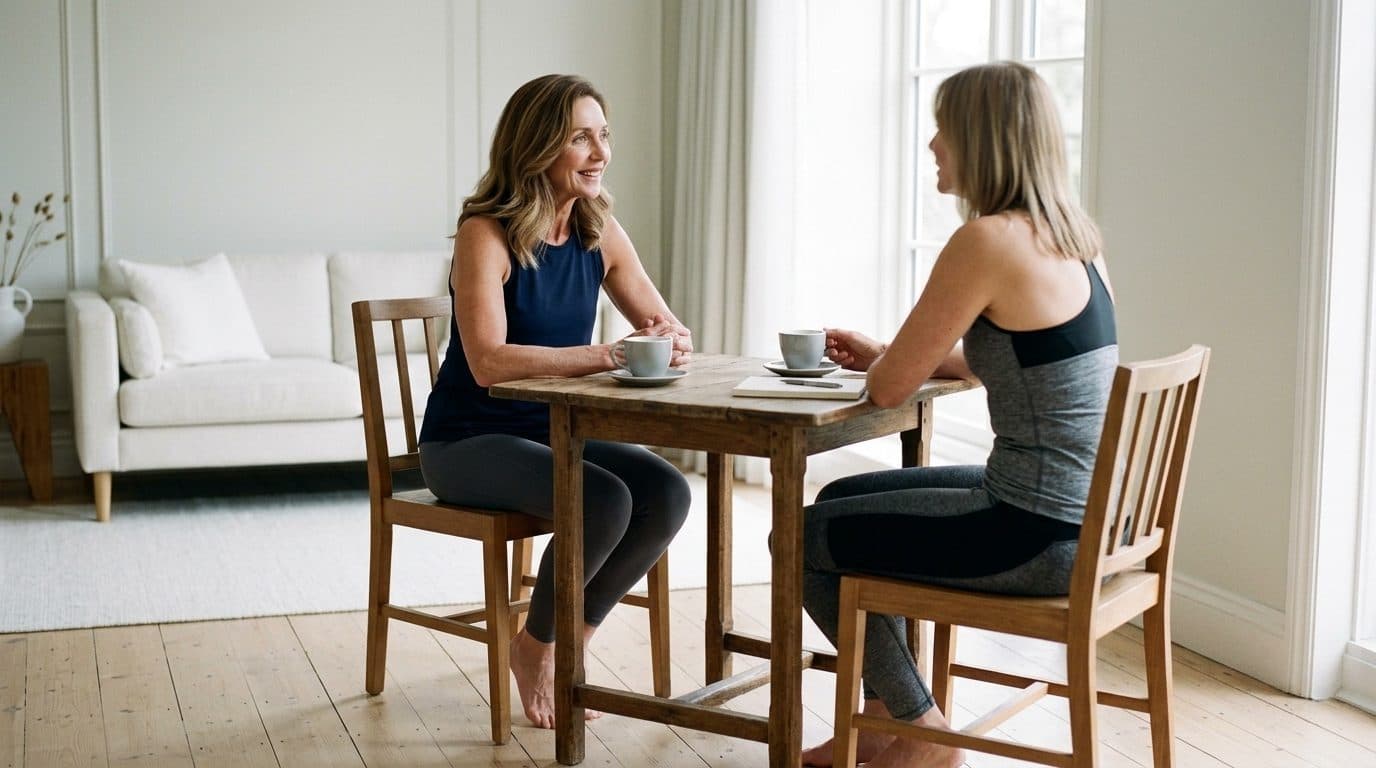
Look for spaces built around this stage of life rather than a general interest: perimenopause groups, midlife-specific fitness classes or online communities for the exact transition you're in. Shared context removes the need to explain yourself. Show up more than once in one place, and let familiarity turn into conversation before you look for depth.
Why It Helps to Find Women Going Through This Too
Midlife loneliness rarely looks like being alone. You can have a full calendar, a long list of contacts, a group chat that never stops buzzing, and still feel like nobody quite gets what's happening with your body, your sleep, your mood, your marriage or your parents, several of them shifting at once. The friends who knew you at twenty-five aren't necessarily the friends who understand this. What's missing isn't company. It's recognition.
That gap matters more than it's often given credit for. Feeling understood isn't a soft extra you get to once sleep and movement are sorted. It sits alongside them.
Finding women in the same stage does something general socialising doesn't: it removes the explaining. You don't need to preface a sentence about a hot flush, a shrinking social circle or a marriage under strain. Someone else has already been there, this month, possibly this week.
Where to Look for Women in the Same Stage
Start with places organised around the transition itself rather than a general interest. A book club is pleasant, but a group built around midlife, perimenopause or the specific stretch of life you're in does more of the work for you, because everyone arrived already sharing the one thing you have in common.
Fitness spaces built for this stage of life are one of the more reliable routes in, because you're already doing something together rather than making small talk cold. Classes designed with midlife bodies in mind tend to draw women dealing with similar shifts in energy, joints and time, which gives you something to talk about before you've said a word. A women's fitness community in midlife is a good place to start if you're not sure where to look first.
Structured groups work for the same reason. A walking group, a local class, a facilitated circle with a set time and place removes the pressure of organising something yourself, and going regularly means you see the same faces enough times for familiarity to build without effort. If joining anything involving other women currently feels rusty, joining a women's group in your 40s covers what to expect from that first session.
Online spaces count too, particularly for finding the specific thing, perimenopause, divorce, an empty nest, before you find the local group. Use them to work out what you're looking for, then move towards something in person when you can. Proximity and repetition do more for real connection than a perfectly matched online group ever will.
- Perimenopause or midlife-specific groups, local or online
- Fitness classes built for this stage of life
- Walking groups with a fixed, regular time
- Existing interest groups where midlife women already gather
How to Start the Conversation Without It Feeling Forced
The opening line matters less than most women think. You don't need a clever hook, you need a specific, low-stakes observation about the class, the walk, the room, the weather. 'Is this your first time here too?' does more work than anything cleverer, because it invites a real answer rather than small talk.
Shared activity is easier to talk through than a blank social occasion, which is part of why doing something alongside other women, rather than just sitting with them, tends to produce conversation that goes somewhere. You're not required to fill every silence, because there's something else happening in the room to fall back on.
One conversation rarely becomes a friendship on its own. What turns a first exchange into something ongoing is usually one specific, small ask: suggesting a coffee after the next session, swapping numbers to walk together next week, agreeing to turn up at the same time again. If you want a structure for that ongoing piece rather than a single chat, finding a fitness accountability partner after 40 sets out how a loose acquaintance becomes a standing arrangement.
Expect some of these to go nowhere. Not every woman you click with once will become a friend, and that isn't a reflection on either of you. Treat the early conversations as low-stakes practice rather than auditions, and the pressure comes off both of you.
What If You're Introverted or Short on Time
Neither of these rules you out, though both change the approach. If a room full of new people drains you, look for smaller, structured formats over open mingling: a class with a fixed routine, a walking pair rather than a group of eight, a short session with a clear start and end rather than an open evening.
Time is usually the bigger blocker in midlife, not personality. This is where combining connection with something you were already doing helps: a short class you attend anyway, a school-run walk you extend by ten minutes, a regular commitment that has a social layer built in rather than one more thing added on top.
If building a wider circle on your own feels like too much on top of everything else, building community as an introvert in midlife has more on pacing this in a way that doesn't leave you depleted.
One short, regular commitment you can keep does more for connection over a year than an ambitious plan to 'get more social' that collapses within a fortnight.
How to Tell It's Becoming Real Connection
Real connection usually shows up as specificity, not warmth. It's the difference between 'we should catch up sometime' and someone texting you directly after a rough week because they remembered you'd mentioned it. Warmth is easy to produce in a room; follow-through outside it is the signal worth watching for.
Old friendships sometimes complicate this process, because you might expect new connections to feel like your oldest ones immediately, and get discouraged when they don't. Long friendships carry years of shorthand that new ones haven't earned yet. If you're also wondering why some existing friendships have gone quiet while you're building new ones, why old friendships fade in midlife is worth reading, since the two things are often happening at once.
Give a new connection several encounters before deciding whether it has legs, ideally across more than one setting. Someone you only see at one class is an acquaintance; someone you've also had coffee with, or messaged about something unrelated to the group, is moving towards a friend.
It's also fine for some of these to stay exactly where they started: pleasant, regular, useful, without becoming a deep friendship. Not every woman going through the same thing needs to become your closest confidante for the connection to be worth having.
If you want this as movement rather than another article, Awaken Barre is the twenty-minute programme I built for a body that has already changed.
Common questions
How long does it take to find women going through the same stage of life?
Longer than one session, usually. Give any group or class three or four visits before deciding whether it has potential, since familiarity and easy conversation both take repetition to build.
What if the first group I try doesn't feel right?
Try another one rather than concluding this doesn't work for you. Groups vary hugely in tone even when the subject matter is identical, and one flat session says more about that particular room than about your chances generally.
Do these have to be fitness-based groups?
No. Fitness classes are a reliable route because you're doing something together rather than making cold small talk, but any regular, structured gathering built around this stage of life works on the same principle.
Is it too late to make close new friends in my 40s or 50s?
No, though it usually takes more deliberate effort than it did earlier in life, when proximity did the work for you. Consistent, small contact over time still builds real friendship at any age.