What Is the Definition of Menopause, and Why Is It Just One Day?
Chrissy Sundt · Rest & Illumination ·
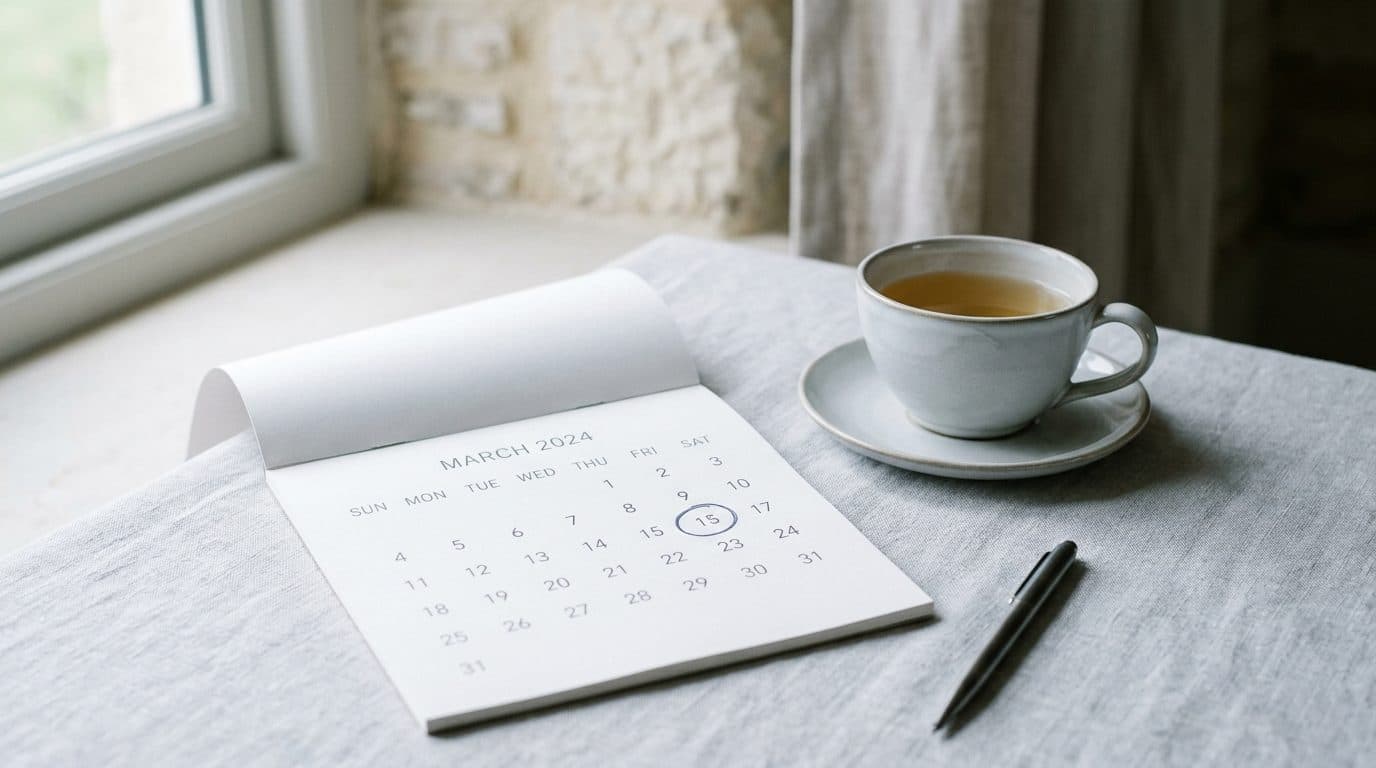
Menopause is a single point in time: the day marking twelve consecutive months without a period, confirmed only in hindsight. It signals the end of ovarian egg release and monthly hormone cycling. The years of fluctuating hormones beforehand are perimenopause; everything afterward is postmenopause, a permanent state, not menopause itself.
The Clinical Definition: One Day, Confirmed in Hindsight
Menopause has a precise medical meaning, and it is narrower than most of us assume. It is the day that marks twelve consecutive months without a menstrual period. Not a season of life, not a set of symptoms, one specific point on the calendar, and you can only identify it after it has already passed. There is no test on the day itself that confirms it. You find out in hindsight, once a full year has gone by without bleeding.
What that day marks, physiologically, is the end of your ovaries releasing eggs on a monthly cycle, and with it the end of the rhythmic rise and fall of oestrogen and progesterone that shaped your cycle for decades. Before that day, your hormones are still active, just erratic. After it, your body has settled into a different hormonal pattern altogether.
This is why a doctor cannot simply tell you, in the middle of irregular cycles and hot flushes, that you are in menopause. Clinically, you are not there yet. You are in the run-up to it, and that run-up is where nearly everyone actually lives for years before the defining day arrives.
- Perimenopause: the fluctuating years leading up to the defining day
- Menopause: the single day marking twelve consecutive months without a period
- Postmenopause: everything afterward, for the rest of life
Perimenopause Is Where the Disruption Happens
Perimenopause is the stretch of years leading up to that defining day, and it is where nearly all of the disruption most women associate with the word 'menopause' really sits. During this time your ovaries are still producing hormones, but unevenly. Oestrogen can surge one month and drop sharply the next, which is part of why perimenopause can feel more erratic and harder to predict than either the years before it or the settled pattern that follows. Periods become irregular before they stop altogether. Sleep gets lighter. Mood can shift in ways that feel unfamiliar. None of this is menopause by the clinical definition. It is the lead-up.
Much of the research into this transition has focused on exactly this window: the mood changes and brain fog that show up while hormones are still fluctuating, before they've settled. It's a useful corrective to the idea that everything difficult belongs to 'menopause' itself. Most of it belongs to the years beforehand.
If this is the stretch you are in, steadying your nervous system through it matters more than waiting for a diagnosis that, technically, hasn't happened yet. Breathwork practised with the transition in mind is one practical way to work with an unpredictable few years rather than just endure them.
Postmenopause: Life on the Other Side of That Day
Postmenopause begins the day after that twelve-month mark is confirmed, and it lasts for the rest of your life. What changes is that your hormone levels settle into a new, steadier baseline rather than continuing to rise and fall month to month. For some women, that settling brings a sense of evenness after the unpredictability of the years before. For others, the adjustment continues well past the defining day itself.
This is also the stretch where the habits you build stop being about waiting something out and start being about the decades ahead. Your nervous system still responds to load, poor sleep and chronic stress the same way it always has, postmenopausal or not. Practical nervous system regulation for midlife doesn't stop mattering once a diagnosis is technically confirmed. If anything, it becomes the more useful frame, because there's no more waiting for things to settle on their own timeline.
Put plainly, menopause is the day itself. Postmenopause is everything after it, which for most women is a longer stretch of life than perimenopause itself. Conflating the three, perimenopause, menopause, postmenopause, into one blurry word is exactly what makes the whole subject harder to plan for.
Why 'Menopause' Gets Used to Mean the Whole Transition
Most everyday use of the word 'menopause' does not match the clinical definition, and that mismatch is doing real damage to how prepared women feel. In conversation, in headlines, in marketing, 'menopause' gets used as shorthand for an entire decade or more of hormonal change: the irregular cycles, the sleep disruption, the mood shifts, all of it. It becomes a catch-all mood rather than a specific event, and once a word has to cover that much ground, it stops being useful for figuring out where you stand in the process.
Part of the reason 'menopause' has become this loose is cultural rather than clinical. The story of where the dread narrative around this transition comes from matters here, because a vague, frightening umbrella term is harder to think clearly about than a specific, time-limited transition with a defined endpoint. Without much shared, practical language for the in-between years, everything before that one defining day tends to get folded into the same word.
The distinction is not just semantic. If you believe you are 'in menopause' for the better part of a decade, it can feel like an open-ended, undefined state with no clear direction of travel. Once you know the actual sequence, perimenopause first, then the single defining day, then postmenopause, it becomes a transition with real structure and a genuine endpoint you can look back at, rather than a fog with no edges.
Why This Distinction Changes How You Train and Eat Now
None of this is trivia. Knowing that perimenopause, not menopause, is the long variable stretch changes where you put your attention. That's where your cycle is unpredictable, where sleep gets interrupted, where cortisol is often already doing more work than usual. It's also exactly the window where training with more force doesn't tend to produce more result, it tends to produce more fatigue. That calls for shorter, more considered sessions rather than pushing harder against a body that's busy adapting to something else entirely.
Choosing strength training over high-intensity work during this stretch is one concrete example of what that looks like in practice: matching the type of effort to what your body can recover from right now, while it's dealing with fluctuating hormones, not settled ones.
The same logic applies to food. The Core Nutrition Reset, written by nutritionist Tina Lond-Caulk, is built around eating for the body you have during this changeable stretch, not the one you had ten years ago or the one you'll have once things settle. None of this waits for a clinical diagnosis. The definition of menopause is precise for a reason, but the years either side of it are where the actual work of training and eating well happens, and that work can start now, whatever stage you're in.
Common questions
Is perimenopause the same as menopause?
No. Perimenopause is the transitional stretch of fluctuating hormones and changing cycles that comes before menopause. Menopause itself is a single day, confirmed only once you've gone twelve months without a period.
What age does menopause happen?
There's no fixed age that applies to everyone. It depends on individual and family history, and the years leading up to it, perimenopause, can start well before the defining day itself arrives.
Can a blood test confirm menopause?
Hormone levels fluctuate too much during perimenopause for a single blood test to give a reliable answer. The clinical definition relies on your period history, twelve consecutive months without one, rather than a lab result.
Does postmenopause mean symptoms stop?
Not necessarily, and not for everyone. What changes is that hormone levels settle into a steadier baseline rather than continuing to fluctuate month to month, though experiences vary widely from woman to woman.