What Workout Replaces Oestrogen's Benefits in Perimenopause?
Chrissy Sundt · Mindful Movement ·
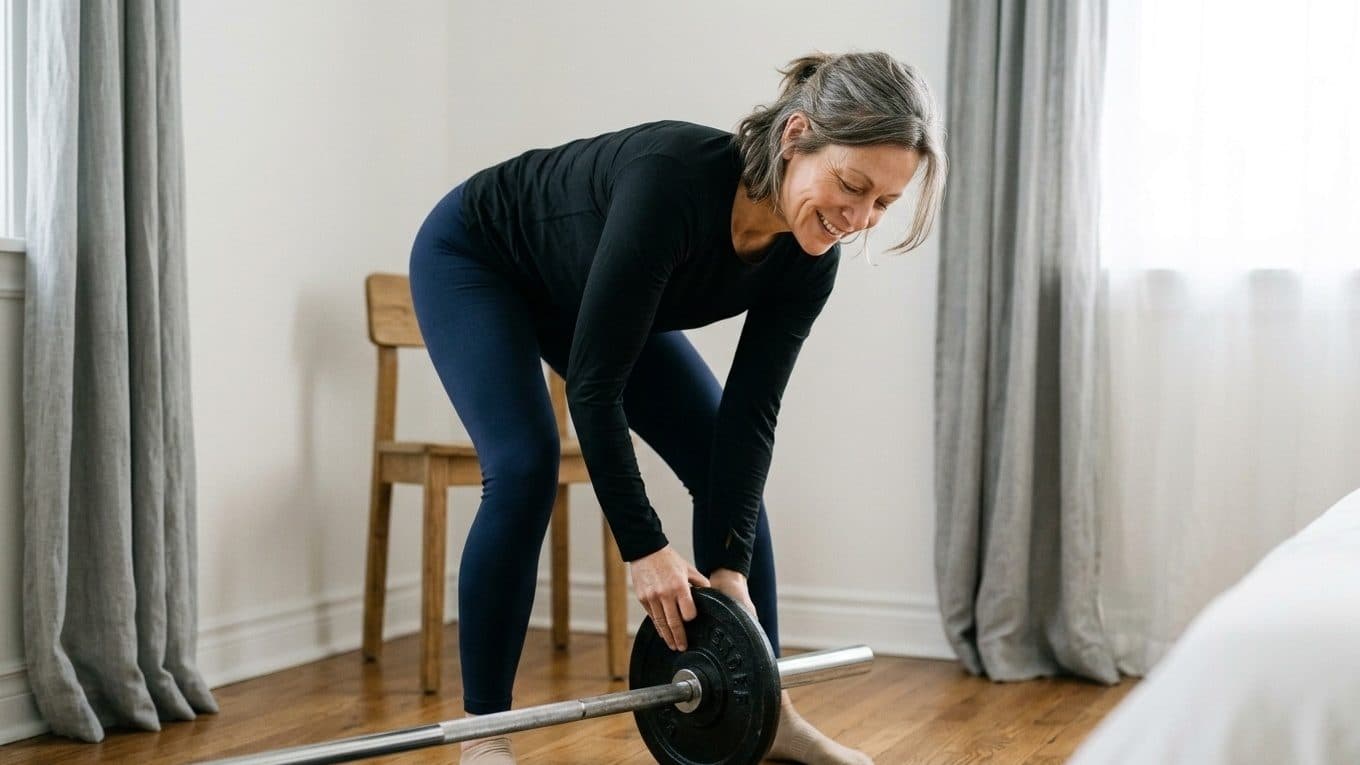
No workout replaces oestrogen, and nothing genuinely does. Oestrogen affects too many systems at once for any session to substitute for it. What changes in perimenopause is the training your body responds to best: strength and power work, held and controlled, rather than more cardio. That shift is what this comes down to.
Does Any Workout Replace What Oestrogen Does?
Start with the honest answer, because this question deserves one. No workout replaces oestrogen. Oestrogen touches sleep, joint comfort, mood, temperature regulation and recovery all at once, and nothing you do on a mat or at a barre substitutes for a hormone operating across that many systems. If anyone sells you a routine that claims to restore what oestrogen did, that is not movement science. It is marketing.
What is true is narrower, and more useful. As oestrogen fluctuates and then declines through perimenopause, the training that used to work for you stops producing the same results. Your effort has not dropped. The terrain has changed. The useful question is which training actually matches the body you have now. That is a different, answerable question, and it is the one this article is built around.
This matters because women are not small men, and training built on male physiology stops serving women once hormones shift in midlife. Exercise does not fix hormonal change. What has to change alongside it is the input: intensity, recovery and the type of load you choose.
The goal is movement your body still responds to, consistently, not movement that worked a decade ago and now leaves you flat.
Why Your Training Needs to Change, Not Just Increase
When a workout stops giving the results it used to, the instinct is to add more: more cardio sessions, more minutes, more intensity. In perimenopause this usually backfires. Doing more of what already is not working rarely produces a different outcome. It just adds fatigue to a body that is already managing enough change.
What tends to serve women better at this stage is strength and power work, done with lower volume and more intent, with recovery built into the plan from the start. This is the core of what the perimenopause-specific approach to training is trying to solve, because the body in your forties and fifties is not simply a slower version of the body you trained in your twenties.
Training protocols modelled on male physiology do not suit women once hormones shift through perimenopause, and that gap widens over time. That is a reason to change the stimulus here. It makes no promise about what the change will do for you medically.
In practice, that means fewer long, low sessions and more short, deliberate ones, built around load the muscles have to work to control. The effort feels different. It does not need to be harder to work.
What Strength Training Gives You Instead
Strength training will not give you back a hormone. What it gives you is something more immediate: muscle you can rely on, day to day, under load you control. That shows up in ordinary moments, not in a lab result.
It also trains the coordination between muscles, which is what balance depends on more than muscle size alone. Barre work in particular asks you to hold a position, shift weight slowly, and control a small range of movement. That kind of control is a skill, and like any skill it needs repeated, deliberate practice rather than occasional effort.
None of this is framed here as protecting against a particular condition, because that is not a claim movement coaching should make. What it builds is capability: the strength to do the physical things your week asks of you, through training that respects where your body is now rather than where it was fifteen years ago. That is the idea behind what we call Intelligent Movement™ at MMM, choosing the dose and type of effort for the woman in front of us, not a generic programme.
Consistency matters more here than intensity. A short session you repeat beats a demanding one you dread and skip.
- Carrying shopping or luggage without bracing for it
- Standing up from a low chair or the floor without pushing off
- Catching your balance on uneven ground instead of stumbling
Why Barre Fits This Moment Better Than More Cardio
Barre is a fitness discipline inspired by ballet, not a ballet class, and it asks nothing in the way of dance experience. The barre itself works the same way the back of a sturdy chair would: something to rest a hand on while you hold a position, not a prop for choreography. That distinction matters here, because it means the barrier to starting is low, whatever your movement background.
What makes barre a particularly good fit for this stage of training is the kind of strength it builds. Sessions are built from small ranges, isometric holds and slow, controlled transitions rather than big ballistic movements, which is the territory covered in why slow, controlled strength work fits your changing body. That control is the point.
Barre does not need to be your only input, and it is not more powerful than other strength work. What it offers is a sustainable way to load muscles and practise balance at a volume you can keep returning to, week after week, without needing recovery days to recover from the recovery.
This is the discipline behind Awaken Barre, built around that same idea: strength and mobility work that fits the body you have now, done in sessions short enough to fit into a week that is already full.
Building a Routine You Can Keep
In practical terms, this looks like two to three short sessions a week built around strength, with an easier walk or a gentler day worked in between. A full-body strength session structured for midlife shows what that can look like in twenty minutes, long enough to matter and short enough to fit into a week that is already full.
If you miss a week, come back to it. There's no need to restart from nothing, and no reason to decide the whole approach has failed. Progress here is built from returning more than it is built from a perfect run of sessions, which matters because most weeks in midlife are not tidy.
How you divide training across the week also matters less than people assume, as long as strength work gets its own dedicated slot in the week. One practical way to structure a week around work and family covers this in more detail for women balancing training against a full calendar.
The aim is to train in a way your body at this stage keeps responding to, week after week. That matters more than pushing harder than you did at thirty.
- Two to three short strength sessions a week, not daily high intensity
- A gentler day or walk between sessions rather than back-to-back training
- Returning after a missed week matters more than an unbroken streak
Common questions
Can exercise raise my oestrogen levels in perimenopause?
No. Exercise does not restore or raise oestrogen levels. Its value lies in helping you build and keep strength, balance and muscle while your hormones are changing, not in altering the hormone itself.
Is strength training better than cardio once I'm in perimenopause?
For most women, strength and power work deserves more weekly attention than steady cardio at this stage, because it is the stimulus the body responds to best. That does not mean cutting cardio out entirely, just rebalancing where your effort goes.
Will barre feel too gentle to make a difference?
Barre can look gentle from the outside because the movements are small and controlled, but holding a position under load is genuinely demanding. The challenge comes from control and time under tension, not from speed or size of movement.
Do I need any equipment to start?
No. Barre-based strength work mostly uses bodyweight and small props like light weights or a ball, with the barre itself acting as a balance aid similar to the back of a sturdy chair. You can start with very little.