Barre for Perimenopause: Why Slow, Controlled Strength Work Fits Your Changing Body
Chrissy Sundt · Mindful Movement ·
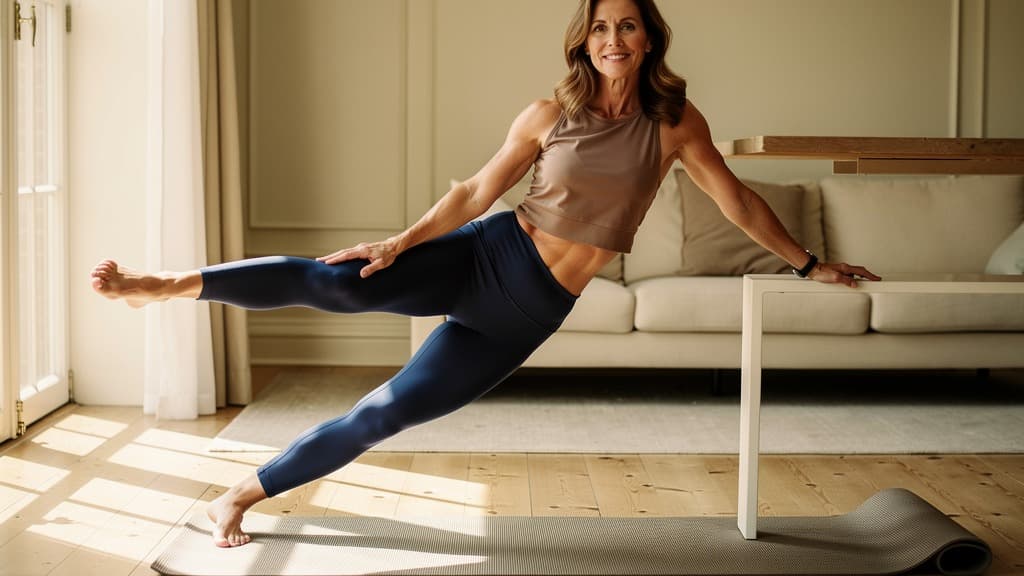
Barre suits perimenopause because it builds strength and deep core stability through slow, controlled, low-impact movement, without the high-intensity force many women were taught to chase. No ballet background needed: a sturdy chair is enough. Pair short sessions with recovery; see [how often should I do barre](/blog/how-often-should-i-do-barre) and [is barre good for menopause](/blog/is-barre-good-for-menopause).
Why is barre recommended for perimenopause?
Most exercise advice was written for a body that responds to force: push harder, add reps, chase the burn. In perimenopause, that approach stops matching the terrain. Your body doesn't always respond to load the way it used to, and pushing through the old way often leaves you more depleted instead of stronger. Barre works differently, asking for small, controlled ranges of motion held with precision, rather than big ballistic effort.
The mechanism matters, because it explains why gentler can be more effective. This phase of life responds to patience more than force. Your body trusts consistency over sudden intensity in this phase of life. And the deep core, the muscles that stabilise your spine and pelvis, is trained with slow, deliberate control rather than rushed through a set chasing a burn.
Practically, that looks like barre: small isometric holds at the barre or a sturdy chair, controlled pulses through the hips, glutes and thighs, with deliberate core engagement layered into every position. You're building real strength and stability, working large muscle groups without the joint-jarring impact of running or high-rep jump training, keeping intensity intelligent rather than maxed out, which matters when your body is already managing enough.
This is also why Awaken Barre comes from lived experience rather than theory. Chrissy Sundt brings her own movement background to it and is navigating perimenopause herself. The method reflects what she's had to relearn about her own body: applying what she knows with more precision instead of more force.
Do you need any dance or ballet experience to do barre?
No, and this is the most common misunderstanding about barre. The name comes from ballet, since the format borrows posture and alignment principles from dance, but a barre class is not a ballet class. There's no dance vocabulary, no choreography, and nobody is watching your turnout. If you've never taken a dance lesson in your life, you're exactly who barre for perimenopause is built for.
The barre itself is simply a balance aid, the same way the back of a sturdy chair is at home. You hold on lightly for stability while your legs, glutes and core do the actual work. It's there so you can focus on the muscle you're working, not on staying upright or performing a dance move correctly.
That's also why barre translates well to home practice. You don't need a studio, a sprung floor or a mirror wall. A kitchen counter, the back of a dining chair or a wall at hip height all serve the same purpose. What you're bringing to the session is attention and control, not flexibility or a dance background.
This matters more than it sounds, because plenty of women rule barre out before trying it, assuming it needs a body or a history they don't have. It doesn't. It needs a willingness to move slowly and with control, which is arguably easier to find in midlife than it was in your twenties, when patience was rarely the priority.
How is barre different from the workouts that used to work for you?
If you've fallen out of your old exercise habit, or the running, HIIT or high-rep sessions that used to work now leave you wiped out for two days, that isn't a failure on your part. It's a sign the method needs to change. You're running the old workout on a body that now needs something else.
Old routines were often built on volume: more sets, more minutes, more sweat as the proxy for effectiveness. In perimenopause, that same volume can leave you more tired rather than stronger. Barre flips the emphasis, replacing volume with precision, asking fewer movements to work harder because they're held with better form and more control.
There's also a body-recognition piece to this that's easy to underestimate. Many women in this phase find the same effort produces different results, recovery takes longer, and old aches show up in new places. Barre doesn't ask you to force your body back into an old shape or an old programme. It works with where you are now, building strength inside the range you have today, whatever that range looked like a decade ago.
That's a meaningful shift if you've been avoiding exercise altogether because nothing seems to fit anymore. Barre is a genuinely different tool, not a smaller or gentler version of what you used to do. It's built around how a changing body actually adapts and gets stronger.
How often and how long should you practise barre in perimenopause?
Awaken Barre sessions are kept short and focused, and that's a deliberate design choice. In this phase of life, your body responds to precision more than it responds to time on the clock. A short, focused block of controlled movement will do more for your strength and stability than an hour of distracted effort, particularly when your nervous system is already managing enough.
Consistency matters more than frequency here. A short, repeatable session that fits into a real week, alongside work, family and interrupted sleep, builds strength more reliably than an ambitious schedule you abandon after ten days. A rhythm you can sustain will serve you better than a target that only sounds impressive on paper.
It's also worth saying plainly: gaps in your sessions don't erase progress already made. This isn't a streak-based habit tracker where one missed week resets you to zero. If you manage two sessions one week and none the next, coming back is what counts. Strength built through controlled movement tends to hold better than people expect.
If you're starting from nothing, even one or two sessions a week is a legitimate starting point. The aim is to give your body a regular signal that it's safe to be strong again, not to fill a calendar. Build from there at whatever pace your actual week allows.
What actually happens in a barre session?
A typical barre session moves through a small, deliberate sequence rather than a random string of exercises. You'll usually start standing, often at a chair or wall for balance, working through small ranges of motion in the legs, glutes and hips: pulses, holds and controlled lifts rather than big dynamic movements. From there, sessions layer in core work, engaging the deep core rather than just the superficial abdominal muscles most people associate with core training.
Because the movements are small and controlled, the effort is easy to underestimate from the outside, and that's rather the point. A well-held barre position at the right depth can build real fatigue in the target muscle within a minute or two, without any impact on the joints. Sessions typically close with mobility and stretching work, so you leave with more range than you started with.
You don't need much to take part. Bare feet or grip socks, a sturdy chair or wall, and enough space to stand with your arms extended is genuinely all that's required.
This is exactly the format Awaken Barre is built around: beginner-friendly barre-based strength and mobility work, designed specifically for a body in midlife rather than adapted from a class meant for someone in their twenties.
You may also find online barre classes for women over 50 and restorative movement for midlife women useful alongside this.
- A sturdy chair, wall or worktop for balance
- Bare feet or grip socks
- Enough space to stand with arms extended
- No mat, weights or dance shoes needed
Common questions
Is barre safe if I have joint pain or stiffness?
Barre moves through small, controlled ranges rather than sudden or forceful effort, and the pace is set by you rather than a set count, so you can work within whatever range of motion suits you on the day. If you have a specific joint concern, check with your doctor or physiotherapist before starting any new exercise programme.
Do I need any equipment to start?
No. A sturdy chair, wall or kitchen counter works as your barre, and you can practise barefoot or in grip socks in a small space at home. There's no need for a mat, weights or dance shoes.
Is barre the same as Pilates?
They're related but distinct. Barre is standing, balance-based work using a chair or barre for support, focused on small controlled movements through the legs, glutes and core. Pilates is typically mat-based, with more emphasis on floor work.
Can I start barre if I've fallen out of exercise altogether?
Yes, this is exactly who barre for perimenopause is designed for. It's beginner-friendly, requires no fitness background, and the short session length makes it realistic to restart even if it's been years since you exercised regularly.
What's the difference between barre and Awaken Barre?
Barre is the general style of movement, standing, balance-based strength work using a chair or barre for support. Awaken Barre is the specific programme that teaches it, built for a body in perimenopause and beyond.
How often should I practise barre in perimenopause?
Two to three twenty-minute sessions a week, with rest or lighter movement between, is a realistic rhythm while hormones and sleep fluctuate. Let recovery guide you; adding restorative work on off days can help the week feel sustainable.