When One Glass Becomes Part of the Holiday
Chrissy Sundt · Nourishment ·
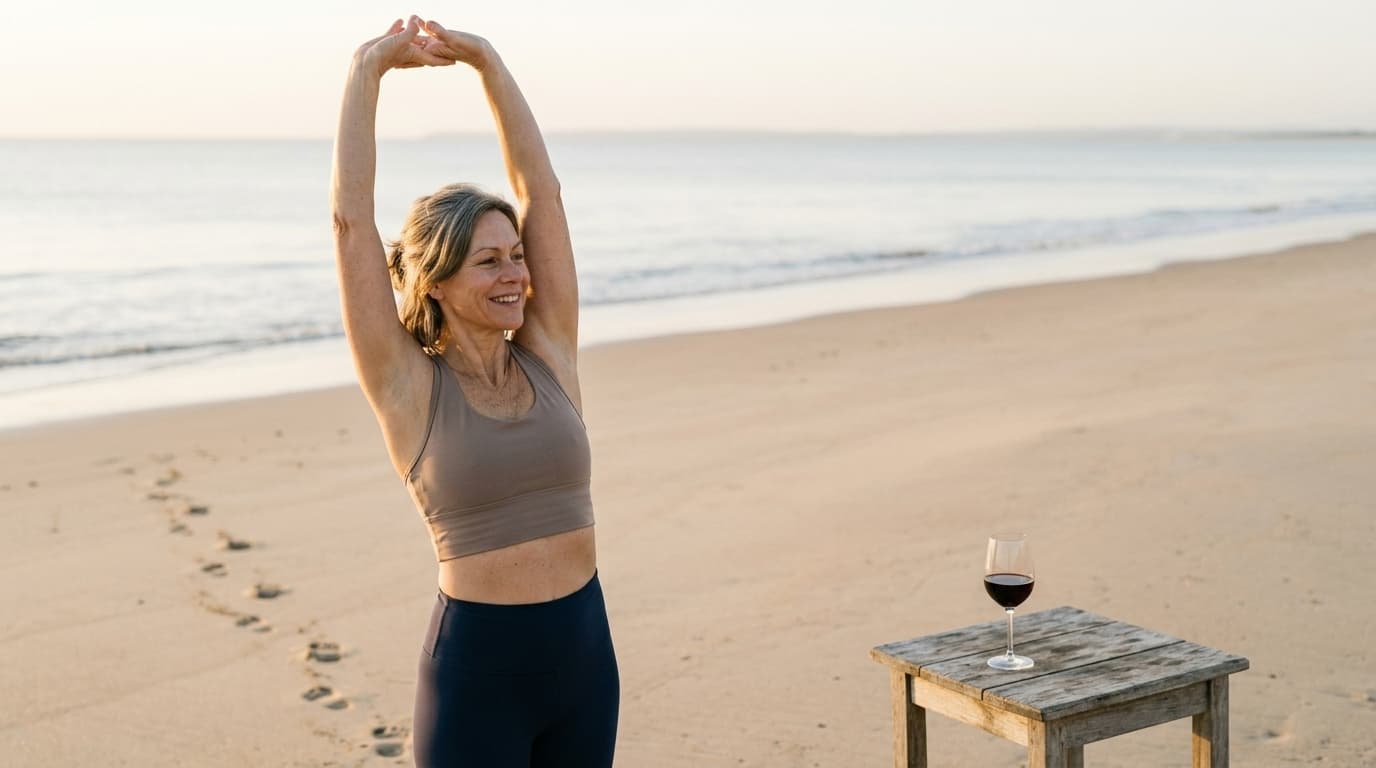
On holiday, wine becomes part of the day without anyone deciding it should. In midlife it does not land as lightly: lighter sleep, a warmer night, less inclination to move the next morning. I do not give the glass up. I ask whether it is adding to the moment, and I move the next morning from care rather than guilt.
I have been in home Norway for nearly a month, and summer has been showing off.
The weather has been beautiful, the evenings have stretched on almost indefinitely, and we have already had a huge family party filled with food, laughter and people I do not see nearly often enough.
It has been wonderful.
And, naturally, there has been wine.
A glass while preparing dinner. A drink when everyone arrives. Champagne for the celebration. Something cold by the water because the sun is shining and, for once, nobody needs to rush anywhere.
None of it has felt excessive or particularly significant. That is often how alcohol creeps into a holiday. Not dramatically, but pleasantly. It becomes part of the punctuation of the day.
At home, I would rarely open a bottle on an ordinary Monday evening. On holiday, Monday does not feel like Monday. There is always a reason to raise a glass, and opting out can feel strangely antisocial when everyone else is joining in.
I do not want to write another article telling women that alcohol is bad, fun is dangerous or every glass of wine must be weighed against its calorie content.
That is not how I want to live, and it is certainly not the philosophy behind The Midlife Movement Method. But if I am truthful,I have noticed that alcohol does not land in my body quite as lightly as it once did.
Alcohol contains energy, of course, but the effect on midlife health is more layered than a simple calorie equation. Because the body cannot store alcohol, it prioritises breaking it down and removing it.
During that process, the metabolism of other fuels temporarily takes a back seat. That does not mean a single glass of wine instantly becomes body fat, nor that fat burning is switched off for the entire day. It simply means the body has another immediate job to do.
For me, the more noticeable effects often come later. I may fall asleep easily but wake during the night. I feel warmer. My sleep is lighter. The following morning, I am slightly less inclined to move and far more interested in bread or a croissant, coffee and another slow start.
Alcohol is also a recognised trigger for hot flushes and night sweats for some women, and reducing it may help improve both sleep and menopausal symptoms. That is where the real ripple effect begins.
One glass is not the problem, but when one glass quietly becomes several evenings in a row, the repeated disruption to sleep, energy and recovery can start to shape how we eat, how we move and how we feel in our bodies.
The holiday spiral
I think many women will recognise the pattern.
You stay up later because everyone is together. You have another drink because it is a special occasion. You wake feeling slightly flat, so the planned workout does not happen. Breakfast becomes less balanced. Lunch lasts longer. By the afternoon, another glass feels completely reasonable because you are already in holiday mode.
None of this is a moral failure. It is simply how routines loosen.
The danger is not the celebration itself. It is the moment we decide that, because our normal structure has slipped, we may as well abandon it completely until we get home.
That all-or-nothing thinking causes far more trouble than a glass of wine ever could.
Movement as an anchor and this is where mindful movement has become so important to me. Not as punishment, not as a way to burn off dinner or earn the next drink, and definitely not as an attempt to recreate my usual training schedule while surrounded by family and holiday plans.
Movement becomes a small anchor to the person I still am underneath the celebration and it could look as simple as a walk before everyone wakes up or just ten minutes of mobility while the coffee is brewing.
I also love a short (but seriously intentional!) Awaken Barre session using a chair in the bedroom. A swim that’s refreshing or a little easeful stretch before bed.
These things may not look like a “proper workout,” but they interrupt the holiday spiral. They remind me that I have not stopped caring for myself simply because I am enjoying myself.
Regular movement also supports sleep, mood, bone health and general wellbeing during menopause, which is why the NHS continues to recommend it as part of menopause self-care. But perhaps the biggest shift os psychological, I think it gives us something incredibly valuable: continuity. It keeps the thread intact.
The morning after our family party, I did not attempt a punishing workout. I drank water, went outside and moved gently. I chose food that made me feel nourished rather than trying to restrict myself. I let the previous evening remain what it had been: a joyful celebration with people I love.
That, to me, is the difference between discipline and self-trust. Discipline says you must make up for what you did. Self-trust says you know how to return.
There will be more dinners this summer. More sunshine. More glasses offered across the table. I will probably say yes to some of them.
But I am also paying attention and ask myself, ‘Is this glass adding to the moment, or has it simply become automatic?’
Will I genuinely enjoy it?
How do I want to feel tomorrow?
Those questions feel far more useful than rigid rules.
Midlife wellness should not require us to withdraw from the very experiences that make life rich. Family parties, holidays and long dinners are part of health too. They offer connection, pleasure and a sense of belonging—one of the central pillars of wellbeing.
The goal is not to become perfect at avoiding indulgence. It is to become skilful at staying connected to ourselves while we enjoy it.
To raise the glass when it feels worth it and to put it down when it does not.
To move the following morning, not from guilt, but from care.
And to remember that one beautiful evening does not undo our health, what matters is what we gently, consistently return to.
First published in The Midlife Movement, Chrissy’s newsletter.
Common questions
Does one glass of wine really affect midlife sleep?
For me the effects arrive later rather than at the time. I fall asleep easily and then wake during the night, I feel warmer, and the sleep itself is lighter. The following morning I am slightly less inclined to move and far more interested in a croissant, coffee and another slow start.
What do you do the morning after a late night?
Not a punishing workout. I drink water, go outside and move gently, and I choose food that leaves me feeling nourished rather than trying to restrict myself. The evening before stays what it was, a joyful celebration with people I love.
Is this about giving up alcohol in midlife?
No. I do not want to write another article telling women that alcohol is bad or that fun is dangerous. The questions I find far more useful than rigid rules are whether this glass is adding to the moment or has simply become automatic, and how I want to feel tomorrow.