Workout Recovery for Women Over 40: What Actually Helps Now
Chrissy Sundt · Rest & Illumination ·
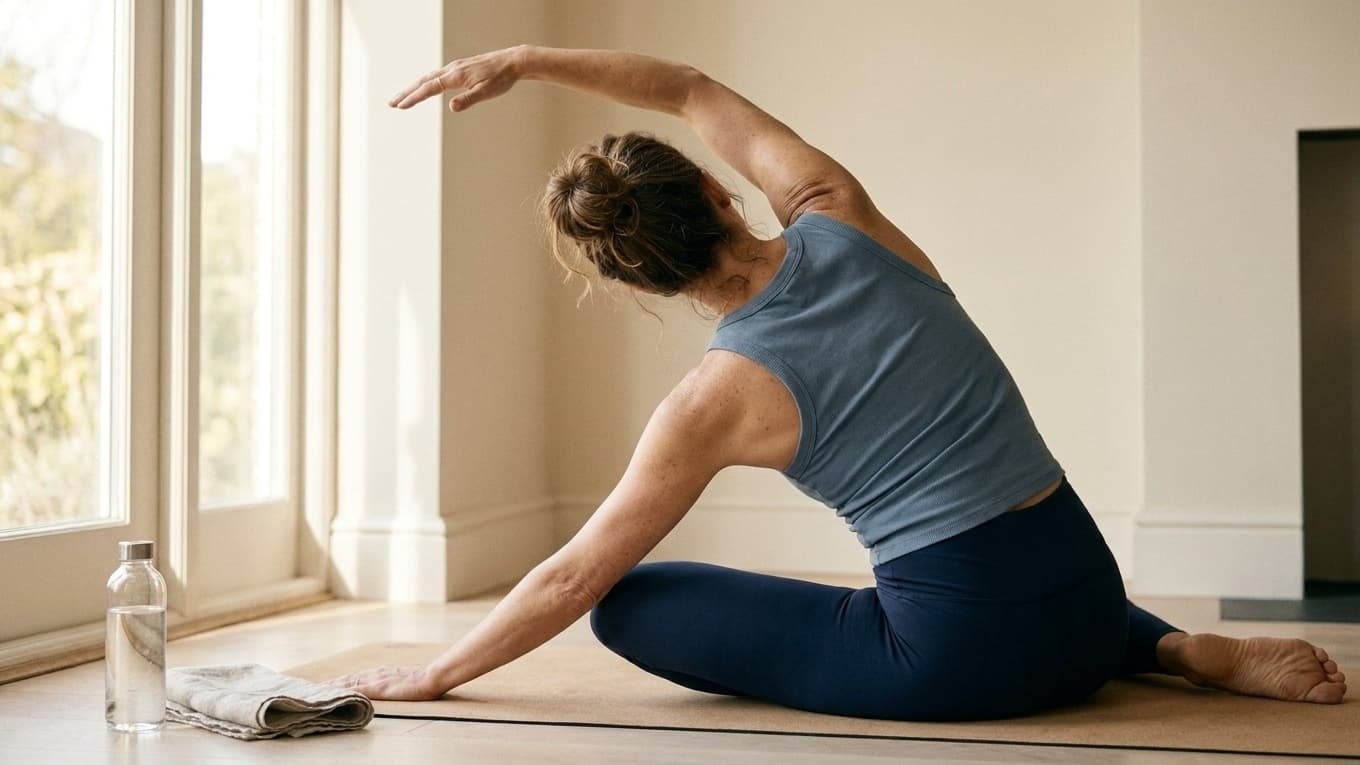
Workout recovery for women over 40 often takes longer, and what helps is not more rest alone, but shorter, more precise sessions around 20 minutes, consistent sleep, gentle active recovery, and paying attention to how you feel rather than a fixed schedule.
Why does recovery take longer in your 40s?
In your twenties and thirties, you could train hard, sleep it off, and be ready to go again the next day. In perimenopause, the maths changes. Hormonal fluctuations affect how your nervous system processes stress, including the stress of exercise, so the same session that used to leave you refreshed can now leave you drained for a day or two afterwards. That isn't a sign you have lost fitness. It is a sign your body is running on a different operating system, and it needs a different recovery approach to match.
Fascia, the connective tissue that wraps every muscle, plays a part here too. It responds to patience rather than force, and in midlife it needs more time between loading sessions to remodel properly. Push through that window with another hard session and you are training on top of unfinished repair, which is often where nagging tightness and that heavy-legged feeling come from.
None of this means you should stop training. It means recovery becomes part of the plan, not an afterthought squeezed in when you remember. Building rest, sleep and gentler regulation work into your week is what allows the training itself to actually land.
What does active recovery actually mean now?
Active recovery does not mean another workout in disguise. It means movement gentle enough to feel calming rather than effortful, without adding to the training load your body is already processing. A slow walk, some mobility work, or a controlled barre-style session can all count, provided the intention is to feel calmer rather than to chase output.
The mistake many women make in their 40s is treating a rest day as a lighter cardio session that is still, in effect, another workout. If you finish it breathless, or your heart rate stays elevated for half an hour, that is not recovery, it is just training at a lower volume. True active recovery keeps your nervous system in a calmer state throughout.
This is also where breathing and deliberately slowing down matter more than people expect. A few minutes of slow, unhurried breathing before or after a session helps shift your nervous system out of the alert state exercise puts it into, and back towards rest. It is a small habit, but it is often the difference between a body that recovers and one that stays mildly wired all week.
Think of active recovery as maintenance, not output. You are not trying to earn anything on these days. You are giving your body the unrushed time it needs before your next training day.
How many rest days do you actually need between sessions?
There is no single number that applies to everyone, but a useful starting principle in your 40s is to avoid stacking two demanding strength sessions on consecutive days. Your muscles might feel ready before your nervous system and connective tissue are, and it is the slower-recovering systems that end up dictating how well you perform and how you feel the next day.
A pattern many women find works well is training three to four days a week, with genuine rest or active recovery in between, rather than training daily and collapsing into one exhausted day off. This spreads the recovery demand evenly instead of concentrating it into a single overloaded rest day that cannot undo a week of accumulated fatigue.
The other variable is life outside your sessions. Poor sleep, a stressful week at work, or a shift in energy all increase how much recovery you need, regardless of what the plan says on paper. Checking in with how you actually feel each morning, rather than following a schedule blindly, is the more reliable guide to whether today calls for a full rest day or a lighter session instead.
- Two consecutive hard strength sessions is often one too many
- A short, focused 20-minute session most days beats one long, punishing one
- Rest days can include gentle movement, not just stillness
- Heaviness or irritability is a cue to add rest, not push through it
What are the signs you're not recovering properly?
The clearest early signal is that a session which used to feel manageable now leaves you disproportionately drained, not just physically tired but irritable or flat for the rest of the day. That gap between the effort you put in and the time it takes to feel like yourself again is worth paying attention to rather than pushing past.
Sleep is often the next place it shows up. If you are waking more through the night after a harder training day, or lying awake wired despite being exhausted, it is worth noticing whether that links to how demanding the session was rather than assuming it is unrelated.
Persistent tightness in the same areas, session after session, is another cue, especially if it does not ease with your usual warm-up. So is a creeping reluctance to train at all, which is less about motivation and more often a sign your body is asking for a lighter week before you go again.
None of these signs mean you have done something wrong. They are information, and the response is not to stop moving altogether, it is to adjust the intensity and add more deliberate rest before your next session.
- Disproportionate fatigue that lingers after a session
- Restless nights after a harder training day
- Tightness that does not ease with warming up
- A growing reluctance to show up, even when you normally enjoy it
Does better recovery mean doing less, or doing it differently?
It is rarely about doing less overall. It is about matching the intensity and length of your sessions to what your body can actually absorb and recover from right now, which in your 40s usually means shorter, more precise training rather than longer sessions that quietly outpace your recovery capacity week after week.
This is why a focused 20-minute session, done with attention to form and the deep core and stabilising muscles rather than pure output, can do more for how you feel than an hour that leaves you flattened for two days. Twenty minutes is enough time to load your muscles properly and stop before you tip into the kind of fatigue that eats into your recovery budget.
The same logic applies to consistency over intensity. Missing a session here and there does not undo progress, and returning to a shorter, calmer routine after a disrupted week matters more than trying to make up for lost time with a harder one. Recovery, in this sense, is not separate from training, it is built into how the training itself is designed.
If you want this as movement rather than another article, Awaken Barre is the twenty-minute programme I built for a body that has already changed.
Common questions
How long does workout recovery take in your 40s compared to your 20s?
There's no fixed number, as it varies with session intensity, sleep and stress levels, but many women find they need noticeably more time between demanding sessions than they used to. Building in extra rest days and shorter sessions is a more reliable approach than trying to match an old recovery timeline.
Is it normal to feel more tired after workouts in perimenopause?
Yes, fluctuating hormones can affect how your nervous system processes the stress of exercise, so sessions that once felt fine can leave you more drained. It is a sign to adjust intensity and recovery, not a sign you are losing fitness.
What's the difference between active recovery and just resting?
Complete rest means no structured movement at all, while active recovery is gentle, low-intensity movement, like walking or slow mobility work, that leaves you feeling calmer rather than keyed up. Both have a place, and alternating between them tends to work better than defaulting to one.
Can short workouts really support better recovery than longer ones?
Shorter, more precise sessions ask less of your recovery systems while still building strength, which is why a focused 20-minute session can leave you feeling capable rather than depleted. It's about matching effort to what your body can actually absorb right now.
How do I know if I need a full rest day versus active recovery?
If you're dealing with restless nights, persistent tightness or feeling flat, a full rest day is usually the better call. If you're simply between training days and feeling otherwise steady, gentle movement like walking or slow mobility work tends to support recovery better than total stillness.