Best Pyjamas for Hot Sleepers: A UK Guide for Warm Nights
Chrissy Sundt · Sleep ·
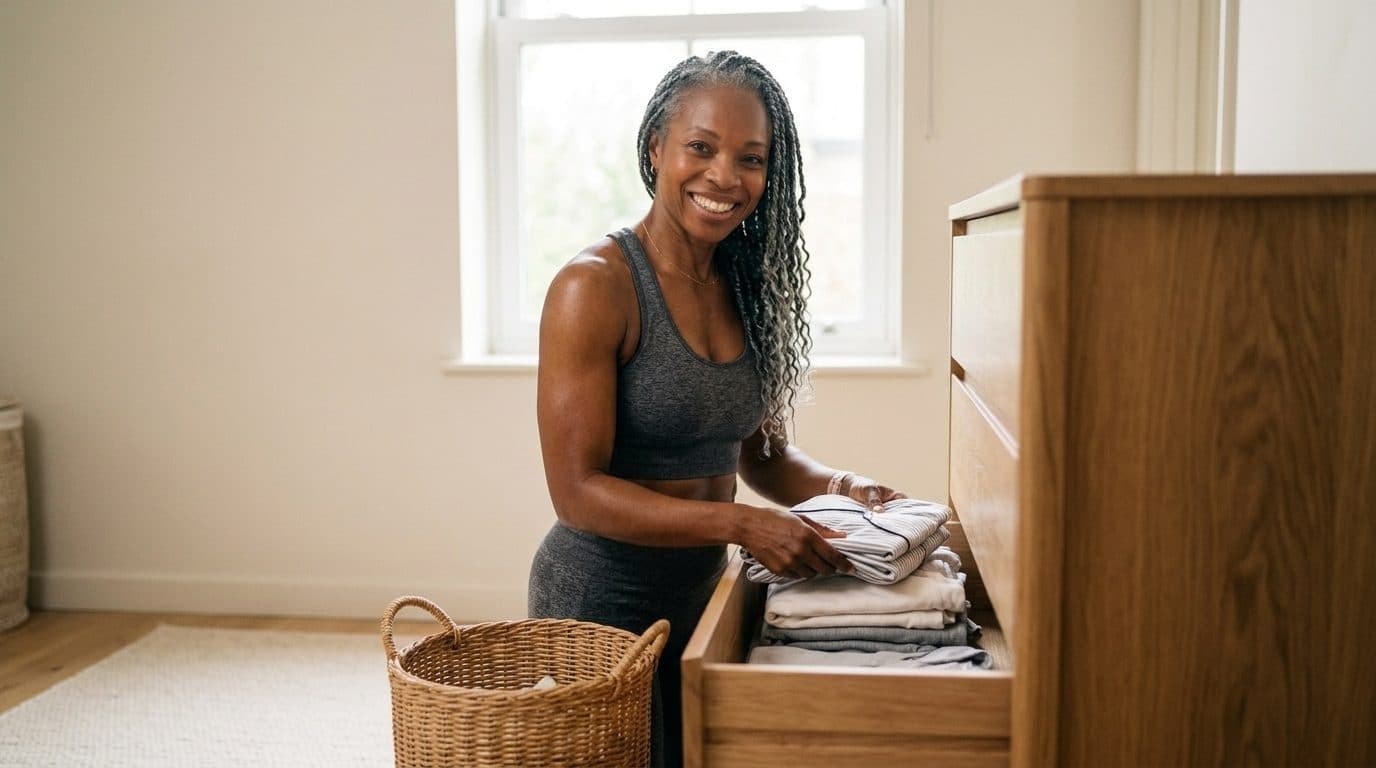
The best pyjamas for hot sleepers are loose-fitting separates in breathable natural fibres: fine cotton jersey, linen, or bamboo-derived viscose. Fitted synthetic sets are the opposite of what you want. These let air move and moisture escape instead of trapping heat against the skin. Pyjamas are one part of the picture though: a cool bedroom, around 18°C, does more of the work than fabric alone.
What actually makes pyjamas cool for hot sleepers?
Falling asleep and staying asleep both depend on your core temperature dropping, which is one reason a hot, restless night so often means broken or shallow sleep, well beyond simple discomfort. Whatever you wear to bed either helps that drop happen or gets in the way of it.
Fabric is the main lever here. Natural fibres such as cotton and linen are woven in a way that lets air pass through and moisture evaporate off the skin, so heat has somewhere to go. Tightly woven synthetic fabrics tend to sit against the skin and hold both heat and dampness there, which is exactly what a hot sleeper doesn't need.
Fit matters almost as much as fabric. A pyjama top that clings to damp skin traps a layer of warm, moist air next to you all night. Something with a bit of room, particularly around the chest and underarms, lets that air circulate. This is also why a two-piece set usually beats a fitted nightdress or all-in-one for anyone who runs warm: you get airflow at the waist as well as the neckline.
None of this needs to be complicated or expensive. The basic test is simple: pick it up and see whether you can easily see or feel air moving through the weave. If it feels dense or slightly rubbery, it will likely trap heat regardless of what the label promises.
Which fabrics work best for night sweats and hot flushes?
For anyone waking up warm or damp in the night, the practical goal is a fabric that both breathes during the night and dries quickly if you do sweat. A few options consistently do this better than the rest.
Fine cotton jersey is the reliable middle ground: soft, widely available, and breathable without being fussy to wash or iron. Linen goes a step further for genuinely hot nights, it feels cool to the touch and its looser weave moves more air, though it creases easily and some people find it less soft against the skin at first. Bamboo-derived viscose sits between the two: very soft, good at wicking moisture away from the skin, and often marketed specifically at hot sleepers, though it can retain a little more dampness than linen once you're properly sweating.
Seersucker and lightweight waffle-knit cottons do a similar job. Their slightly textured weave holds the fabric just off the skin in places, which helps airflow even in fitted styles.
Whichever fabric you choose, separates you can adjust beat a one-piece set for a genuinely hot sleeper, since you can push a top off in the night without fully waking or getting tangled.
- Fine cotton jersey: soft, breathable, easy care
- Linen: coolest to the touch, best airflow, creases easily
- Bamboo-derived viscose: very soft, good moisture-wicking
- Seersucker or waffle cotton: textured weave holds fabric off the skin
What should hot sleepers avoid wearing to bed?
Polyester and other synthetic blends are the most common culprit. They're often chosen for how they look or how little they crease, but they don't allow much airflow and tend to hold moisture against the skin rather than letting it evaporate. If a fabric feels slightly slippery or shiny, it's usually synthetic.
Thick fleece and brushed-cotton flannel sets are cosy in a cold house but work against you if you're already prone to overheating overnight, particularly in a British summer or a well-insulated modern bedroom. Tight elastic at the cuffs, waist or neckline is also worth avoiding, since it restricts the airflow that loose natural fabric is otherwise giving you.
Getting straight into pyjamas after a hot bath or shower is a habit that works against you. A warm bath or shower roughly an hour before bed can genuinely help, because your body cools down afterwards and that drop supports falling asleep. Climbing into bed immediately, still warm, skin damp, in fitted pyjamas undoes some of that benefit. Give yourself time to cool between the shower and lights out, then dress for bed once your skin has settled.
Novelty fabrics and anything marketed on print or softness alone, with little said about weave or fibre content, are usually the least useful for a genuinely hot sleeper, whatever the packaging says.
Does bedroom temperature matter more than pyjamas?
Yes, largely. Pyjamas are one input into a much bigger picture, and the room you're sleeping in usually does more work than what you're wearing. A bedroom around 18°C is broadly supportive of good sleep, cooler than most people actually keep their bedrooms, especially in UK homes with central heating left on into the evening.
If the room itself is too warm, no amount of clever fabric will fully compensate. A cracked window, a fan, or simply turning the heating down an hour before bed will often do more for a hot sleeper than switching pyjama brands. Natural-fibre bedsheets, cotton or linen, make a real difference too; a heavy synthetic duvet cover cancels much of that out, since the same breathability principles apply to what's under and over you as to what you're wearing.
There's also a routine side to this. Dim, low light in the hour or so before bed is part of what helps sleep settle in, alongside a consistent bedtime and wake time. A cool room and breathable pyjamas do their best work as part of that fuller wind-down. On their own, they won't fix a bedroom that's overheated by nine at night, well before you even close the curtains.
Layered bedding you can push off in the night gives you the same flexibility overnight that loose pyjama separates do, more so than one heavy tog duvet.
How do I choose pyjamas if I'm waking up drenched at 3am?
Waking hot and damp in the small hours is a genuinely common experience in perimenopause. A brief waking in the night isn't in itself a sign anything has gone wrong. Waking during the night is a normal feature of sleep for most people; what changes it from a non-event into a disruptive one is often what happens next: lying there overheated and frustrated, unable to settle back down.
Practically, that means having a plan for the waking, since hoping it won't happen rarely works. Keep a spare pyjama top within reach of the bed so a change doesn't mean a full trip to a drawer with the lights on. A two-piece set makes this far easier than a one-piece, since you can change the top that's actually damp without disturbing the rest.
Fabric choice matters more here than anywhere else. Something that dries quickly once you're out of it, fine cotton or a good bamboo-viscose blend, means a change genuinely helps. A fabric that stays damp for ten minutes just swaps one damp layer for another.
I'm navigating this stage myself, and the pyjama drawer is a small, practical piece of a much bigger picture that includes how you move, eat and rest during the day. Sleep is one of five pillars I work through with women in midlife, and it rarely sits in isolation from the rest.
If you want this as movement rather than another article, Awaken Barre is the twenty-minute programme I built for a body that has already changed.
Common questions
Are bamboo pyjamas actually cooler than cotton?
Bamboo-derived viscose is very soft and wicks moisture well, which suits some hot sleepers. Linen and fine cotton jersey generally breathe better and dry faster once you're actually sweating, so try both before assuming bamboo wins by default.
Should I sleep in shorts and a t-shirt instead of proper pyjamas?
Ordinary cotton loungewear works just as well as branded nightwear if the fabric and fit are right. What matters is breathable fabric and a loose fit, whatever the label says.
Is sleeping without pyjamas better for hot sleepers?
It can help some people, since there's no fabric at all to trap heat. Others find it disrupts their sense of routine at bedtime, which matters too, so it comes down to personal preference.
Do I need separate winter and summer pyjamas if I run hot?
Often yes. A lightweight cotton or linen set for most of the year, with a slightly heavier cotton option kept for genuinely cold nights, tends to work better than one set trying to do both jobs.
How many pairs of pyjamas should a hot sleeper own?
Enough to allow a change mid-week and one kept by the bed for a night change. Two to three breathable sets in rotation is usually plenty.